
Guides/Industry Education
Structural Plywood Explained: AS/NZS 2269 F-Grades, PS 1/PS 2 Span Ratings and EN 636 S
What makes plywood structural in each market: AS/NZS 2269 F-grades, PS 1/PS 2 span ratings and Structural I, EN 636 S, and what importers should check.
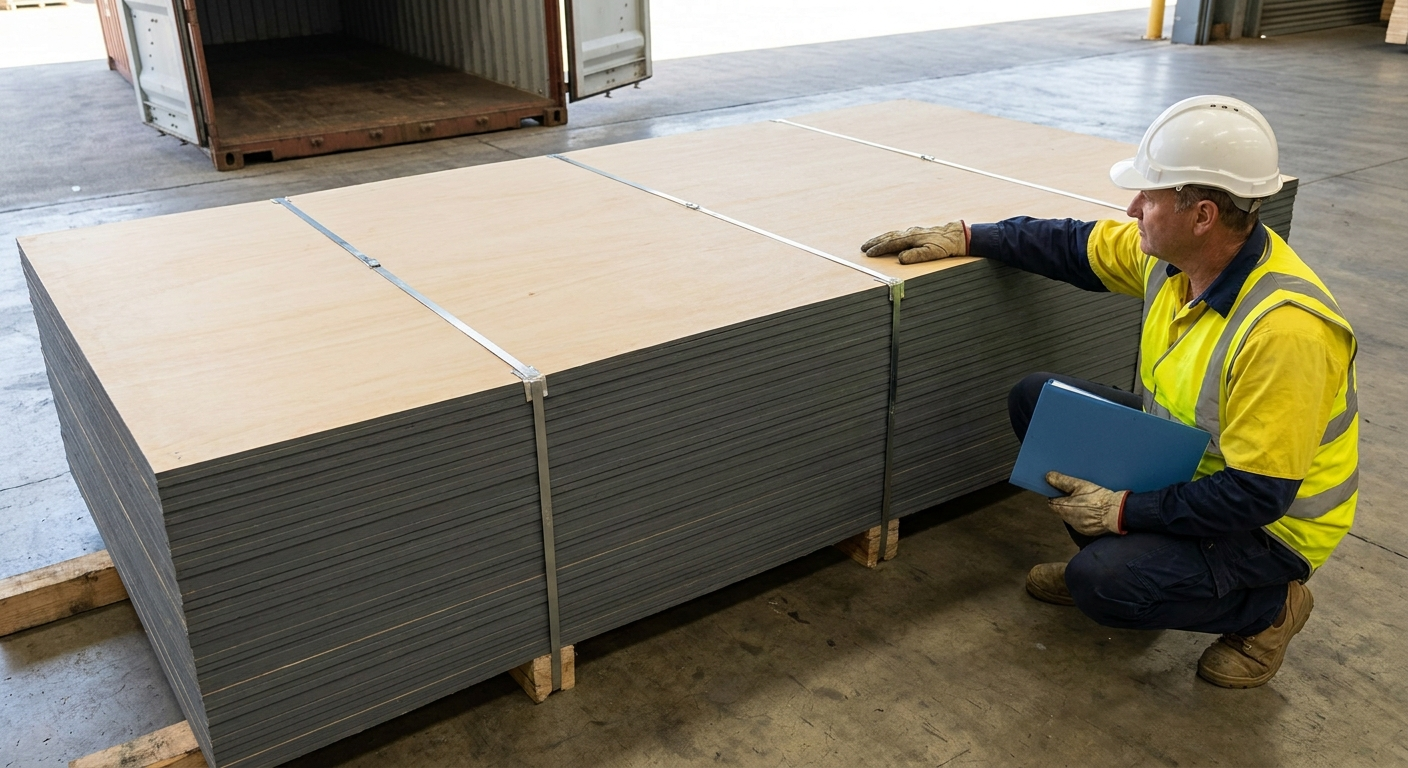
Here's a situation importers run into more than they'd like. A container of plywood lands, the sheets look great, the thickness is right, the faces are clean. Then the builder's engineer asks for the structural certification, and there isn't one. Nobody doubts the panels are strong. The trouble is that nobody can prove how strong, in numbers a building code accepts, so the whole order ends up in fit-out and packaging instead of on a roof.
That's the thing about the word "structural". Printed on a plywood quote, it isn't a compliment. It's closer to a promise someone can be held to. Whoever sizes a floor or a braced wall has to plug real strength and stiffness figures into the sums, and they need a glue line that survives the frame getting soaked before lock-up. A structural panel is one where a standard sets those values, the mill makes to them, and a third-party mark on the sheet says someone checked. Strong plywood without that mark is just strong plywood.
What makes it tricky for anyone shipping across markets is that "structural" means a different document in each one. Australia and New Zealand use AS/NZS 2269 and its F-grades. The US uses PS 1 and PS 2, span ratings and Structural I. Europe and the UK use EN 636 with an "S" for structural. We'll go market by market below, then deal with formwork, which is honestly where half the mix-ups come from.
First, though, why can a perfectly good sheet flunk "structural" on paper? Because certification is a habit rather than a single lab report. The mill gets a product qualified by testing samples against the standard, and after that it has to keep running under a quality system an outside body audits, pulling fresh panels off the line for testing every so often. Stop that cycle and the right to use the mark stops with it. So a Vietnamese or Chinese or Chilean panel can be every bit as stiff as a certified one and still not be structural, simply because nobody is watching the line on the standard's behalf.
Australia and New Zealand: AS/NZS 2269 and F-grades
In Australia, and across the Tasman in New Zealand, the governing document is AS/NZS 2269.0:2012 (Amendment 1 came out in 2015). Standards New Zealand's summary lists a long scope: manufacture, grading, finishing, branding, veneer and bond quality, standard lay-ups, tolerances, joints and moisture content. Tucked at the end are the characteristic strength and stiffness values for each nominated F-grade, and for an engineer that's the bit that counts. When a sheet is branded F11 or F14, the grade points to a set of design values the engineer can pull straight into calculations.
People sometimes read F-grades like appearance grades, and they aren't. An F14 sheet is not "nicer" than an F11 one; it carries higher characteristic mechanical values, and its face could still be a plain C or D surface. Appearance is a separate face grade in the same standard. If a supplier quotes "structural F14" with no stamp, no certifying body and no test history behind it, the label is doing all the work.
Branding is the other half of the Australian picture, and it's more than decoration. The standard sets out what the brand on each sheet has to say, so that a builder on site can tell the grade, the bond and the maker without a folder of paperwork. In practice, buyers look for that brand to be backed by a certification scheme that audits the mill and keeps retesting panels, because a stamp anyone could have carved out of rubber isn't worth much. More often than not, the weak link in a rejected shipment isn't the panel. It's a brand with nobody behind it.
Formwork in Australia has its own product standard, AS 6669, which is where formply lives. A sheet made to AS 6669 is designed for concrete forming, and it shouldn't be swapped in as roof or floor sheathing on the strength of the word "plywood". Our formply explainer covers that standard and the face options in detail.
United States: PS 1, PS 2, span ratings and Structural I
Americans have two NIST documents to juggle. PS 1 is the plywood-only recipe book, older and prescriptive, spelling out species groups, veneer grades and lay-ups. PS 2 came later and doesn't much mind what's inside the panel (plywood or OSB) as long as it survives the load, deflection and bond tests for the job it's rated for. A lot of US sheathing is certified to both.
The number most US buyers see first is the span rating. In PS 2's wording it's an index for the recommended maximum centre-to-centre support spacing for a given end use, counted in inches. The standard's own example sticks: 32/16 means 32 inches between rafters on a roof, 16 between joists under a subfloor. Stiffness, in other words, translated into a tape-measure number a framer actually uses.
Beside it there's often a Performance Category, 15/32 CAT or 23/32 CAT and so on. PS 2 links that label to the thickness ranges the US codes (IBC, IRC) use, which lets an inspector check the panel against the code tables quickly. It looks like a thickness, and it nearly is one, but it's really a code label. Buyers coming from metric markets sometimes order to the millimetre and then find the stamp doesn't carry the category the inspector wants to see, which is an annoying, avoidable problem.
Structural I is a step up within that system. PS 2 describes Structural I sheathing as meeting extra requirements for cross-panel strength and stiffness and for racking load performance, the sort of thing that matters in shear walls and diaphragms. An engineer specifies it when the design calls for it; plenty of ordinary sheathing jobs are drawn with the standard grades instead. Exposure ratings sit alongside all of this, and our guides to CDX plywood and Exposure 1 explain how US bond classification works.
UK and Europe: EN 636, the "S" suffix and EN 13986
In Europe the main plywood specification is EN 636, and it comes in three flavours: EN 636-1 for dry conditions, EN 636-2 for humid conditions and EN 636-3 for exterior use. Each can be declared as S, for structural, or NS for non-structural, general purpose. That suffix matters more than the number in front of it. An EN 636-3 NS sheet has an exterior-grade bond but makes no structural claim at all.
For construction use, EN 636 is called up by EN 13986, the harmonised standard behind CE marking (UKCA in Great Britain). That's where the Declaration of Performance comes in, a document from the manufacturer listing the panel's declared characteristics. One detail catches people out. The bending classes in EN 636 are product properties, and the standard itself says they are not characteristic values for design; those come from EN 12369-2 or from the maker's own testing. Bonding quality ties back to EN 314-2, which we explain in the EN 314-2 bonding classes guide.
EN 636 wants factory production control at the mill too, and external control on top of it, which is Euro-speak for an outsider keeping watch. My advice to importers is boring but works: read the Declaration of Performance as closely as you read the price. It ought to name the standard, the service condition, S or NS and the declared values, and it has to belong to the panel in the container. DoPs copied across from another thickness or glue system turn up more than you'd think, and building control officers do spot them.
Where formwork plywood fits
Formwork panels take real load (wet concrete is heavy, and a tall wall pour pushes hard on the face), so it's natural to assume they must be structural plywood. In practice they're bought against a different question. A sheathing standard asks whether the panel can be part of a building for decades. A formwork spec asks whether it'll hold wet concrete flat for a pour, strip cleanly and come back for the next one, and how many times. Those are related but they're not the same test.
So each market tends to buy forming panels under their own rules. Australia has AS 6669 for formply. In the US, PS 1 has concrete form grades along with MDO and HDO overlay grades. Europe usually combines an EN 636 bonding class (often EN 636-3 for phenolic glue lines) with a face specification for the film. I think buyers save themselves a lot of grief by asking two separate questions on the RFQ, one about the structural or bond mark and one about the face and reuse, rather than hoping one stamp answers both. For more on this side, see our pages on Vietnam formwork plywood, concrete forming plywood and phenolic plywood.
What a buyer checks on an import order
Everything above comes down to paperwork that matches the sheets in the container. The quick comparison below shows what to look for in each market. It isn't a replacement for our standards cross-reference matrix, which lines the standards up in much more detail.
| Market | Standard | What "structural" is called | The mark to look for | Key grade field |
|---|---|---|---|---|
| Australia / New Zealand | AS/NZS 2269.0 | Structural plywood | Brand from a recognised certifying body | F-grade (e.g. F11, F14) plus bond type |
| United States | PS 1 / PS 2 | Wood structural panel, Structural I | Third-party agency trademark | Span rating, Performance Category, Exposure 1 or Exterior |
| UK / EU | EN 636 via EN 13986 | EN 636-1/2/3 S | CE or UKCA marking with Declaration of Performance | Service condition (1, 2, 3) and S suffix |
On the sheet itself, check that the stamp names the standard and the grade, and that a certifying body is identified; our grade stamp decoder goes through real examples. After that, get the certificate or declaration and confirm it's for this product from this factory, not a sister plant, not a sample from 2019. And look at the bond class. A structural grade with a dry-use bond is still the wrong sheet for a roof that might sit uncovered through a wet month. For the documents themselves, the guides on reading a test certificate and certification requirements by destination are the next stop.
If you'd like the simpler, non-standards version of the structural versus non-structural question, Vinawood's mill blog has a short comparison in structural vs non-structural plywood. The standards side is what decides whether a panel goes on the roof, though, and that is worth sorting out before the container leaves port.
Frequently asked
What is structural plywood?
Structural plywood is plywood made and certified for load-bearing use, so a standard sets its strength, stiffness and bond durability and a third-party mark proves it. In Australia and New Zealand that standard is AS/NZS 2269.0, in the US it is PS 1 or PS 2, and in the UK and EU it is EN 636 with the S suffix. A panel can be strong and still not count as structural if it does not carry that mark.
What is the difference between structural and non-structural plywood?
The difference is a declared, certified performance claim rather than how the sheet looks. Structural plywood has tested strength, stiffness and bond values that engineers and building codes can rely on, backed by an ongoing certification scheme. Non-structural plywood may be well made, but it makes no load-bearing claim, so it suits fit-out, furniture and packaging rather than floors, walls or roofs.
What does F11 or F14 mean on Australian plywood?
F11 and F14 are stress grades under AS/NZS 2269.0, and each points to a set of characteristic strength and stiffness values an engineer can use in design. A higher F-number means higher mechanical values, not a better-looking face. Appearance is graded separately, so an F14 sheet can still have a plain C or D face.
What is Structural 1 plywood?
Structural 1, written Structural I in the US standards, is a sheathing grade under PS 1 and PS 2 that meets extra requirements for cross-panel strength and stiffness and for racking load performance. It is typically specified by an engineer for shear walls, diaphragms and similar braced elements. Many ordinary sheathing jobs use the standard span-rated grades instead.
Is formwork plywood structural plywood?
Usually not in the certification sense, even though formwork carries concrete pressure. Forming panels are bought to formwork specifications such as AS 6669 for formply in Australia, the concrete form and overlay grades in PS 1 in the US, or an EN 636 bond class plus a face spec in Europe. A structural sheathing mark and a formwork face spec answer different questions, so the RFQ should ask both.
How can an importer tell if plywood is certified structural?
Check the stamp first: it should name the standard, the grade and a certifying body. Then ask for the certificate or Declaration of Performance and confirm it covers this exact product and current production from this factory. Finally, make sure the bond class suits the job, because a structural grade on a dry-use bond is still the wrong panel for exposed framing.
Related in the atlas
Continue reading
Same topic first, then what others on the atlas read most.
Industry Education
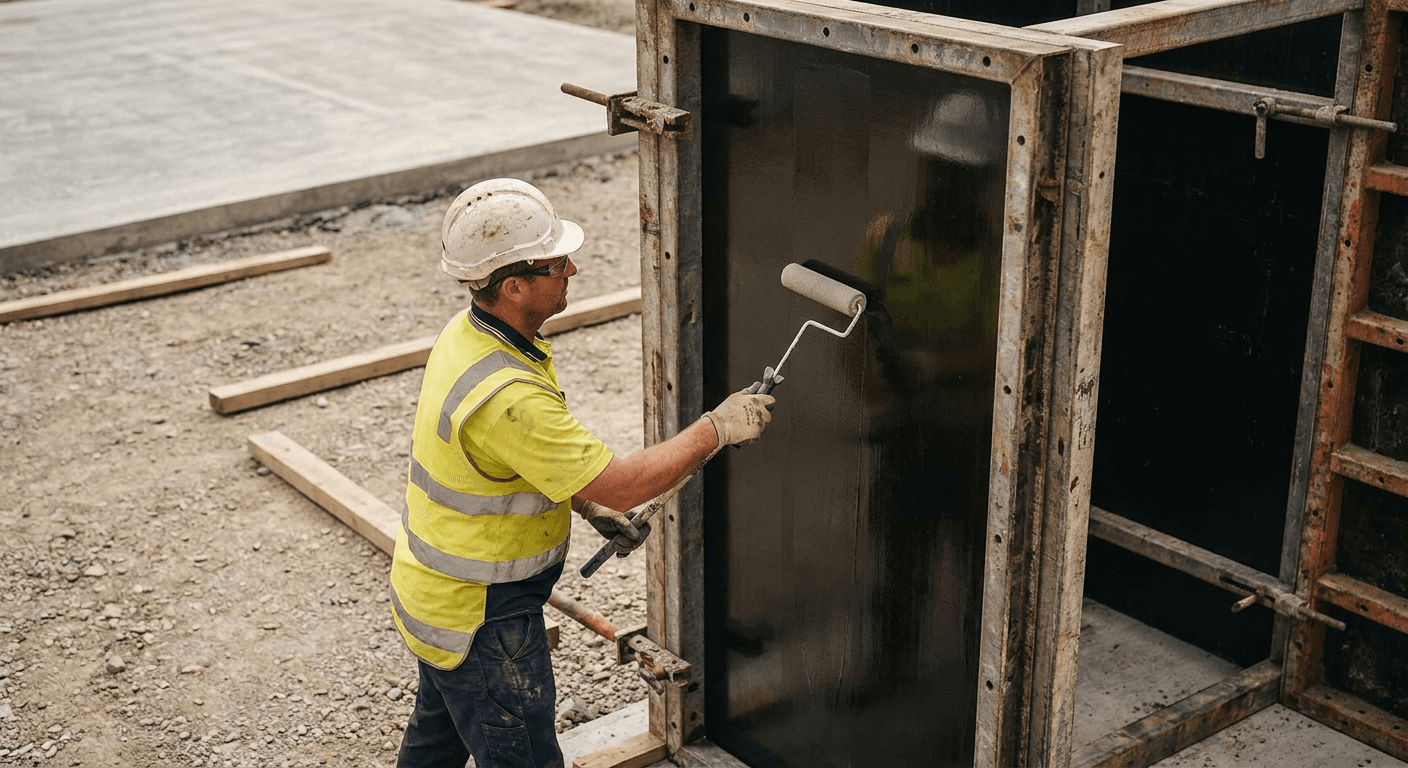
Form Release Agents Explained: How Release Chemistry Meets the Plywood Form Face
A concrete form release agent is the coat between wet concrete and the plywood form face. Here is how barrier and reactive chemistries differ, how VOC rules treat them, and why face type and release choice belong on the same RFQ line.

Industry Education
Plywood Delamination Explained: Glue-Line Failure, Bond Tests and What Buyers Should Ask
Plywood delamination is a glue line letting go between plies. Here is how PS 1 and EN 314 define and test it, how it differs from film peeling and veneer checks, and what bond evidence a buyer should ask a mill for.
Grades
Plywood Standards Cross-Reference Matrix (EN, BS, IS, JAS, AS/NZS, ASTM)
A side-by-side reference that lines up plywood bond, durability and formaldehyde classes across EN, BS 1088, IS 710/303, JAS, AS/NZS and US PS 1, so a foreign spec can be translated into what a Vietnamese mill can build and certify.
Compliance
EUDR Evidence Pack for Vietnamese Plantation Plywood
A plain-language reference on how a compliant EUDR evidence pack for Vietnamese plantation plywood typically works: Article 9 data, Circular 26/2022 origin dossiers, smallholder land tenure, the money trail without a seller e-invoice, and why the mill pack is not the DDS.