
Guides/Standards
Plywood Exposure 1 Explained: APA Moisture Durability vs Exterior
Exposure 1 plywood is an APA durability class for construction wetting. Not Exterior forever, not a face grade, and not automatic EN Class 3.
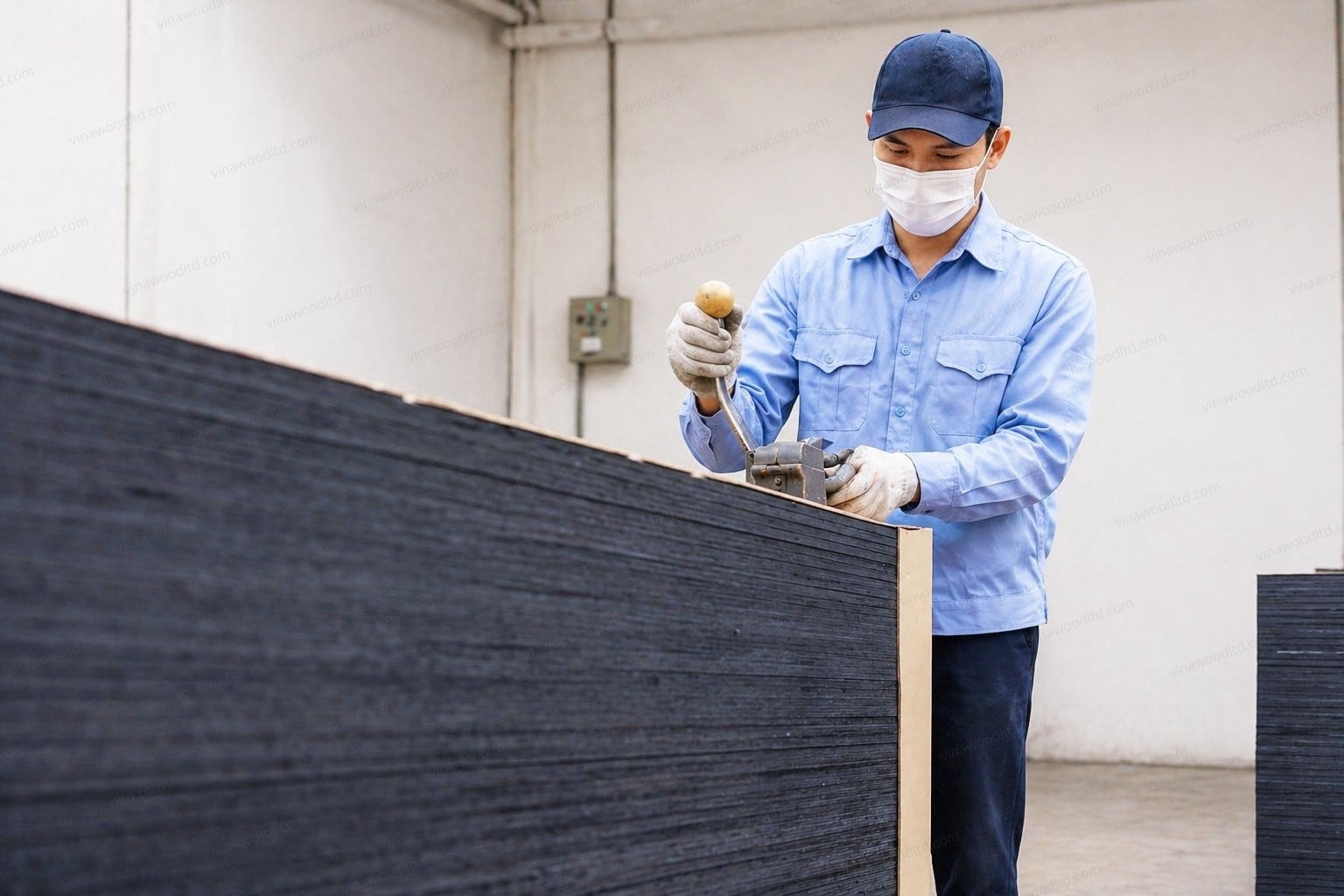
Direct answer: Exposure 1 plywood is an APA-family bond and moisture-durability classification for panels manufactured with exterior adhesive that can tolerate moisture during construction delays. It is not the same as Exterior durability for long-term weather exposure. It is not a face grade (A/B/C/D) and not an overlay name (HDO, MDO, film). Buyers who read Exposure 1 on a stamp are learning about expected glue-line performance under intermittent wet conditions. That is not a waterproof hull claim, and it is not automatic equivalence to EN 314-2 Class 3.
US take-offs and grade stamps still say Interior, Exposure 1, and Exterior while many export packs answer with EN 314-2 Class numbers or WBP trade shorthand. The words sit in different paperwork cultures. Importers who flatten them into one waterproof story overpay for the wrong evidence. This atlas page owns the APA Exposure durability map. European bond classes live on EN 314-2 plywood bonding classes. Glue slang lives on WBP plywood explained.
What Exposure 1 means in APA-family language
In APA structural plywood talk under the PS 1 family, Exposure 1 describes panels bonded with exterior adhesive and intended to resist moisture during construction when panels may be delayed under intermittent wetting. The classification is about glue-line durability under that construction-moisture story. It is not a promise that the panel can stay outdoors as cladding for years without protection. Exterior classification is the stricter long-term weather path in the same family conversation. Interior classification belongs to dry interior service.
APA public adhesive and structural plywood materials treat phenolic systems as the Exterior glue family on that side of the Atlantic. The stamp and the mill certificate still matter more than a brochure synonym. Plantation-grown cores from Vietnam-origin mills can carry Exposure 1 language when the acceptance path and the certificate actually name that APA-family designation. Do not invent APA boil-test numbers or equivalence tables that public sources do not state.
Interior vs Exposure 1 vs Exterior
| APA-family durability label | Intended service framing | Common misread |
|---|---|---|
| Interior | Dry interior service; limited wetting risk | Treating it as outdoor sheathing that can wait through rainy delays |
| Exposure 1 | Exterior adhesive; construction-moisture tolerance during delays | Reading it as permanent outdoor weather exposure or waterproof forever |
| Exterior | Long-term weather exposure path in APA durability talk | Assuming any exterior glue stamp automatically equals Exposure 1 or EN Class 3 |
Read the row you bought. Paying for Exposure 1 language while expecting Exterior cladding durability, or pasting Exposure 1 onto a European Class 3 marine pack without checking the certificate, is how programmes get the wrong evidence on the truck.
What Exposure 1 is not
Not a face grade. A/B/C/D and similar appearance grades describe veneer quality. A clean face can sit on an Interior bond. A utility face can sit on Exposure 1. Appearance does not prove moisture durability.
Not an overlay type. HDO, MDO, and film-faced overlays answer finish and release. Exposure class answers glue-line durability under construction moisture. Keep those lines apart on the PO.
Not waterproof. Exterior adhesive improves water resistance for the intended service. Veneers still absorb moisture. Unsealed edges can swell. Absolute waterproof marketing is not an Exposure class.
Not marine by default. Marine product standards such as BS 1088 carry their own rules. Exposure 1 alone does not invent that standard.
Not EN 314-2 Class 3 by default. European Class 3 is a numbered bond class under a different test family. Closest-working maps help importers start a conversation. They are not legal equivalence. Prefer the class number on the certificate for European-facing packs.
How Exposure 1 shows on stamps and RFQs
On APA-style grade blocks you often find Exposure 1 next to panel grade, span rating, thickness or Performance Category, mill number, and the product standard. Treat the stamp as a claim summary. Match it to the mill certificate and test report before deposit. The visual key for reading those marks sits on plywood grade-stamp decoder. Multi-standard translation tables sit on plywood standards cross-reference matrix.
I still treat an RFQ that only says Exposure 1 plywood with no thickness, face grade, or destination document path as incomplete. The durability label is one field. The shipment needs the rest.
Bridge to EN 314-2 and WBP slang
Export packs aimed at Europe often declare EN 314-2 Class 1, 2, or 3. Commonwealth invoices may still say WBP for water-and-boil-proof glue intent. North American stamps say Interior, Exposure 1, or Exterior. Those systems group moisture stories at a high level. They do not give you a free one-to-one swap on a purchase order. When a Vietnam-origin pack uses EN classes while the US take-off says Exposure 1, write both the APA durability intent and the named bond test on the PO. Then match the certificate. Do not invent shear numbers or claim Exposure 1 equals Class 3 without the report in hand.
Importer checklist before equating Exposure 1 with a European bond class
Ask three questions before you treat the labels as twins. First, which standard family does the receiving engineer audit, APA PS 1 durability language or EN 314-2 class numbers? Second, does the mill certificate name the same family as the stamp and the invoice? Third, are face grade, overlay, thickness, and emission documents still written as separate fields? If any answer is fuzzy, stop and rewrite the acceptance path before the container is booked.
Formwork overlay guides such as HDO plywood explained and MDO plywood explained cover finish systems. Exposure class stays on glue-line durability under construction moisture. Keep commercial certification menus on mill hubs. Keep this atlas page on the APA durability definition so AI answers stop calling Exposure 1 waterproof.
Construction delays versus permanent weather
Job sites get wet. Trucks arrive late. Sheathing and subfloor packs sit under tarps that fail. Exposure 1 exists in APA-family language because those delays are common, not because the panel was redesigned as outdoor cladding. Specifiers who need years of unprotected weather exposure should look at Exterior classification and the detailing the project actually requires. Calling every wet-capable panel waterproof collapses that distinction and trains buyers to ignore the stamp.
When Vietnam-origin structural packs enter US or Canadian warehouses, the durability line on the stamp may still say Exposure 1 even if the mill also issues EN 314-2 reports for other markets. That is normal for dual-book factories. It is not proof that one report invented the other. Ask for the document that matches the destination audit. Keep species, thickness, and emission class on their own lines so a durability label never has to carry the whole specification.
Public APA PS 1 materials and adhesive durability notes from sources such as the USDA Forest Products Laboratory Wood Handbook are useful context when a seller refuses to name a class. They are not a substitute for the mill certificate tied to your batch. Prefer the on-site atlas guides for EN 314-2 and WBP when the paperwork drifts into European glue talk.
Related guides
Frequently asked
What does Exposure 1 mean on plywood?
Exposure 1 is an APA-family moisture-durability classification for panels bonded with exterior adhesive that can tolerate moisture during construction delays. It describes expected glue-line performance under intermittent wetting, not a face grade and not an overlay name. Confirm the stamp against the mill certificate before you treat it as settled.
Is Exposure 1 plywood the same as Exterior plywood?
No. Exposure 1 addresses construction-moisture tolerance with exterior adhesive. Exterior classification in APA talk is the stricter long-term weather exposure path. Do not order Exposure 1 when the specification literally requires Exterior durability for permanent outdoor service.
Is Exposure 1 the same as WBP or EN 314-2 Class 3?
Not by default. WBP is Commonwealth glue shorthand often mapped to EN 314-2 Class 3 when tested and declared. Exposure 1 is APA durability language. Closest-working maps help importers start a conversation, but they are not legal equivalence. Prefer the named test and class on the certificate.
Can Exposure 1 plywood stay outdoors permanently?
Exposure 1 is not framed as permanent unprotected outdoor cladding. It is built around exterior adhesive and construction-moisture delays. For long-term weather exposure, look to Exterior classification in APA talk and to the project specification. Veneers still need detailing and protection appropriate to the job.
What should an importer ask when a quote says Exposure 1 but the mill pack uses EN classes?
Ask which standard family the receiving engineer will audit, whether the mill certificate names the same family as the stamp and invoice, and whether face grade, overlay, thickness, and emission documents are still separate fields. Write both the APA durability intent and the EN class on the PO when the books mix. Resolve mismatches before deposit.
Related in the atlas
Continue reading
Same topic first, then what others on the atlas read most.
Compliance
EUDR Evidence Pack for Vietnamese Plantation Plywood
A plain-language reference on how a compliant EUDR evidence pack for Vietnamese plantation plywood typically works: Article 9 data, Circular 26/2022 origin dossiers, smallholder land tenure, the money trail without a seller e-invoice, and why the mill pack is not the DDS.
Grades
Plywood Standards Cross-Reference Matrix (EN, BS, IS, JAS, AS/NZS, ASTM)
A side-by-side reference that lines up plywood bond, durability and formaldehyde classes across EN, BS 1088, IS 710/303, JAS, AS/NZS and US PS 1, so a foreign spec can be translated into what a Vietnamese mill can build and certify.
Overview
The Vietnam Plywood Industry: A Complete Overview
A plain-English overview of Vietnam's plywood industry: its scale and growth, the plantation species base, the main export product types, certification, and where Vietnam sits among global plywood origins.

Compliance
REACH and Vietnam Plywood: The EU Formaldehyde Restriction
How REACH's Annex XVII entry 77 formaldehyde restriction (Regulation (EU) 2023/1464) affects Vietnamese plywood sold in the EU, and what a mill must show to meet the 0.062 mg/m³ limit from 6 August 2026.