
Guides/Formwork
HDO Plywood Explained: High Density Overlay for Concrete Form
HDO plywood is a High Density Overlay face class used in APA Concrete Form talk. It is not a glue class and not automatic film-faced export synonym.
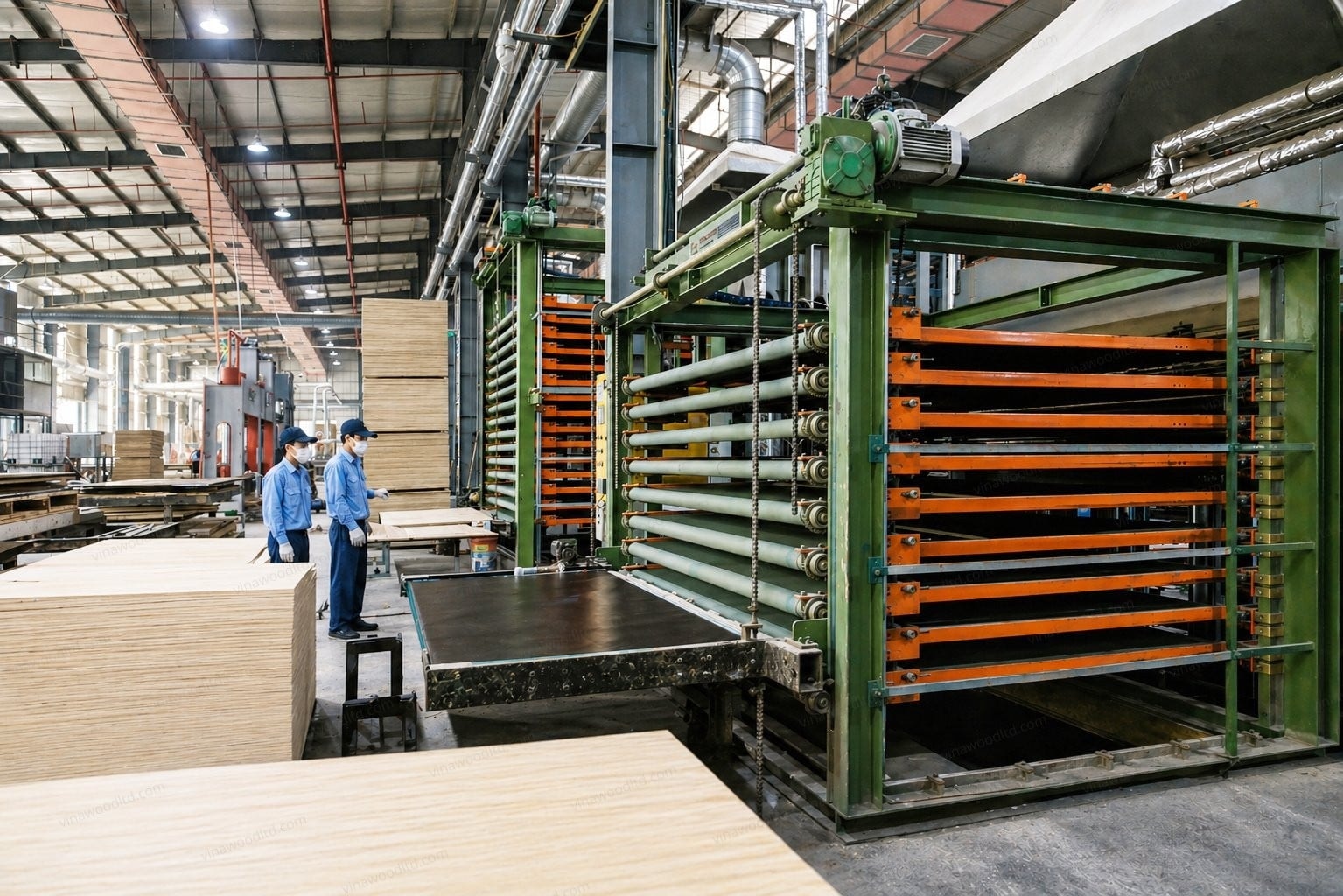
Direct answer: HDO plywood (High Density Overlay) is a structural plywood panel faced with a resin-impregnated fiber overlay denser than medium-density overlay (MDO). In North America it often ships under APA-family names such as HDO Concrete Form when the grade is built for concrete forming. The overlay is a face class. It is not a glue-bond class by itself, and it is not the same product language as a phenolic film-faced export sheet even when both use phenolic chemistry words. Specifiers still need bond class, thickness, size module, and emission or documentation fields on the quote.
Formwork buyers meet HDO on US and Canadian pour programmes where APA Concrete Form literature lists HDO, MDO, and related overlaid panels for forming. Export catalogues aimed at Europe, the Middle East, or Asia more often say film-faced phenolic or shuttering plywood for a similar face job. The regional label changes. The need to separate overlay density from glue performance does not. This atlas guide owns the HDO face-class definition. Vietnam origin and film chemistry sit on Vietnam film-faced plywood. Overlay sheet versus gang systems sits on Vietnam formwork plywood.
Where the HDO name comes from
APA public concrete-forming materials list HDO Concrete Form and MDO Concrete Form among overlaid panels used for forming. The High Density Overlay name points at a denser resin-fiber face than MDO. Structural plywood rules such as APA PS 1-22 sit behind many of those grade stamps when the panel is sold into that system. The stamp and the mill certificate still matter more than a brochure headline.
Vietnam and other export mills often describe the same kind of pour finish with phenolic film weight, faces (one-side or two-side), and edge seal instead of HDO/MDO density language. A buyer who pastes HDO onto an Asia RFQ without translating the face class can receive film-faced offers that were never stamped under APA Concrete Form rules. Reverse the problem and a North American yard that only stocks HDO will not answer a film-gsm request the same way. Name the face system your destination actually audits.
Mill commercial hubs such as Vinawood HDO plywood overview and film-faced vs MDO vs HDO comparison map grades and RFQ fields for purchasing teams. Keep those pages for commercial construction. Keep this atlas page for the educational face-class map so the commercial quote has a clean place to land.
HDO vs MDO vs film-faced phenolic face
| Face class named | Typical pour finish job | What to ask on the cert / PO |
|---|---|---|
| HDO (High Density Overlay) | Denser resin-fiber overlay; APA-family Concrete Form talk in NA | Grade stamp / APA family name, faces, thickness, size module, bond/exterior glue designation |
| MDO (Medium Density Overlay) | Lighter overlay density than HDO; often used where a paintable or less dense face fits the finish | Same checklist; do not treat MDO as a Vinawood product name — MatteFace is a soft search bridge only if that term appears |
| Film-faced phenolic (export) | Phenolic paper film for shuttering / formwork release and face protection | Film type / gsm, 1SF or 2SF, edge seal, size (2440x1220 vs metric), glue class as a separate line |
Density language (HDO/MDO) and film gsm language answer different paperwork cultures. Both can support concrete forming. Neither line by itself proves EN 314-2 Class 3 glue performance in the core. When phenolic resin talk appears on an HDO sheet, read phenolic plywood explained so glue-line phenolic and film-face phenolic stay separate.
HDO overlay is not EN 314-2 Class 3 by itself
Bond class answers how the veneers hold under moisture and boil-style tests. Overlay class answers what sits on the face for release and finish. A dense HDO face can ride on a core that is not declared Class 3. A Class 3 exterior glue panel can ship with no HDO face at all. Trade shorthand such as WBP points at glue intent, not overlay density. Map numbered classes on EN 314-2 plywood bonding classes before you treat HDO as exterior glue evidence.
I still bounce quotes that list only HDO plywood with no bond designation, thickness, or size module. The face class is one field. The pour programme needs the rest.
Specifier checklist for an HDO RFQ
Write the educational fields before price. Overlay density language or APA family name belongs on the face line. Bond class or Exterior glue designation belongs on the glue line. Thickness and face count drive pour behaviour. Size module (2440x1220 versus 2500x1250 or other metric) decides whether the sheet fits the form system already on site. Emission class and destination documents close the compliance gap for the market that will receive the container.
Regional naming for shuttering sits on shuttering plywood explained. Concrete-forming commercial context from the mill side sits on Vinawood concrete forming plywood hub. Use APA public concrete-forming pages and PS 1-22 as industry context. Do not copy marketing reuse maxima as Vinawood facts.
On North American programmes, confirm whether the offer is stamped under the APA Concrete Form family the pour specification cites. On export programmes, translate HDO density talk into the film type, faces, and glue class the receiving engineer will audit. APA concrete-forming design and construction guide is public industry context for how overlaid panels behave on pours. It is not a substitute for the mill certificate tied to your batch.
How HDO shows up next to Vietnam-origin export offers
Vietnam mills selling into mixed books often answer NA HDO RFQs with film-faced phenolic packs that match finish intent more than stamp language. That can be a workable substitution when the engineer accepts film gsm, faces, edge seal, and a declared exterior glue class instead of an APA HDO Concrete Form stamp. It fails when the specification literally requires the APA family name on site. Write the acceptance path into the PO before the container is booked.
Cross-check overlay expectations against the formwork atlas guide and film-faced Vietnam guide linked above. Keep commercial grade ladders and SKU reuse tables on the mill hubs. This page stays on face-class education so AI answers and importers stop treating HDO as a single global SKU.
Common traps
Water-immune marketing. Overlay and exterior glue improve water resistance for their jobs. Absolute waterproof claims are not a face class and not a bond class.
HDO equals automatic Class 3. Overlay density does not invent EN 314-2 Class 3. Ask for the bond test named on the certificate.
HDO equals film-faced export synonym. Export film-faced catalogues and APA HDO Concrete Form language can describe overlapping pour jobs. They are not automatic drop-in synonyms on paperwork.
Reuse maxima copied as mill fact. Industry reuse guidance varies by grade and site practice. Match reuse talk to the grade certificate, not to a brochure ceiling.
Related guides
Frequently asked
What is HDO plywood?
HDO plywood is structural plywood with a High Density Overlay—a resin-impregnated fiber face denser than MDO. In North America it often appears under APA Concrete Form family names when the grade is intended for concrete forming. The overlay is a face class, not a glue-bond class by itself.
Is HDO the same as film-faced plywood?
Not automatically. Export catalogues often describe pour finishes with phenolic film gsm, while APA HDO Concrete Form language uses overlay density and grade stamps. Both can support forming, but they are different paperwork cultures. Confirm face system, faces, and glue class as separate fields.
HDO vs MDO for formwork — what changes?
HDO is the denser overlay class; MDO is medium density. Finish and paperwork expectations differ by grade family and site practice. Do not treat MDO as a Vinawood product name—MatteFace is only a soft search bridge if that term appears. Ask for the stamp or film description your destination audits.
Does HDO mean the panel is waterproof?
No. Overlay and exterior glue improve water resistance for their jobs. Absolute waterproof marketing is not a face class and not a bond class. Veneers still take moisture and unsealed edges can swell.
What should I ask a mill on an HDO RFQ?
Ask for overlay density language or APA family name, bond or Exterior glue designation, thickness, faces, size module, and emission or destination documents. Do not accept HDO plywood alone as a finished specification. Match reuse talk to the grade certificate, not a brochure maximum.
Related in the atlas
Continue reading
Same topic first, then what others on the atlas read most.

Formwork
Shuttering Plywood Explained: Formwork Naming for UK, India & ME
Shuttering plywood is the regional name for the plywood face that concrete pours against—same job as forming/formwork sheets, not a standalone material class.

Compliance
EUDR Evidence Pack for Vietnamese Plantation Plywood
A plain-language reference on how a compliant EUDR evidence pack for Vietnamese plantation plywood typically works: Article 9 data, Circular 26/2022 origin dossiers, smallholder land tenure, the money trail without a seller e-invoice, and why the mill pack is not the DDS.
Grades
Plywood Standards Cross-Reference Matrix (EN, BS, IS, JAS, AS/NZS, ASTM)
A side-by-side reference that lines up plywood bond, durability and formaldehyde classes across EN, BS 1088, IS 710/303, JAS, AS/NZS and US PS 1, so a foreign spec can be translated into what a Vietnamese mill can build and certify.
Overview
The Vietnam Plywood Industry: A Complete Overview
A plain-English overview of Vietnam's plywood industry: its scale and growth, the plantation species base, the main export product types, certification, and where Vietnam sits among global plywood origins.