
Guides/Formwork
Plywood Edge Sealing Explained: Why Formwork Panel Edges Fail First and How Sealing Works
Why plywood edges soak up water faster than faces, what edge sealant on film-faced formwork panels does, why cut edges need resealing and how to check it.
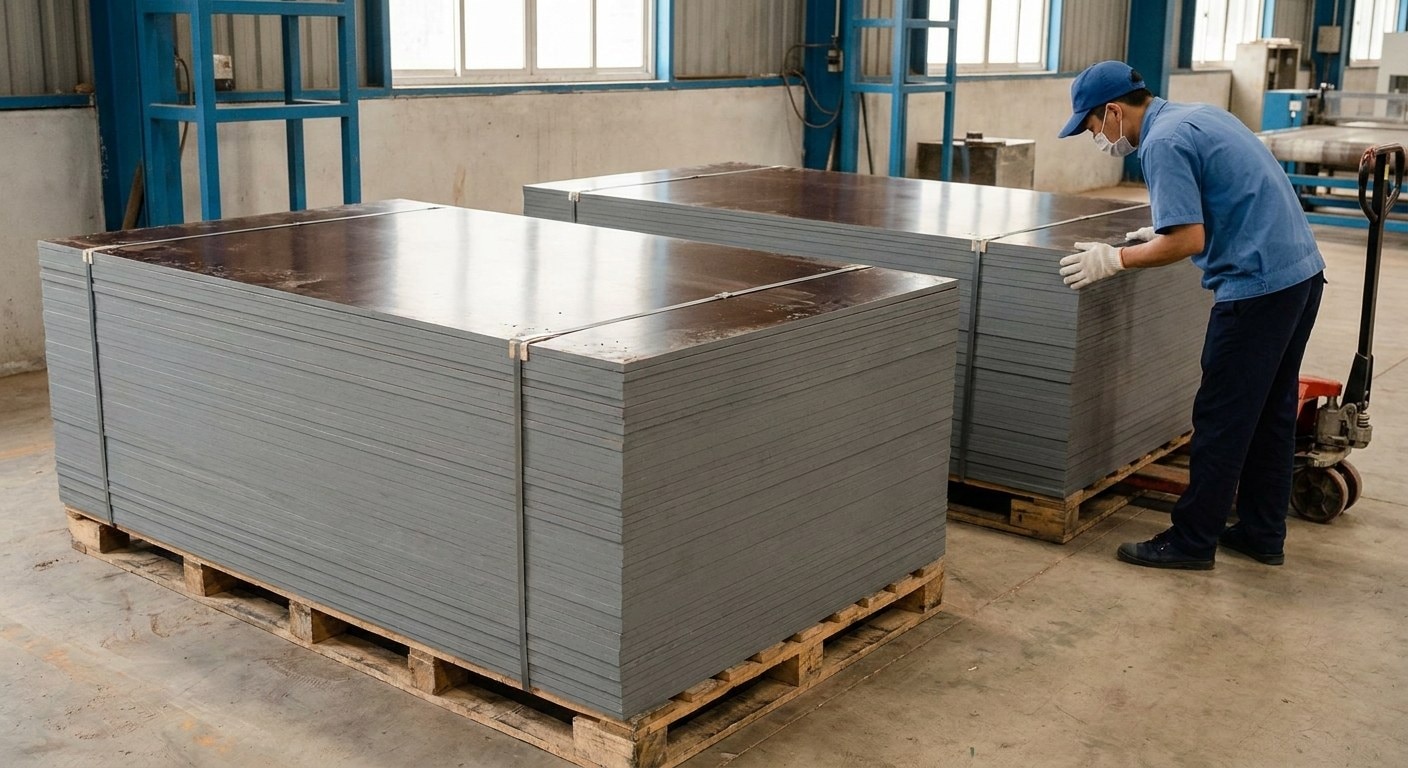
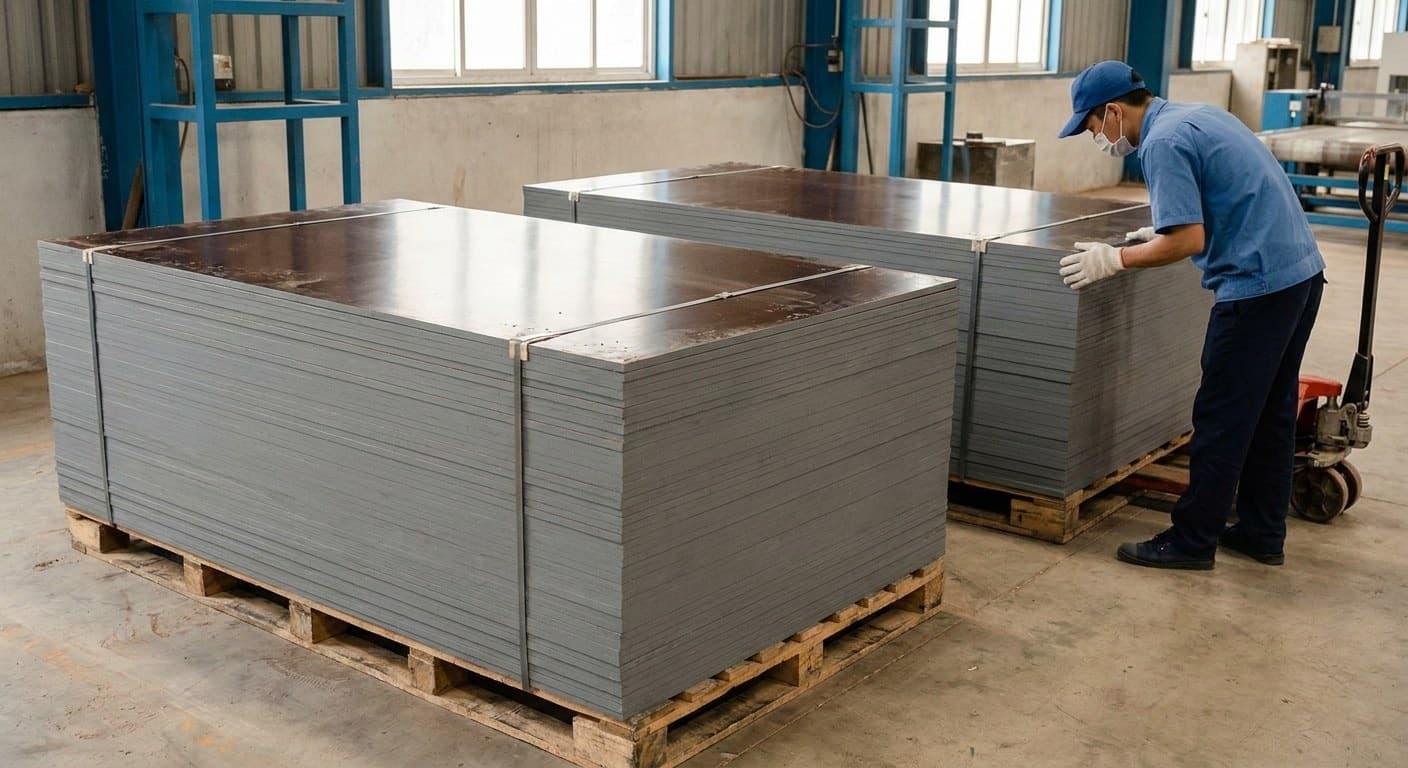
Want to know if a form panel is past it? Don't look at the face. Run your thumb down the edge. On a sheet that's seen one pour too many, that's where the damage shows up first. Soft, a bit hairy, the outer plies puffed out, and the film starting to peel back at a corner. Meanwhile the face can look almost fine.
So yes, edge sealing matters, even if it looks like a stripe of paint someone added to make the stack pretty. The question tends to come up from yards and importers right after a batch of panels has swollen on site. Below we go through why edges soak up water so much faster than faces, what a sealant really does (and what it doesn't), and what we'd check when a delivery comes in.
Why the edge is the weak point on a form panel
Plywood edge sealing is a coat of paint, resin or sealant put on the cut edges of a panel so water can't wick into the exposed end grain of the veneers and the glue lines between them. On film-faced and phenolic formwork panels the two faces are already covered by resin film. The four edges are not. So the edges are where water gets in.
Picture wood as a bundle of drinking straws, glued side by side. Water runs down a straw easily. Getting through the wall of one is much slower, and the USDA's Wood Handbook says as much in more scientific language. Now, plywood stacks its veneers crosswise. That means every edge of the sheet shows you a few plies cut straight across the straws. Bare end grain. Leave it like that next to wet concrete and it'll suck water up for as long as it can.
APA (the Engineered Wood Association) puts it bluntly in its finishing advice: panel edges and ends take on moisture faster than faces, so seal them. On a formwork job the water comes from everywhere. Bleed water from the pour. Rain. The hose after stripping. That puddle the stack has been sitting in since Tuesday.
Waterproof glue doesn't make waterproof wood
Here's where people get tripped up. Most form ply is glued with an exterior-grade adhesive, it's sold as WBP or tested to EN 314-2 Class 3, and the buyer reasonably asks: if the glue's waterproof, why worry?
Because the glue isn't the bit that swells. A bond class only tells you the glue line survived the soak and boil tests in the standard. The wood on either side still drinks water, gets fatter, dries out and shrinks back, and the glue line sits in the middle taking the strain each time. Our EN 314-2 guide explains those bond tests, and the WBP explainer covers the older British label. Both are about glue. Sealing an edge is about the wood.
What goes on the edge, and why it's usually coloured
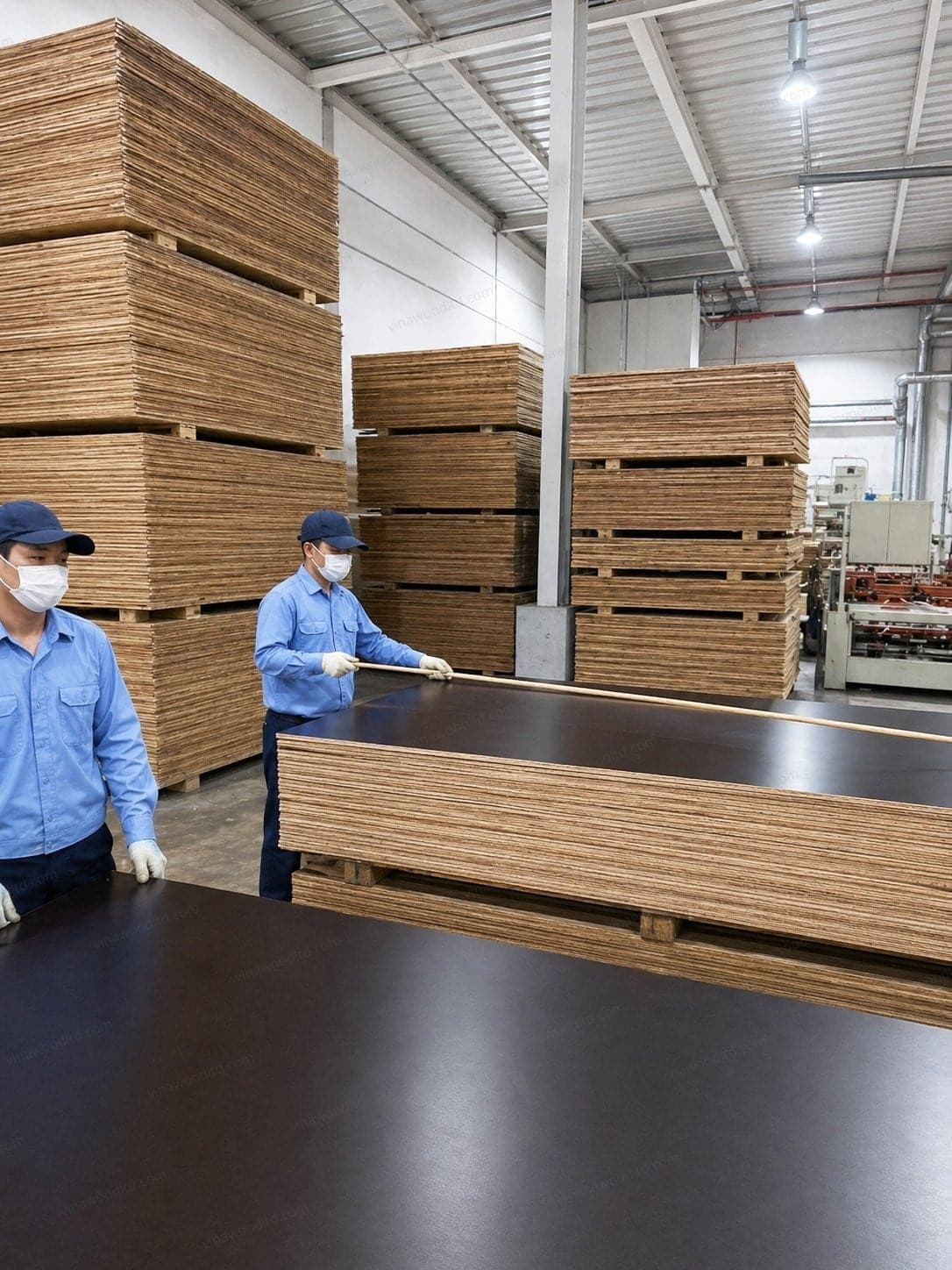
Most mills seal form panel edges with a water-resistant paint or coating. You'll mostly see acrylic or polyurethane-type products; a few use other resin or wax-based mixes. It goes on near the end of the line once the sheets are trimmed, sometimes rolled or sprayed across a whole stack at once, and dries before packing. If you want to see where that step sits, our walk-through of how Vietnam plywood is made covers the line from log to pallet.
Why the colour? Mostly so you can see it. Try checking a clear coat on dark brown ply by eye. You can't. Colour also helps yards tell lines apart when every sheet in the warehouse looks the same. The pigment does nothing for the protection, though. What you care about is a coat that's unbroken, actually stuck to the wood, and heavy enough to plug the end grain.
And don't expect miracles. APA is clear that a seal isn't permanent and won't make a panel moisture-proof. It slows water down and keeps the swelling more even. Over a long run of pours that's worth a lot. But it wears away, it chips the first time someone drops a sheet off the truck, and it's useless on an edge that never got painted.
Every saw cut and tie hole is a new raw edge
The factory seals four edges on a full sheet. Then the sheet gets to site. Someone cuts it down to fit round a column, trims a strip for an opening, drills it for ties. Every one of those cuts is fresh, unsealed end grain.
APA tells builders to reseal any edge cut after delivery, and good formwork crews do the same thing before a cut panel goes into the form. Brush or roller. One coat. Let it dry. That's it. It takes minutes. Skip it and we'd bet on that cut sheet being the first one to swell in the whole set, even if it was the nicest panel on the truck.
Holes get forgotten more than cuts. Picture a tie hole through a film-faced sheet: a little ring of raw veneer and glue, right where the concrete is wettest. Seal the bore if you can, or use sleeves where your tie system allows it.
From a wet edge to delamination
Panels rarely fail overnight. The outer plies swell first, so the edge rises a hair above the face. You won't notice until the next pour, when that little ridge prints a line onto the concrete at every joint, or opens a gap and lets grout leak out.
Wet, dry, wet, dry. Each cycle pushes harder on the glue lines closest to the edge, and sooner or later one lets go. The film lifts. Now water gets under the face too, not just into the core. That's delamination, and our plywood delamination explainer covers the other routes to it. Sealing won't make a panel immune. What it does is slow things down right where the trouble usually starts.
It's also why reuse numbers come with fine print. When a supplier says a panel is good for up to a certain number of pours, they're assuming sealed and resealed edges, release agent on every pour, and sensible handling and storage. Strip out the sealing and the same panel won't get there.
Sun, frost and long gaps between pours
Site climate counts for more than you'd guess. Hot and humid? Panels get soaked at the pour and then cook on the deck the next afternoon. Those fast swings are rough on the outer plies, and an edge with a thin, patchy coat gives up sooner there than it would somewhere mild.
Cold sites are a different story. Say water has already crept into a bare edge, and the night drops below zero. Ice needs more room than water. So it shoves the fibres and glue lines apart from inside, just a bit, every frost. One night won't show. A whole winter of them, though, and that edge goes spongy and starts splitting along the plies.
And then the stack nobody's using. Sheets stood on end in a puddle, or laid flat under a tarp that sweats underneath, keep taking up water at the edges for weeks. Get them off the ground. Let air through. Cover the top, but don't shrink-wrap them airtight. Honestly that does more for the edges than a second coat of paint ever will, because sealing buys time and storage decides how much of it you actually get.
| Edge condition | What moisture does | What to check |
|---|---|---|
| Factory sealed, intact | Slow uptake, small even swelling | Unbroken colour on all four edges, corners covered |
| Cut on site, left bare | Fast uptake at the end grain, outer plies swell | Bare wood at the cut, fuzzy fibres, ridges at joints |
| Cut on site, resealed | Close to a factory edge while the coat lasts | Coat dry before use, nothing missed at corners or holes |
| Seal chipped or worn | Water gets in at the chips and travels along glue lines | Knocked corners, film lifting near the edge, soft spots |
Checking edge sealing when panels arrive
No lab needed. Pull three or four sheets from different packs, take them somewhere with decent light, and sight down each edge. You want colour the whole way along, no bare bits, and a coat that wraps over the corners instead of stopping short. Scratch it with a fingernail. Good sealant stays put; a dusty skin of dried paint flakes straight off.
Check that the colour is even from one sheet to the next as well. Within a single product it should be. If one pack looks patchy or thin, ask the supplier about it before you sign for the rest. Corners get a second look from us every time, since that's where the coat is thinnest and where forklifts and straps do their damage.
It's worth sorting a few things in writing before you order, too. What's the sealant type? One coat or two, and is it on before or after final trimming? Will they ship a tin of touch-up sealant for your site cuts? How quickly and clearly a panel maker answers that tells you plenty. Our phenolic plywood explainer runs through the face and glue questions to ask alongside.
For the full site routine around a panel, from release oil to cleaning and storage, Vinawood's mill blog keeps a formwork panel care guide. The Vietnam Plywood Atlas is published by Vinawood with a transparent mill affiliation; this page keeps to the reasons edges fail and what sealing changes.
Frequently asked
Why do plywood edges need sealing if the glue is waterproof?
Because the glue is not the part that swells. An exterior bond class shows the glue line survives soaking and boiling tests, but the wood on either side still takes up water through its end grain, swells and shrinks again. Repeated swelling strains the glue lines nearest the edge, so sealing protects the wood that the glue cannot.
Is film-faced plywood sealed on the edges?
Film-faced formwork plywood is normally edge sealed at the mill, usually with a coloured water-resistant paint or coating applied after the sheets are trimmed. The film protects only the two faces, so the edge coat covers the four sides. Check on delivery that the coat is continuous, covers the corners and is firmly bonded.
Should cut edges of formwork plywood be resealed?
Yes. Every saw cut and drilled tie hole exposes raw end grain that has never been sealed, and APA advises resealing edges cut after delivery. A coat of edge sealant applied and left to dry before the panel goes into the form keeps a cut panel from becoming the first to swell.
What is used to seal plywood edges?
Form panel edges are usually sealed with water-resistant paints or coatings, commonly acrylic or polyurethane-type products, and some mills use other resin or wax-based mixes. The colour mainly makes the coat visible and helps identify product lines. What matters for protection is an unbroken, well-bonded coat that closes the end grain.
Does edge sealing stop delamination?
Edge sealing does not make a panel immune to delamination, but it slows the process where it usually begins. Water entering bare edges swells the outer plies and, over repeated wet and dry cycles, strains the glue lines until one fails. Keeping edges sealed, using release agent and handling panels carefully all help a panel reach its supplier-stated reuse range.
Why are formwork panel edges painted a colour?
The colour makes the sealant easy to see, since a clear coat on dark plywood is almost impossible to check by eye. Mills and yards also use edge colours to tell product lines apart. The pigment itself adds no protection; coverage and adhesion do.
Related in the atlas
Continue reading
Same topic first, then what others on the atlas read most.
Formwork
Formply Explained: Australian F-Grade Formwork Plywood and AS 6669
Formply is the Australian and New Zealand trade name for concrete-formwork plywood ordered by F-stress grades such as F17 under AS 6669—not a waterproof claim and not APA MDO.
Formwork
MDO Plywood Explained: Medium Density Overlay for Concrete Form
MDO plywood (Medium Density Overlay) is a resin-fiber face class used in North American Concrete Form talk for matte pour finishes—not a glue class and not a waterproof certificate.
Formwork
Concrete Forming Plywood Explained: US Forming Language and Overlay Families
Concrete forming plywood is structural plywood used as the temporary mold face for wet concrete—not sheathing and not a gang frame. Here is the US naming map and overlay checklist.
Formwork
Fair-Faced Concrete Explained: Architectural Finish Classes, Specs and the Form Face
Fair-faced concrete is graded differently in every market. How the UK NSCS, US ACI classes, German Sichtbeton SB1 to SB4 and Australian AS 3610 define the finish, and what each asks of the formwork.