

Guides/Formwork
Concrete Forming Plywood Explained: US Forming Language and Overlay Families
Concrete forming plywood is the temporary mold face for wet concrete. Map US forming, film-faced, shuttering, and Formply without mixing overlay with glue.
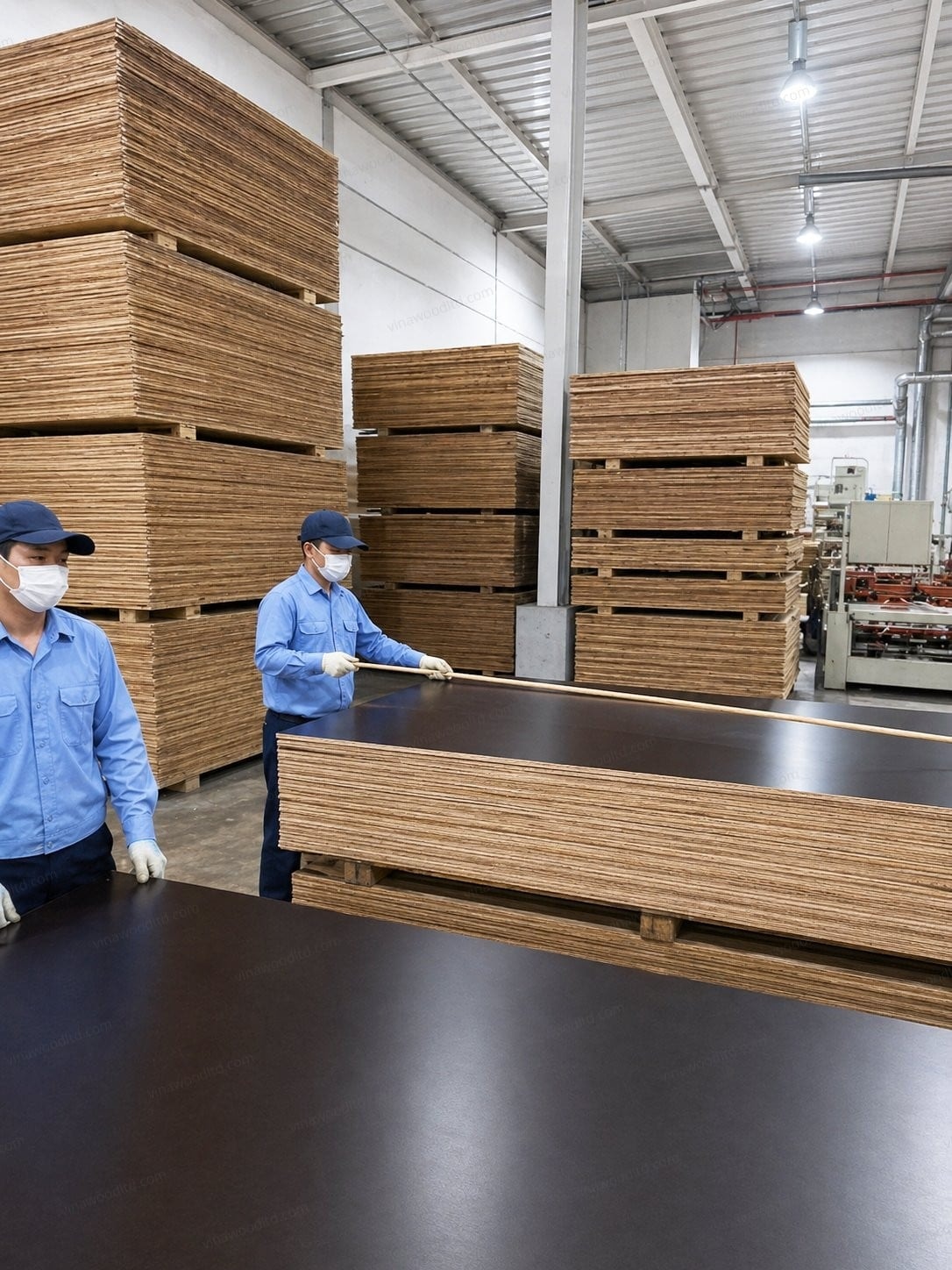
Direct answer: Concrete forming plywood (also searched as concrete form plywood or forming plywood) is structural plywood specified as the face of a temporary mold for wet concrete. It is not sheathing for roofs or walls, and it is not the steel or aluminum gang frame by itself. North America often uses forming, form, or plyform language. Export catalogues more often say film-faced. UK and India programmes say shuttering. Australia says Formply. Specifiers still separate overlay family (bare wood-face plyform, film-faced phenolic overlay, HDO, MDO) from bond class and from sheet module. Overlay is not glue class. Water-resistant glue language belongs on the PO. Absolute waterproof marketing does not.
Buyers type three synonyms for one temporary mold job because each market inherited a different paperwork culture. A US take-off that says forming plywood can land next to a Vietnam-origin offer that only lists film gsm. The pour pressure and the finish goal can match. The stamp language often does not. This atlas page owns the North American naming map and the overlay-family education that keeps those RFQs honest. Origin and system context sit on Vietnam formwork plywood. Regional twins sit on shuttering plywood explained and Formply explained.
What concrete forming plywood is — and is not
On site, the sheet takes the pressure of wet concrete, holds the face the architect will see after strike, and strips so the gang can move. That is the forming plywood job. The gang frame, walers, and ties are a separate system conversation. Roof sheathing and flooring panels can share structural plywood ancestors under APA PS 1 family rules, yet they are not ordered as pour faces. Confusing those product jobs is how a warehouse sends the wrong stack to a pour programme.
APA public concrete-forming materials describe overlaid and wood-face panels used for forming under structural plywood rules. The stamp and the mill certificate still matter more than a brochure headline. Plantation-grown cores from Vietnam-origin mills can answer forming programmes when overlay, bond, size, and documents are written as separate fields. Do not invent reuse maxima. Match reuse talk to the grade certificate and site practice.
Naming map: forming, film-faced, shuttering, Formply
| Regional name | What it mainly signals | Where to read next |
|---|---|---|
| US/CA forming / form / plyform | Temporary mold face language; often APA Concrete Form family talk | This page; APA concrete-forming public pages |
| Film-faced (export catalogues) | Phenolic paper film for release and face protection | Vietnam film-faced plywood |
| Shuttering (UK/India/Commonwealth) | Trade word for formwork plywood face job | Shuttering plywood explained |
| Formply (AU/NZ) | F-stress grades and AS 6669 branding culture | Formply explained |
None of these rows is an automatic synonym on paperwork. Overlapping pour jobs still need the face system, bond, thickness, and size your destination audits. Mill commercial hubs such as Vinawood’s concrete forming plywood page and film-faced plywood for concrete formwork guide map purchasing fields. Keep those pages for commercial construction. Keep this atlas page for the educational naming map.
Overlay families (education only)
Wood-face plyform and bare sanded forming faces still show up when the pour specification accepts a wood grain imprint or a later coating. Film-faced phenolic overlays dominate mixed export books because the resin paper helps release and protects the face through wet cycles. HDO names a denser resin-fiber overlay class in APA Concrete Form talk. MDO names a medium-density overlay often chosen when a matte pour finish is the goal. MDO stays a search and education token here. It is not a Vinawood product name. MatteFace is the protected commercial face name when a mill SKU conversation starts elsewhere.
Read density-class detail on HDO plywood explained and MDO plywood explained. Phenolic chemistry on faces versus glue lines sits on phenolic plywood explained. Overlay family answers finish and release. It does not invent a glue class.
Four independent fields on a forming RFQ
Write four lines before price. Overlay or face system belongs on the face line. Bond class or Exterior glue designation belongs on the glue line. Size module (for example 2440×1220 versus a metric module already on site) decides whether the sheet fits the form system. Emission class and destination documents close the compliance gap for the market that will receive the container. Thickness and faces ride with those fields. Trade shorthand such as WBP points at glue intent, not overlay density. Map numbered European classes on EN 314-2 plywood bonding classes and glue shorthand on WBP plywood explained.
I still bounce North American forming RFQs that list only “forming plywood” with no overlay family, bond designation, thickness, or size module. The mold-face word is one field. The pour programme needs the rest.
Common mix-ups
Phenolic face means Class 3 glue. A phenolic film protects the face. The core glue line still needs its own bond test and class on the certificate.
MDO search equals signage kraft MDO. Concrete Form MDO talk and signage or painting MDO talk are different paperwork cultures. Confirm forming intent on the PO.
Marine equals forming overlay. Marine product standards such as BS 1088 are not forming overlay names. Do not paste marine language onto a pour face RFQ as a synonym.
Waterproof forever. Exterior glue and overlays improve water resistance for their jobs. Veneers still take moisture. Unsealed edges can swell. Absolute waterproof marketing is not a forming grade.
How Vietnam-origin packs answer a US forming RFQ
Vietnam mills selling into mixed North American books often translate forming intent into film type, faces, edge seal, and a declared exterior glue class rather than an APA Plyform stamp. That substitution can work when the engineer accepts those fields as the pour acceptance path. It fails when the specification literally requires an APA Concrete Form family name on site. Write the acceptance path into the PO before the container is booked, and keep plantation-grown species lines honest on the commercial pack.
When the destination mixes US forming language with European glue talk, put both on the quote. Name the overlay family the pour finish needs. Name the bond test the receiving auditor will open. Size module errors are quiet killers. A metric sheet that almost fits a 2440×1220 gang still costs a day on site. Emission and formaldehyde documents close the door for markets that will not unload without them.
Commercial grade ladders and SKU menus stay on mill hubs. Educational overlay siblings already listed above stay on the atlas. Reciprocal cites exist so purchasing teams can jump to RFQ construction without cloning the same outline twice. Distinct intent protects both domains from looking like duplicate pages in search.
Related guides
Frequently asked
What is concrete forming plywood?
Concrete forming plywood is structural plywood specified as the face of a temporary mold for wet concrete. It holds pour pressure and the off-form finish, then strips so the gang can move. It is not roof sheathing and not the steel or aluminum frame by itself. Overlay, bond class, thickness, and size still belong on the quote.
Is concrete forming plywood the same as formwork, shuttering, or Formply?
They can describe overlapping pour jobs, but they travel with different RFQ cultures. Forming and plyform are common North American words. Shuttering is the UK and India trade word. Formply is Australian and New Zealand language tied to F-grades and AS 6669. Translate the paperwork your destination audits rather than treating the names as drop-in synonyms.
What is the difference between forming plywood and film-faced plywood?
Forming plywood names the mold-face job. Film-faced plywood names a phenolic paper overlay used on many export formwork offers. Many forming programmes use film-faced sheets, yet wood-face plyform, HDO, and MDO also appear in North American Concrete Form talk. Confirm face system and glue class as separate fields.
Does a phenolic face mean Class 3 or WBP glue?
No. A phenolic film is a face overlay for release and protection. Bond class answers how the veneers hold under moisture tests. Ask for the numbered class or Exterior glue designation on the mill certificate. Map European classes on the atlas EN 314-2 guide and glue shorthand on the WBP guide.
What specs belong on a forming-plywood quote besides forming plywood?
Ask for overlay or face system, bond class or Exterior glue designation, thickness, faces, size module, and emission or destination documents. Do not accept forming plywood alone as a finished specification. Match reuse talk to the grade certificate and site practice, not to a brochure maximum.
Related in the atlas
Continue reading
Same topic first, then what others on the atlas read most.

Formwork
Formply Explained: Australian F-Grade Formwork Plywood and AS 6669
Formply is the Australian and New Zealand trade name for concrete-formwork plywood ordered by F-stress grades such as F17 under AS 6669—not a waterproof claim and not APA MDO.

Formwork
HDO Plywood Explained: High Density Overlay for Concrete Form
HDO plywood (High Density Overlay) is a denser resin-fiber face class used in North American Concrete Form talk—not a glue class and not a waterproof certificate.

Formwork
MDO Plywood Explained: Medium Density Overlay for Concrete Form
MDO plywood (Medium Density Overlay) is a resin-fiber face class used in North American Concrete Form talk for matte pour finishes—not a glue class and not a waterproof certificate.

Formwork
Shuttering Plywood Explained: Formwork Naming for UK, India & ME
Shuttering plywood is the regional name for the plywood face that concrete pours against—same job as forming/formwork sheets, not a standalone material class.