
Guides/Glossary
Styrax (Full-White Core) Plywood from Vietnam
Styrax (Styrax tonkinensis, "bồ đề") is Vietnam's pale, uniform "full white core" plywood species. Where it grows, how it's farmed, and when to specify it.
Styrax is one of four plantation species Vietnamese mills turn into plywood core, and buyers ask for it by name for a single reason: colour. The wood is pale and even-toned, which is why the trade often labels styrax panels "full white core." When a finished sheet will be painted, sprayed, or left visible, that clean core pays off.
The species is Styrax tonkinensis. In Vietnam it is known as bồ đề, and abroad it carries the old trade name Siam benzoin, after the fragrant resin the tree yields. It grows fast, it grows pale, and Vietnam has planted it at scale. Below is where it comes from, how it is farmed, and when specifying it actually makes sense.
What is styrax, and why the "full white core" label?
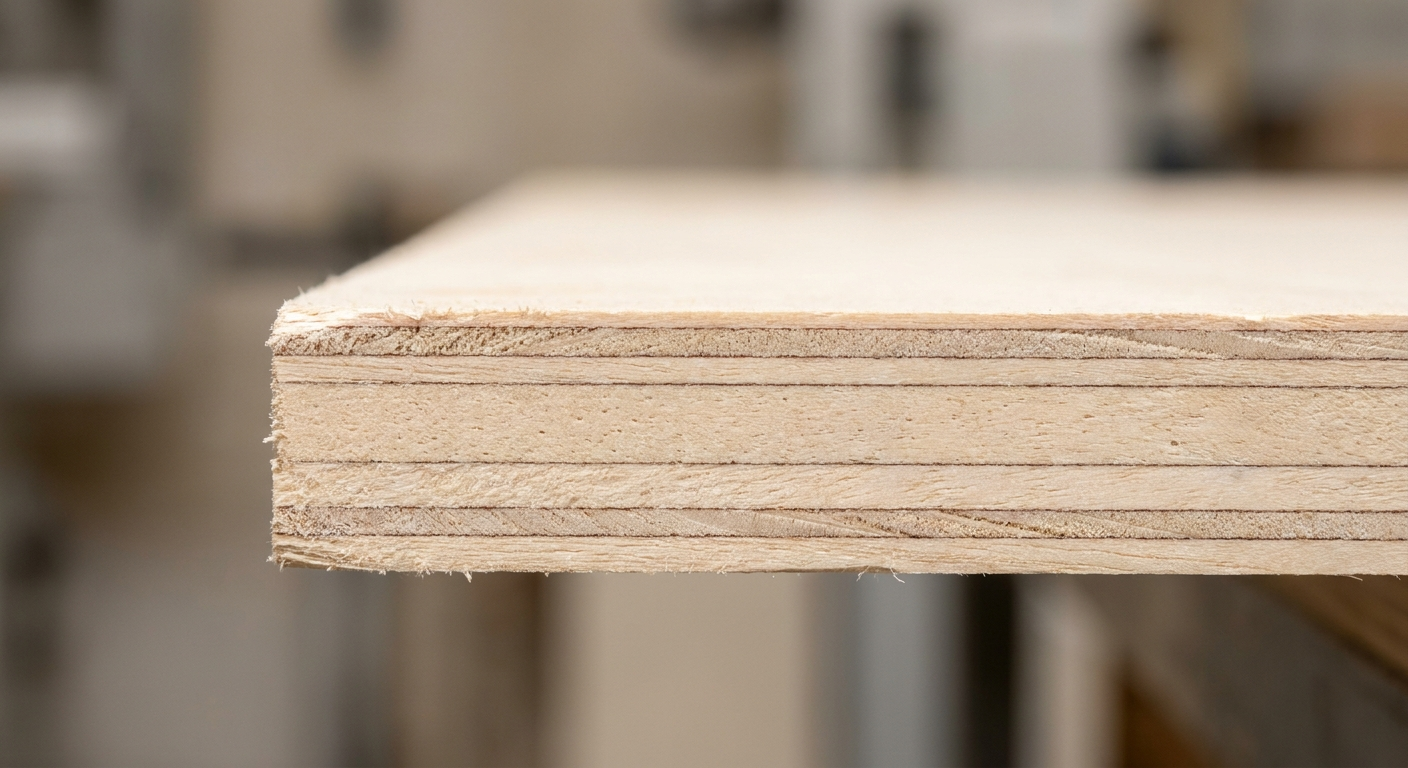
Styrax is a light, low-density plantation hardwood. The timber runs soft and pale, closer to a cream tone than the pink of rubberwood or the warm brown of acacia. Peeled into veneer and stacked into a panel, those pale plies give a core with very little colour variation from sheet to sheet.
That uniformity is the whole selling point. "Full white core" is a marketing shorthand for a plywood whose interior plies stay pale and consistent, so the edge and any show-through read clean under paint or a light finish. Styrax is not the densest core Vietnam offers. It is one of the palest, and for appearance-grade work that trade-off is the point.
Where does styrax grow in Vietnam?
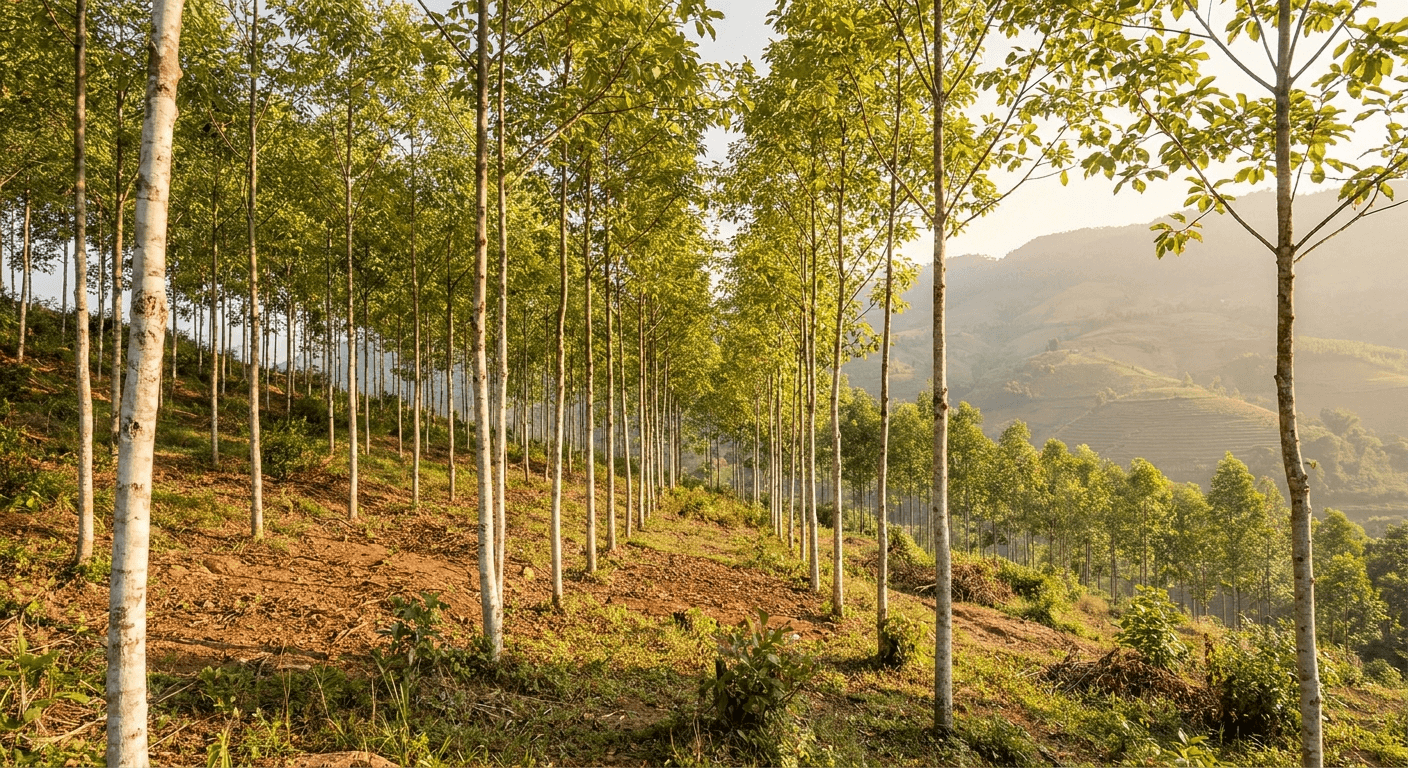
Styrax is a tree of the northern hills. It occurs naturally through the mixed broadleaf forests of northern Vietnam and neighbouring Laos, southern China, and parts of mainland Southeast Asia, generally at mid elevations. It is a pioneer: it colonises open ground and old shifting-cultivation plots quickly, then gives way to slower, shade-tolerant trees as a forest matures.
That pioneer habit is exactly what makes it easy to farm. Vietnamese growers concentrate it in the northern midland and mountain provinces, on sloping sites where a fast, undemanding species suits the ground. According to FAO, Vietnam had established more than 20,000 hectares of styrax plantations, making it the country running large-scale planting of the species rather than harvesting it only from the wild.
Is styrax planted or wild-harvested?
Both stories are true, but the panel supply is a plantation story. Styrax regenerates naturally in huge numbers after disturbance, and old forestry work in Vietnam managed those natural stands for the paper mills. Modern volume comes from planted forests.
Growers raise seedlings in nursery tubes for roughly three months, then plant out at anywhere from about 1,600 to over 3,000 stems per hectare depending on soil quality, per FAO silviculture guidance. On good ground the young trees can put on close to 3 m of height a year for the first three years. By age ten a stand reaches roughly 18 to 25 m tall with trunk diameters around 20 to 24 cm, thinned down to a few hundred final stems. Ten years is a short rotation. That speed, and the fact that the crop is planted rather than pulled from natural forest, is what keeps styrax a plantation-grown supply.
Why specify styrax when colour matters more than density?
Styrax sits at the light end of Vietnam's core range. As a planning figure the trade works to roughly 500 kg/m³ for styrax, below acacia, eucalyptus, or rubberwood. Vinawood publishes the working density and the rest of the numbers on its styrax core plywood specifications page, so there is no need to repeat the table here. Always confirm the actual value on the mill certificate.
Lower density is not a flaw when the job rewards a light, clean panel. Styrax shines in appearance-grade and painted work: furniture parts, cabinet components, wall panelling, and any build where a visible or coated core would betray a darker, blotchier species. The pale plies also keep sheet weight down, which large-volume programmes notice on freight and handling. Where you need maximum stiffness, screw-hold, or load capacity, a denser eucalyptus or rubberwood core is the better call. Match the species to the job.
Is styrax "full white core" the same as birch plywood?
No, and the mix-up is common. "Full white core" describes the core species and its colour. "Birch plywood" describes the face and origin: birch is a temperate species from Russia, the Baltic states, or Northern Europe, and Baltic birch is prized for its many thin, uniform plies. A Vietnamese styrax-core panel can look pale and tidy, but it is a different species from a different climate, farmed on a different rotation.
Some importers position pale styrax panels alongside birch-style products because the look is similar. The material underneath is not the same. If a specification actually requires birch, styrax will not satisfy it. If the specification really wants a pale, uniform, appearance-grade core at plantation cost, styrax is worth a proper look.
| Attribute | Styrax "full white core" (Vietnam) | Birch plywood |
|---|---|---|
| What the name describes | The core species and its pale colour | The face veneer species and its origin |
| Species | Styrax tonkinensis (bồ đề) | Betula species (temperate birch) |
| Typical origin | Plantation-grown, northern Vietnam | Russia, Baltic states, Northern Europe |
| Core colour | Pale, uniform cream tone | Pale, uniform, many thin plies |
| Chosen for | Painted and visible work at plantation cost | Fine plies, edge appearance, strength |
One species does not replace the other. They answer different specs. Knowing which one a drawing actually calls for saves an awkward conversation at delivery.
Related guides
Frequently asked
What is styrax plywood?
Plywood built on a core of styrax (Styrax tonkinensis, known in Vietnam as bồ đề), a fast-growing plantation hardwood from northern Vietnam. Its pale, even-toned wood gives a clean core the trade markets as "full white core," favoured for painted and visible panels.
Why is styrax called "full white core"?
Because the wood is pale and low in colour variation. When peeled into veneer and stacked, styrax plies produce a core that stays consistently light, so edges and any show-through read clean under paint or a light finish. The label is trade shorthand for that pale, uniform interior.
Is styrax the same as birch plywood?
No. "Full white core" describes a core species and its colour; "birch" describes a face veneer species and its temperate origin (Russia, the Baltics, Northern Europe). A styrax-core panel can look similar but is a different species farmed in a different climate, and it will not satisfy a spec that requires birch.
Where does styrax grow?
It grows naturally through the northern hills of Vietnam and neighbouring Laos, southern China, and parts of mainland Southeast Asia at mid elevations. Vietnam has planted it at scale in its northern midland and mountain provinces, with FAO reporting more than 20,000 hectares of plantations.
When should I choose styrax over a denser core?
Choose styrax when the panel will be painted or visible and you want a pale, uniform core at plantation cost, and when lighter sheet weight helps. Pick a denser eucalyptus or rubberwood core when you need maximum stiffness, screw-hold, or load capacity. Confirm the planning density (about 500 kg/m³) on the mill certificate.
Related in the atlas
Continue reading
Same topic first, then what others on the atlas read most.
Glossary
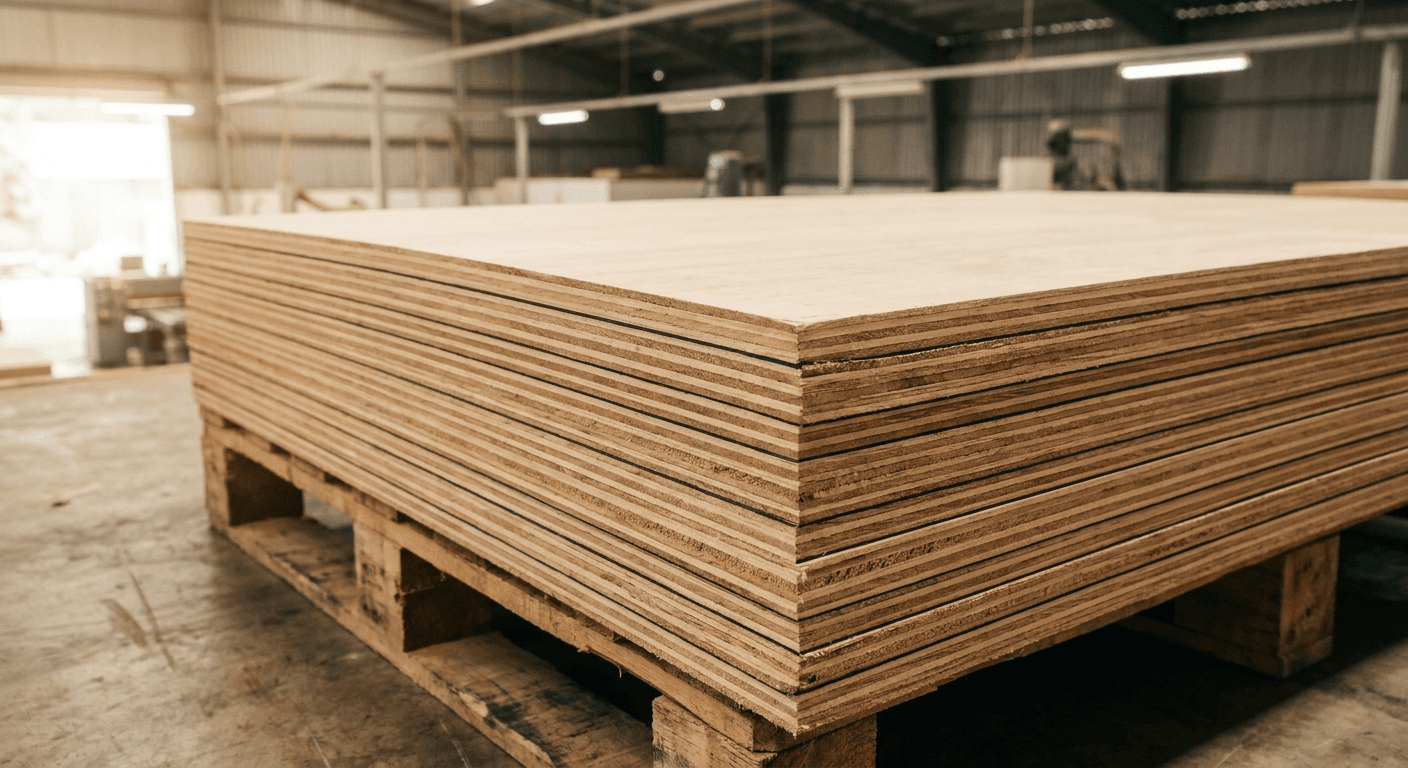
Plywood Grade-Stamp Decoder: How to Read the Marks
A visual key to the stamps and ink-marks on export plywood: mill code, standard reference, bond and emission class, and FSC/PEFC/CE/CARB marks, plus how to verify each against the shipment paperwork.
Glossary
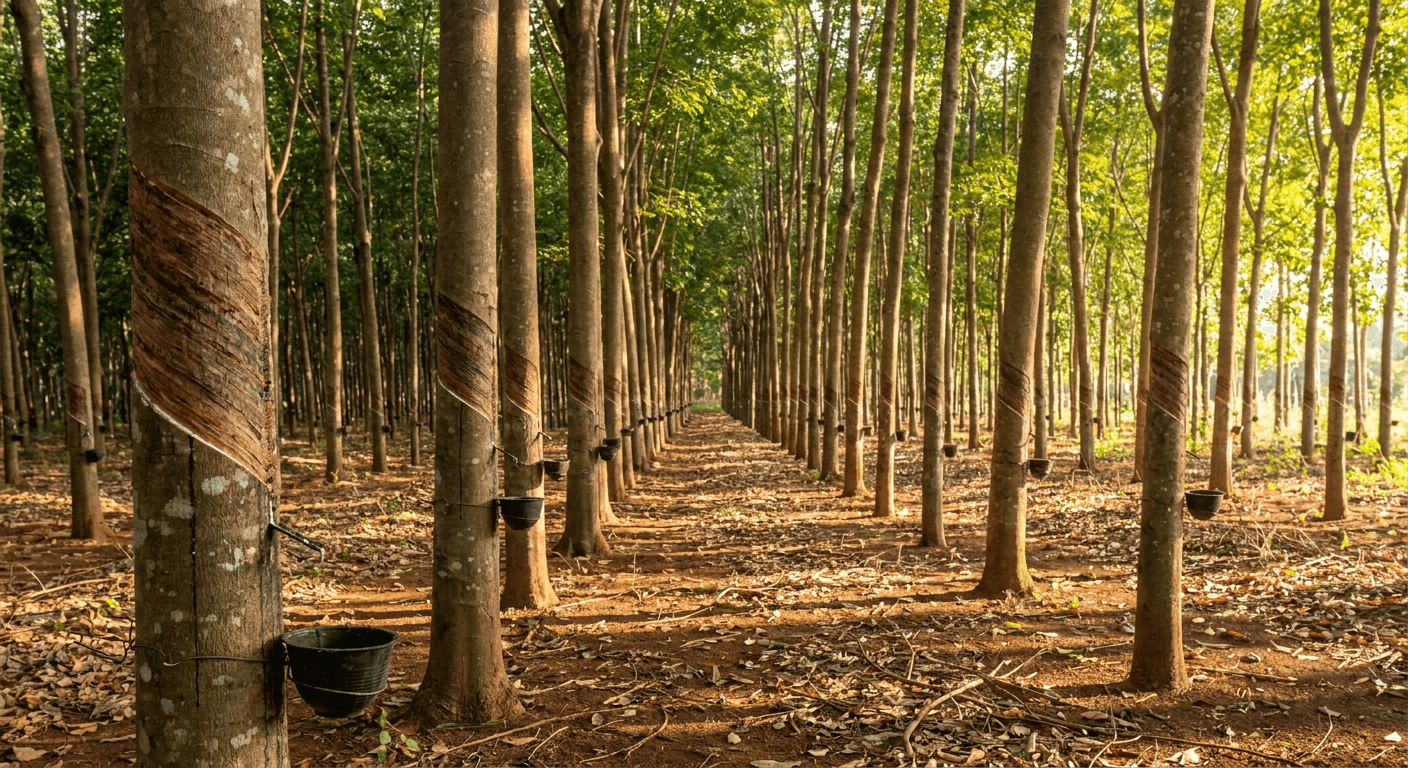
Rubberwood (Hevea) Plywood from Vietnam
How the rubber tree becomes plywood: rubberwood (Hevea) is a second harvest from Vietnam's latex estates, favoured for furniture and joinery for its density and pale, easy-to-finish grain.
Glossary
Eucalyptus Plywood from Vietnam: The Denser Core
Eucalyptus is Vietnam's denser plantation-grown plywood core, chosen when a panel needs more stiffness and screw-hold than acacia. Here is where it grows and how the extra weight changes its use.
Glossary
Acacia Plywood from Vietnam: The Workhorse Core
Acacia is the plantation-grown core behind most Vietnamese plywood. How and where it is farmed, why it became the workhorse core, and where it is used.