
Guides/Overview
Plantation Forestry Behind Vietnam's Plywood
How plantation-grown acacia, eucalyptus and rubberwood from smallholder farms feed Vietnam's plywood, plus FSC/PEFC and EUDR legality context.
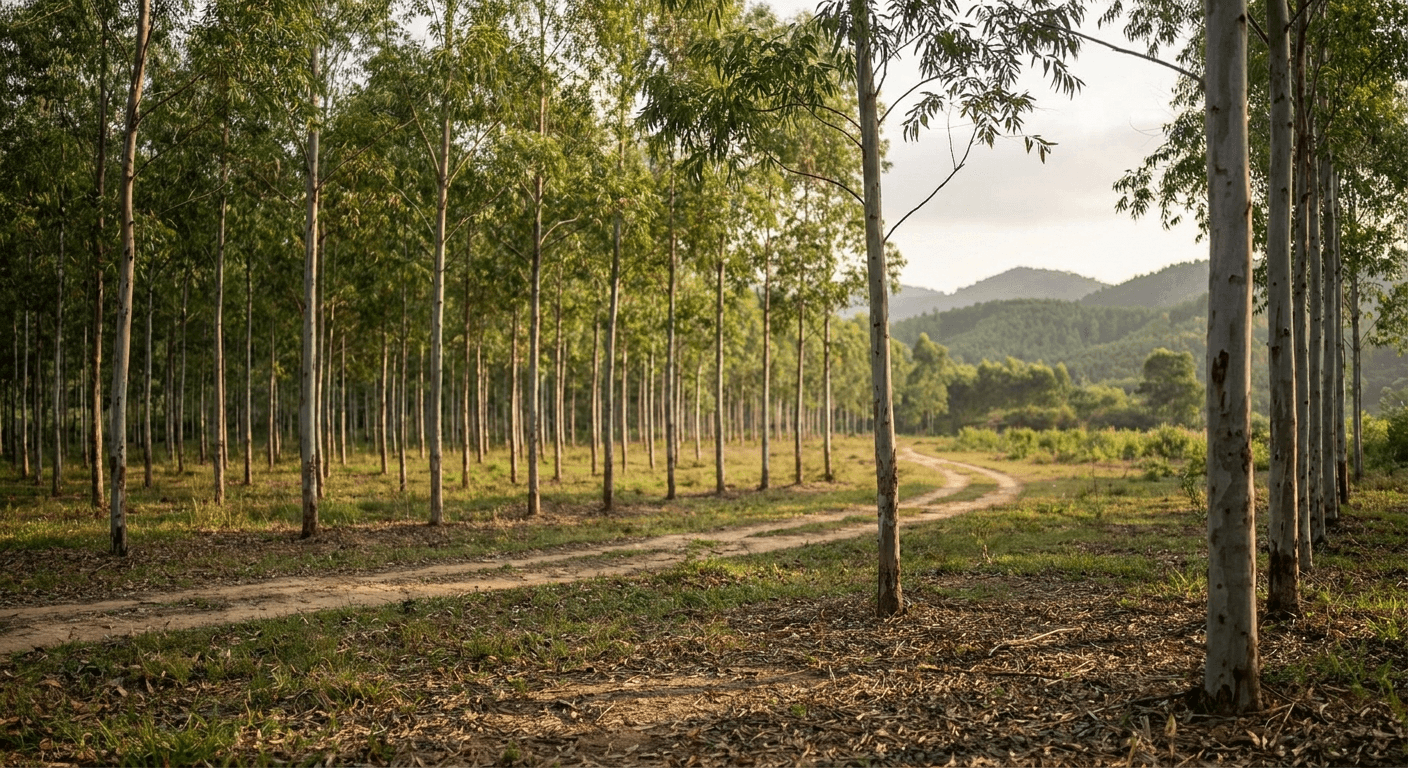
Most plywood shipped from Vietnam starts life on a plantation, not in a natural forest. The veneer comes from fast-growing acacia and eucalyptus grown on managed plots, plus rubberwood recovered from retired latex trees. A large slice of that timber is raised by farming households on a few hectares each.
This page looks at the forestry base under the panels: which species, who grows them, how long they take, and how the wood gets certified and cleared as legal for export. For panel specifications, thickness, or a full species density table, see the manufacturer references linked below rather than this page.
What timber feeds Vietnam's plywood?
Four plantation species do most of the work. Acacia, mostly the acacia hybrid (a cross of Acacia mangium and Acacia auriculiformis), is the backbone of the core and much of the face veneer. Eucalyptus sits alongside it, a little denser. Rubberwood (Hevea) adds a heavier, pale core popular in furniture panels. Styrax, known locally as bồ đề, gives a light face veneer, and some pine goes into core and packaging grades.
None of this is rainforest timber. It is plantation-grown, planted on a cycle and harvested like a crop. Vietnam holds roughly 14.6 million hectares of forest, and about 4.3 million hectares of that is planted forest (MARD 2020, reported through FAO's 2020 assessment). Production forest covers close to 6.9 million hectares. For the wood-property side of each species, Vinawood's core species guide carries the density and grade detail.
Who actually grows the trees?
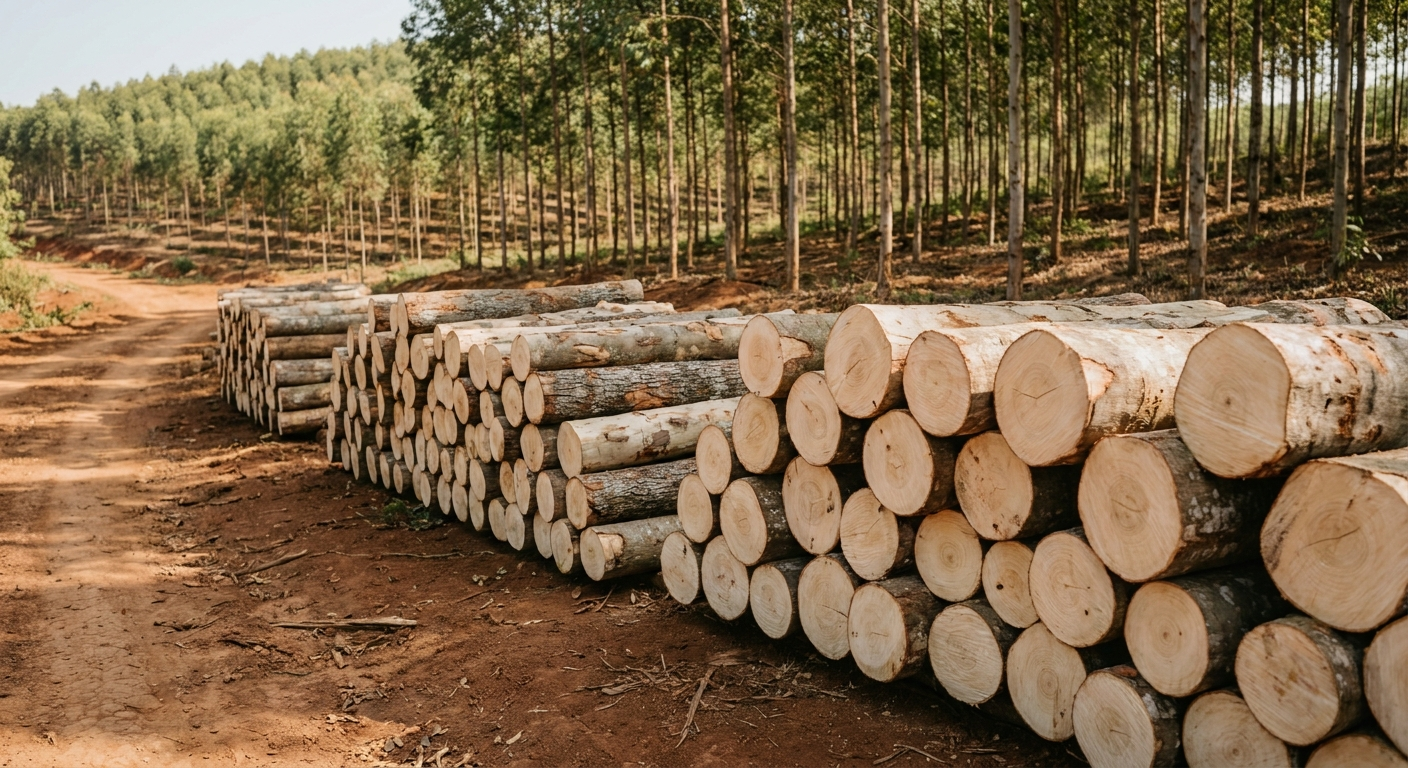
Smallholders. Domestic households and individuals manage around 20.8% of Vietnam's forest area, and their share of plantation wood supply runs higher than that number alone suggests. Plots are small, often one to three hectares (about 2.5 to 7.4 acres), farmed by families who treat a stand of acacia as a savings account they can cut when cash is needed.
That structure shapes the supply chain. Millions of small growers feed woodchip mills, veneer peelers and plywood plants through local traders. It keeps timber cheap and available. It also makes traceability harder, which matters the moment a European buyer starts asking where a specific plot sits.
How long does the timber take to grow?
Acacia grows fast. Many households cut at five to seven years and sell the small logs as woodchip or pulpwood, because the early return beats waiting. Held longer, to roughly eight to twelve years, the same trees put on the diameter that veneer and sawlog buyers want. Vietnam's forestry agencies have pushed growers toward those longer rotations to lift the share of larger logs, a shift studied closely among smallholders in central Vietnam.
Rubberwood runs on a different clock. It is a co-product: the tree is tapped for latex for about 25 to 30 years, and only once yields fall does it come out for timber. Nothing is planted for the wood alone, which is part of why rubberwood reads well on sustainability grounds.
| Species | Plantation type | Typical rotation | Planning density (kg/m³) | Common role in plywood |
|---|---|---|---|---|
| Acacia (acacia hybrid) | Fast-growing plantation | 5–7 yr (chip); 8–12 yr (veneer/sawlog) | ~580 | Core and face veneer |
| Eucalyptus | Fast-growing plantation | 5–7 yr | ~650 | Core, denser veneer |
| Rubberwood (Hevea) | Latex plantation co-product | ~25–30 yr (end of tapping) | ~700 | Core, furniture-grade panels |
| Styrax (bồ đề) | Plantation | ~8–10 yr | ~500 | Light-coloured face veneer |
| Pine | Plantation | Varies | ~520 | Some core and packaging grades |
Density figures are typical planning values, not guarantees; the actual value for a given panel is confirmed on the mill certificate. By weight the order runs Hevea, then eucalyptus, then acacia.
How is the wood certified?
Two schemes cover most certified volume. FSC chain-of-custody has been present in Vietnam for years and is held by many mills. Vietnam also built its own national scheme, VFCS, which won PEFC endorsement in March 2021; the national body VFCO became the first PEFC member to supply certified natural rubber and rubberwood. Certified plantation area was modest at endorsement and has grown since, with the Vietnam Rubber Group alone targeting more than 100,000 hectares of certified rubber plantation.
Certification does two jobs at once. It signals responsible plantation management, and its chain-of-custody paperwork lets a mill prove the certified wood stayed separate from uncertified wood all the way to the container. Vinawood holds FSC-COC and PEFC; how that flows onto a finished panel is covered in its FSC film-faced guide.
Is Vietnamese plantation plywood legal to import?
Legality and certification are separate questions. Legality rests on Vietnam's Timber Legality Assurance System (VNTLAS), built under the country's voluntary partnership agreement with the EU. For years the EU Timber Regulation (EUTR) has required importers to run due diligence on origin and legality, and Vietnamese plantation wood with clean paperwork has moved into Europe under that rule.
The EU Deforestation Regulation (EUDR) raises the bar. It asks for plot-level geolocation and proof that the land was not deforested after 31 December 2020. After a further delay, its main obligations land on large and medium operators from 30 December 2026, and on micro and small enterprises from 30 June 2027. The open problem is smallholder data: mapping millions of one-hectare plots into a usable database is the hard part, and it is where much of the current work sits. This is an overview, not a compliance manual. For the market-by-market certification and EUDR detail, see Vinawood's certifications guide.
Sourcing questions about a specific species, certificate or plantation origin go to the mill. You can reach Vinawood's team through its contact page.
Related guides
Frequently asked
Is Vietnamese plywood made from tropical rainforest wood?
No. The veneer is plantation-grown, mainly acacia and eucalyptus planted and harvested on a cycle, plus rubberwood recovered from retired latex trees. It is not cut from natural rainforest.
What is the most common species in Vietnamese plywood?
Acacia, usually the acacia hybrid of Acacia mangium and Acacia auriculiformis. It supplies most of the core and much of the face veneer, with eucalyptus and rubberwood alongside it.
How long does plantation acacia take to grow?
Smallholders often cut acacia at five to seven years for woodchip or pulpwood. Held to roughly eight to twelve years, the trees reach the diameter that veneer and sawlog buyers prefer.
Is Vietnamese plantation plywood FSC or PEFC certified?
Both are available. FSC chain-of-custody is held by many Vietnamese mills, and Vietnam's national VFCS scheme won PEFC endorsement in March 2021. Certified plantation area has expanded since then.
Does Vietnamese plywood meet EUDR requirements?
EUDR asks for plot-level geolocation and proof the land was not deforested after 31 December 2020. Its main obligations reach large and medium operators from 30 December 2026. Vietnam's VNTLAS legality system underpins the paperwork; smallholder plot traceability is the main hurdle.
Related in the atlas
Continue reading
Same topic first, then what others on the atlas read most.
Overview
The Vietnam Plywood Industry: A Complete Overview
A plain-English overview of Vietnam's plywood industry: its scale and growth, the plantation species base, the main export product types, certification, and where Vietnam sits among global plywood origins.
Overview
What is Vietnam plywood?
Vietnam plywood, defined: plywood made in Vietnam from plantation-grown acacia, eucalyptus, rubberwood and styrax and exported worldwide. How it differs by origin, and where to go deeper.
Overview
How Vietnam plywood is made
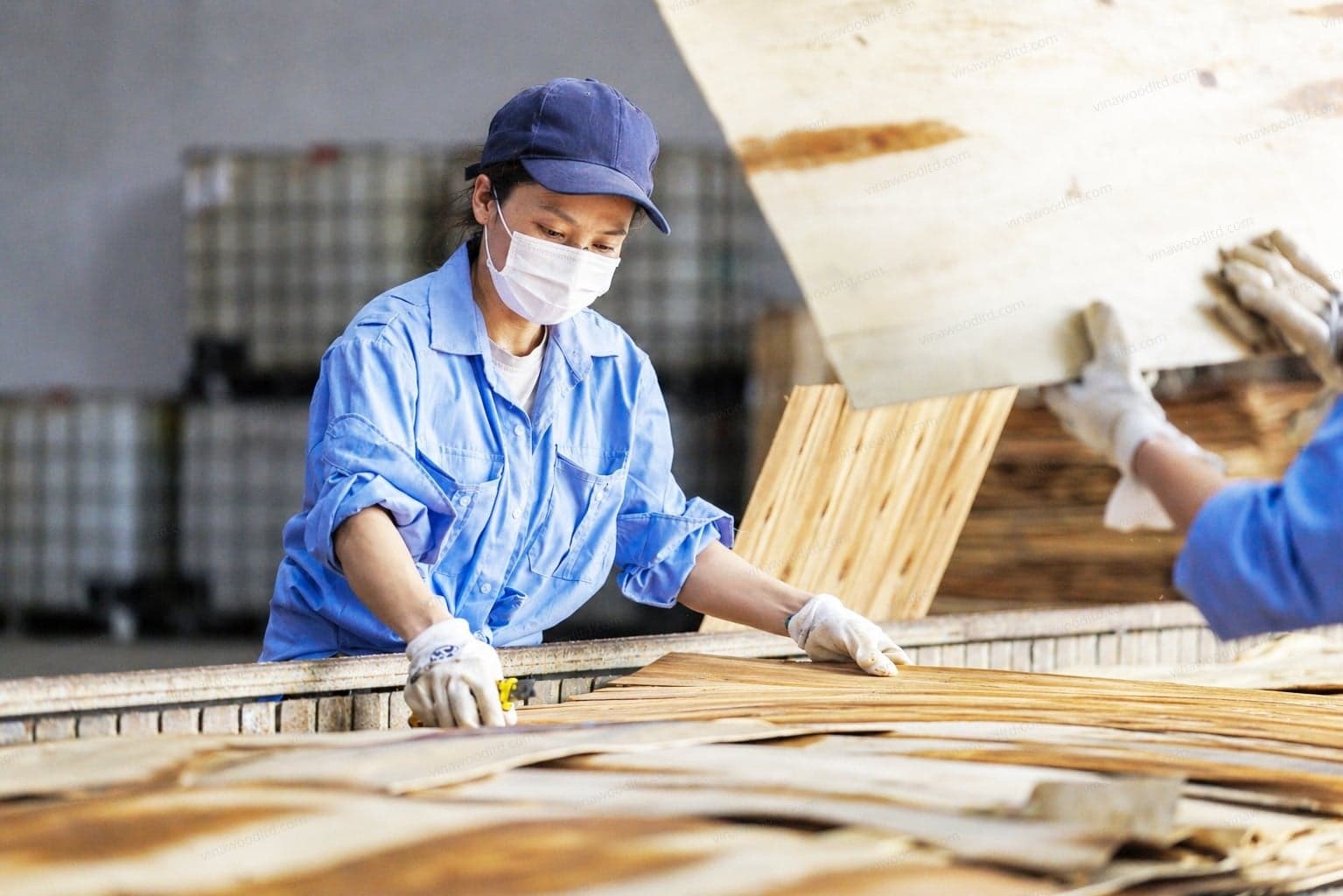
How a modern Vietnamese export mill turns plantation-grown logs into finished plywood, walked through all twelve production stages from log peeling to container loading.
Overview
Vietnam's Plywood Manufacturing Regions and Clusters
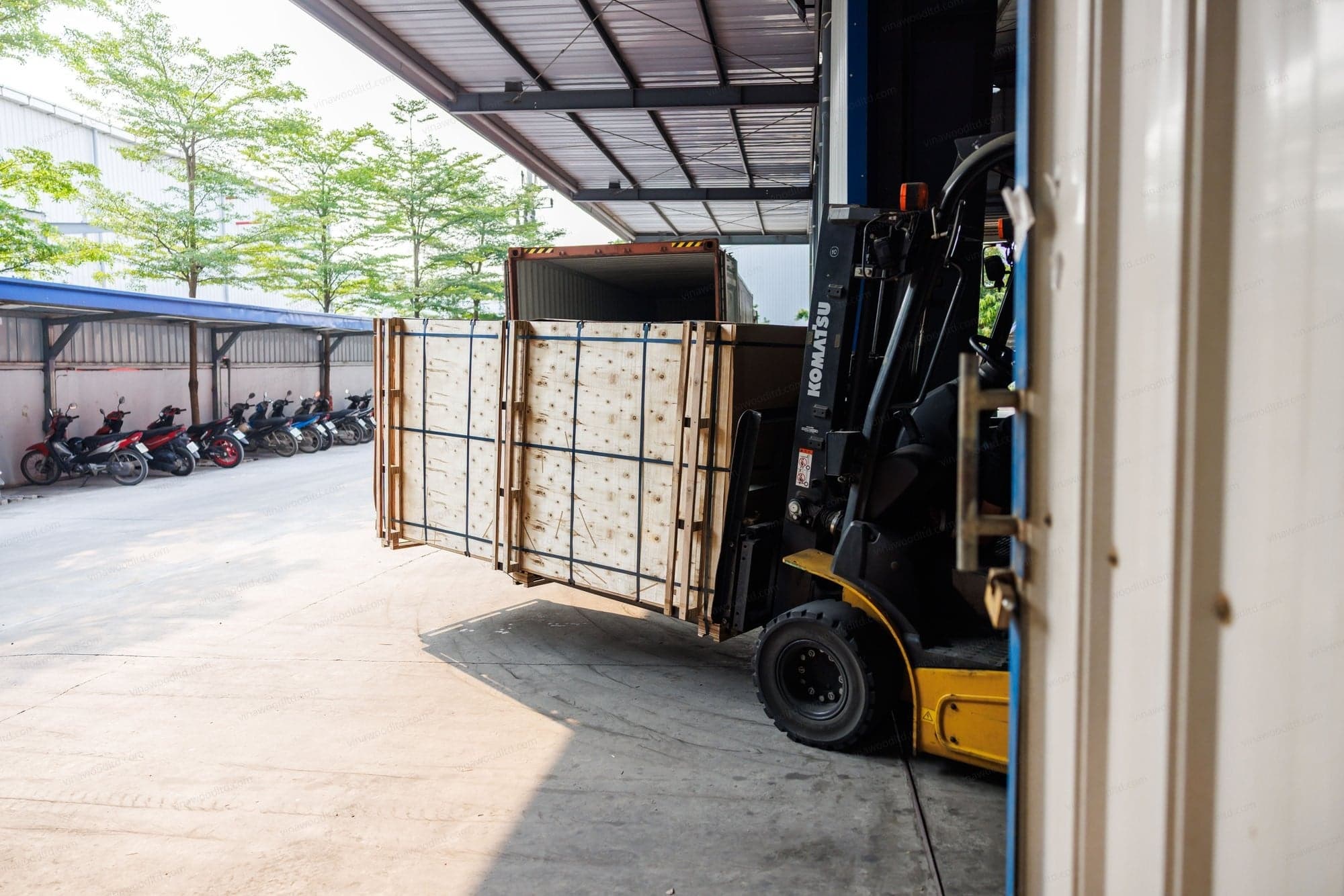
A map of where Vietnam makes plywood: the northern mill clusters around Bac Ninh and Phu Tho, the southern furniture belt, and how region maps to species supply and to the export ports that ship each.