
Guides/Glossary
Rubberwood (Hevea) Plywood from Vietnam
How Vietnam's rubber trees become plywood: rubberwood (Hevea) is harvested after its latex life, then used for furniture-grade panels and joinery.
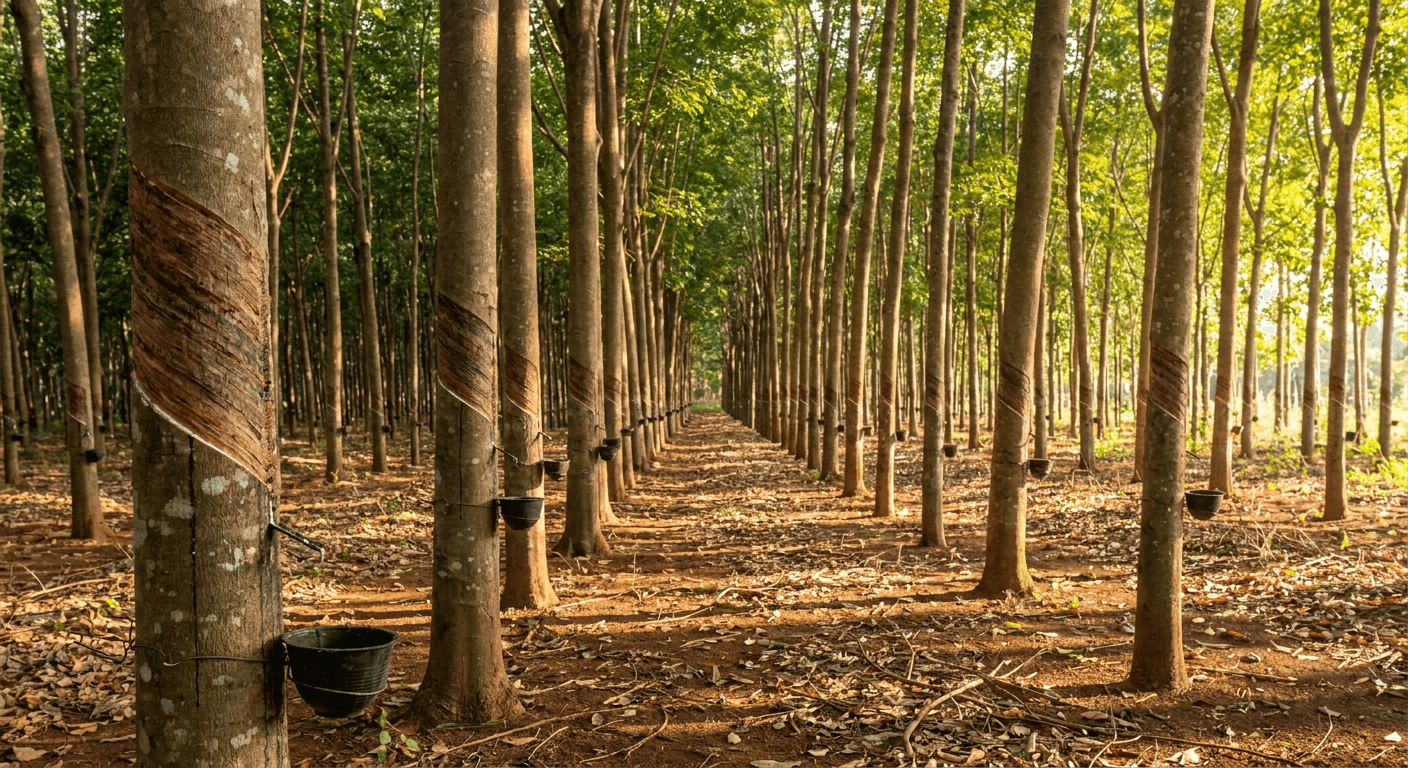
Rubberwood plywood from Vietnam starts with Hevea brasiliensis, the same tree that Vietnamese estates tap for latex. When a tree slows down and no longer yields enough latex to be worth tapping, usually after 25 to 30 years, it is felled and its trunk becomes timber. That timber feeds furniture parts, panel cores, and interior joinery. The origin story is the selling point. The wood is a second harvest from a tree already grown for another purpose.
What is rubberwood, and why do people call it the leftover-tree timber?
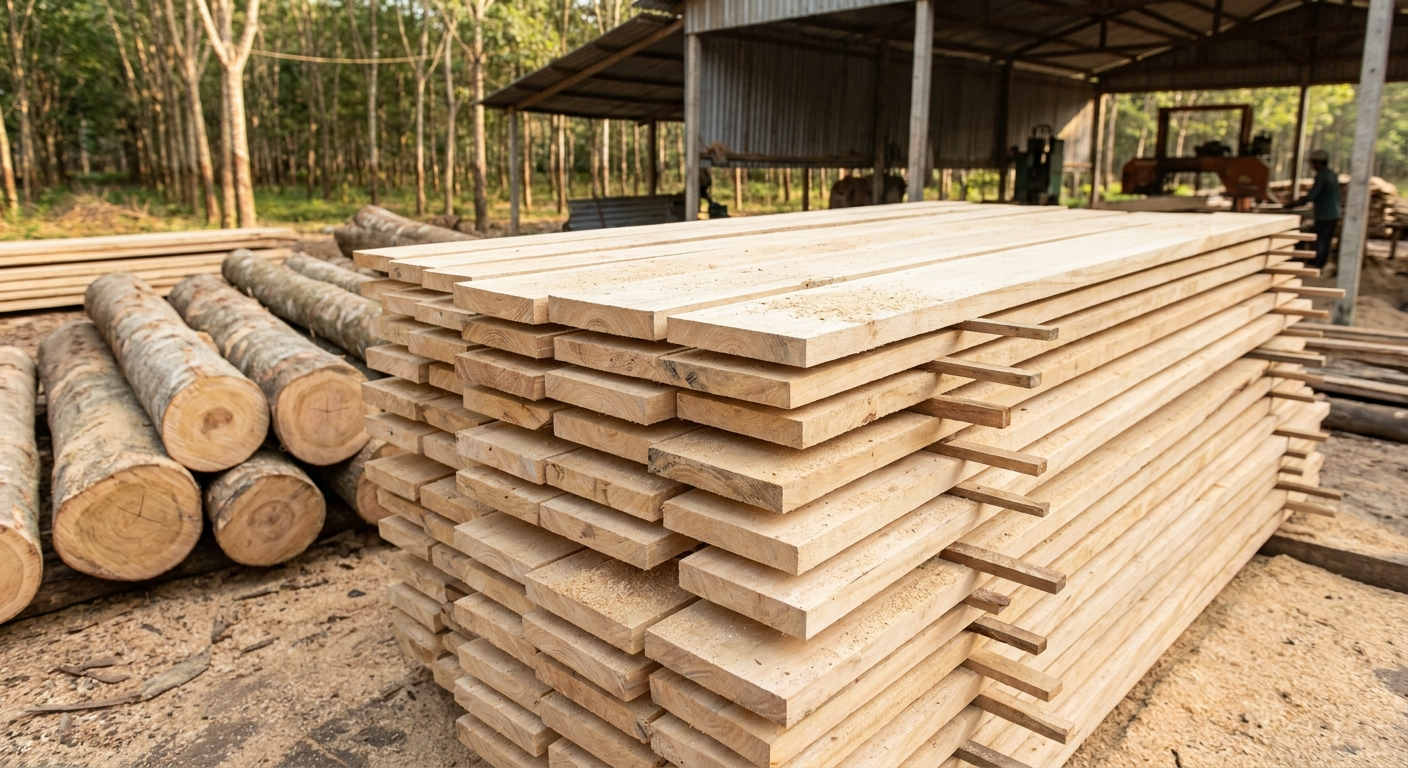
Every rubber tree has two working lives. For roughly three decades it produces latex, the raw material behind rubber gloves and tyres. Yield falls off as the tree ages. Once tapping stops paying its way, the estate replants, and the old trees come down. In the past that wood was often burned as fuel. Now it is sawn, kiln-dried, and sold as rubberwood.
Foresters frame this as putting a would-be waste stream to use. A 2015 case study on Hevea in Brazil examined the structural potential of rubberwood after the latex-extraction period and found it viable for engineered use, which is part of why the species moved from firewood to furniture stock across Southeast Asia over the last few decades.
Where does Vietnam's rubberwood come from?
Vietnam is the world's third-largest producer of natural rubber, behind Thailand and Indonesia, with output around 1.3 million tonnes in 2024. The plantation base covered roughly 910,000 hectares that year, and about 80% of it was old enough to tap. A large share sits with smallholders. Some 488,000 hectares span about 264,000 households, per Vietnam Rubber Association figures. Every one of those hectares is a future timber supply once the trees age out.
The growing is concentrated. Two zones do most of the work.
| Region | Key provinces | Role in rubberwood supply |
|---|---|---|
| Southeast | Binh Phuoc, Binh Duong, Tay Ninh, Dong Nai, Ba Ria-Vung Tau | The historic heartland, with the largest estate area and the densest cluster of sawmills and wood-processing plants |
| Central Highlands | Gia Lai, Dak Lak | Newer plantings on basalt soils; a growing share of tapping-age trees now feeding timber lines |
| Central Coast and North | Quang Tri and nearby provinces | Smaller, more scattered smallholder plots that add to national area |
That geography matters for buyers who care about traceability. The EU Deforestation Regulation now pulls natural rubber and rubberwood into its scope, so Vietnamese producers have been mapping plantation origin down to the plot. Estate wood tends to carry cleaner paperwork than scattered smallholder wood. That is one reason FSC-certified rubberwood commands a premium.
Why does rubberwood end up in furniture and joinery?
Character, mostly. Rubberwood is a pale, even-toned hardwood, light blonde to tan, with straight grain and a fairly coarse texture. It takes stain and glue well, and it machines cleanly. Cabinet makers like that it finishes to resemble pricier woods. The Wood Database puts the dried weight of solid rubberwood timber at about 595 kg/m3, close to walnut or cherry on hardness.
It is not flawless. Green rubberwood warps and discolours easily if it is not dried and treated quickly, and it gives off a sour smell while being worked. Left untreated it is prone to fungal stain and borer attack, so mills kiln-dry and chemically treat it early in the process. Handled right, none of that reaches the finished panel.
What does a rubberwood core bring to a plywood panel?
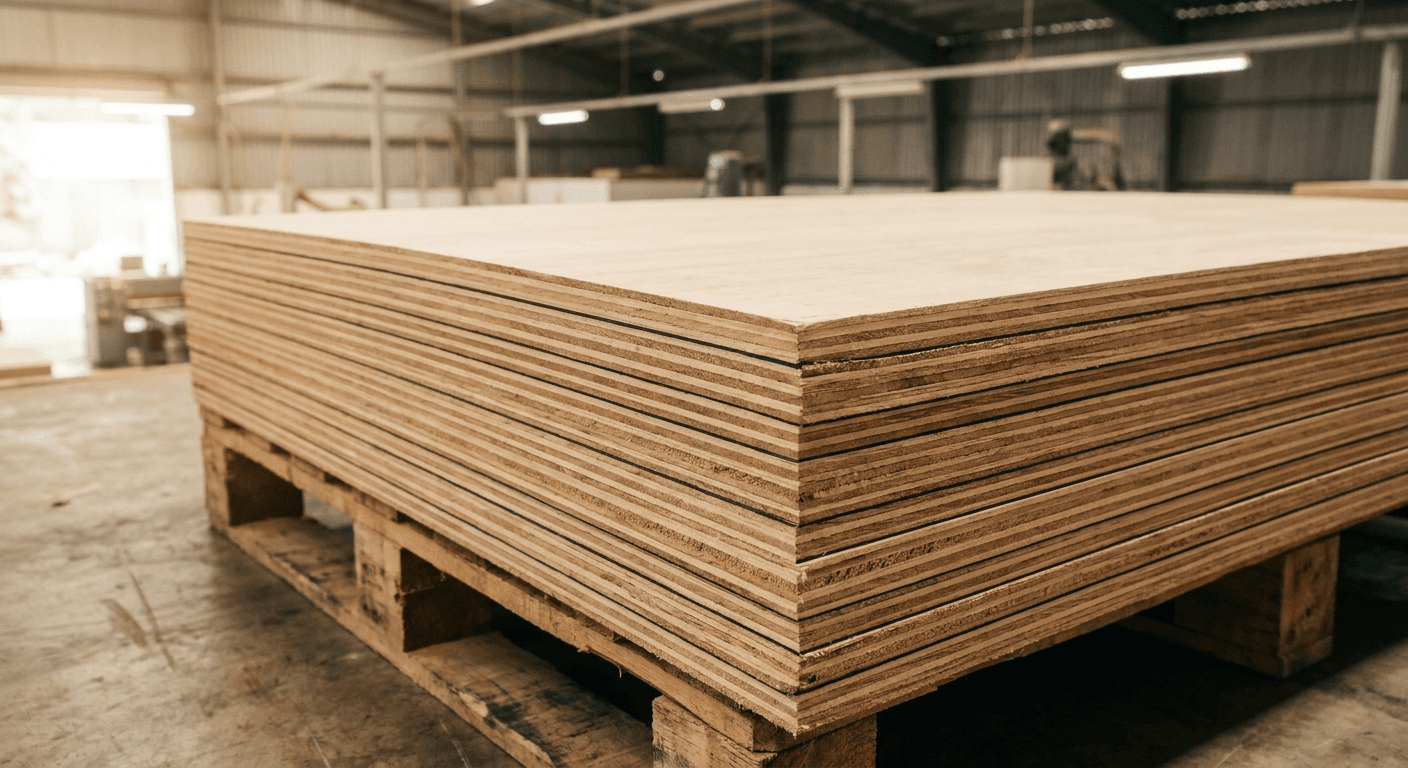
Weight and a tight, uniform core. Among Vietnam's plantation species, rubberwood sits at the denser end, above eucalyptus and acacia. That density gives rubberwood-core panels a solid feel and strong screw-holding, which suits furniture carcasses, cabinet boxes, shelving, and interior joinery far more than it suits lightweight packaging. For the planning density, around 700 kg/m3, and the full panel specifications, see Vinawood's rubberwood core plywood spec page rather than any number quoted here. The value printed on your mill certificate is what governs.
Vinawood, founded in 1992, is one Vietnamese manufacturer that builds rubberwood-core panels this way. Depending on grade and destination market, panels can carry certifications such as FSC chain-of-custody, EPA TSCA Title VI (CARB Phase 2) for formaldehyde, and CE marking under EN 13986. Always confirm the specific certificate for the panel in front of you.
Is rubberwood actually a green choice?
Broadly yes, with caveats. The wood comes from trees already grown for latex, so it does not drive fresh logging of virgin forest, and it diverts a by-product that used to go to the burn pile. That is a real environmental argument. The honest caveats sit alongside it. Rubber estates themselves have sometimes replaced natural forest in decades past, treatment chemicals need proper handling, and the word rubberwood on its own tells you nothing about where the trees stood. FSC or PEFC certification is what turns the general story into a documented one.
Related guides
Frequently asked
Is rubberwood the same tree that produces natural rubber?
Yes. Rubberwood is the timber of Hevea brasiliensis, the rubber tree. It is milled from trees that have finished their latex-producing years, usually at 25 to 30 years old, so it is a by-product of the latex industry rather than a tree grown for lumber.
Where in Vietnam does rubberwood come from?
Mostly the Southeast (Binh Phuoc, Binh Duong, Tay Ninh, Dong Nai) and the Central Highlands (Gia Lai, Dak Lak). Those two zones hold most of Vietnam's roughly 910,000 hectares of rubber plantation, with smaller smallholder plots along the Central Coast and further north.
What is rubberwood plywood used for?
Interior furniture and joinery, mainly. Cabinet boxes, shelving, and furniture components suit the wood's density, screw-holding, and pale, easy-to-stain grain. It is not aimed at exterior or structural applications, where a treated or film-faced panel would be specified instead.
Is rubberwood plywood sustainable?
It reuses trees already grown for latex rather than clearing forest for timber, which is a genuine environmental plus and diverts wood that was once burned. The claim only fully holds up with FSC or PEFC certification documenting the chain of custody back to the plantation.
How dense is a rubberwood-core panel?
Rubberwood is the densest of Vietnam's common plantation species, above eucalyptus and acacia. Vinawood plans around 700 kg/m3 for rubberwood-core panels. See the linked rubberwood spec page for the full figures, which are confirmed on the mill certificate for each order.
Related in the atlas
Continue reading
Same topic first, then what others on the atlas read most.
Glossary
Plywood Grade-Stamp Decoder: How to Read the Marks
A visual key to the stamps and ink-marks on export plywood: mill code, standard reference, bond and emission class, and FSC/PEFC/CE/CARB marks, plus how to verify each against the shipment paperwork.
Glossary
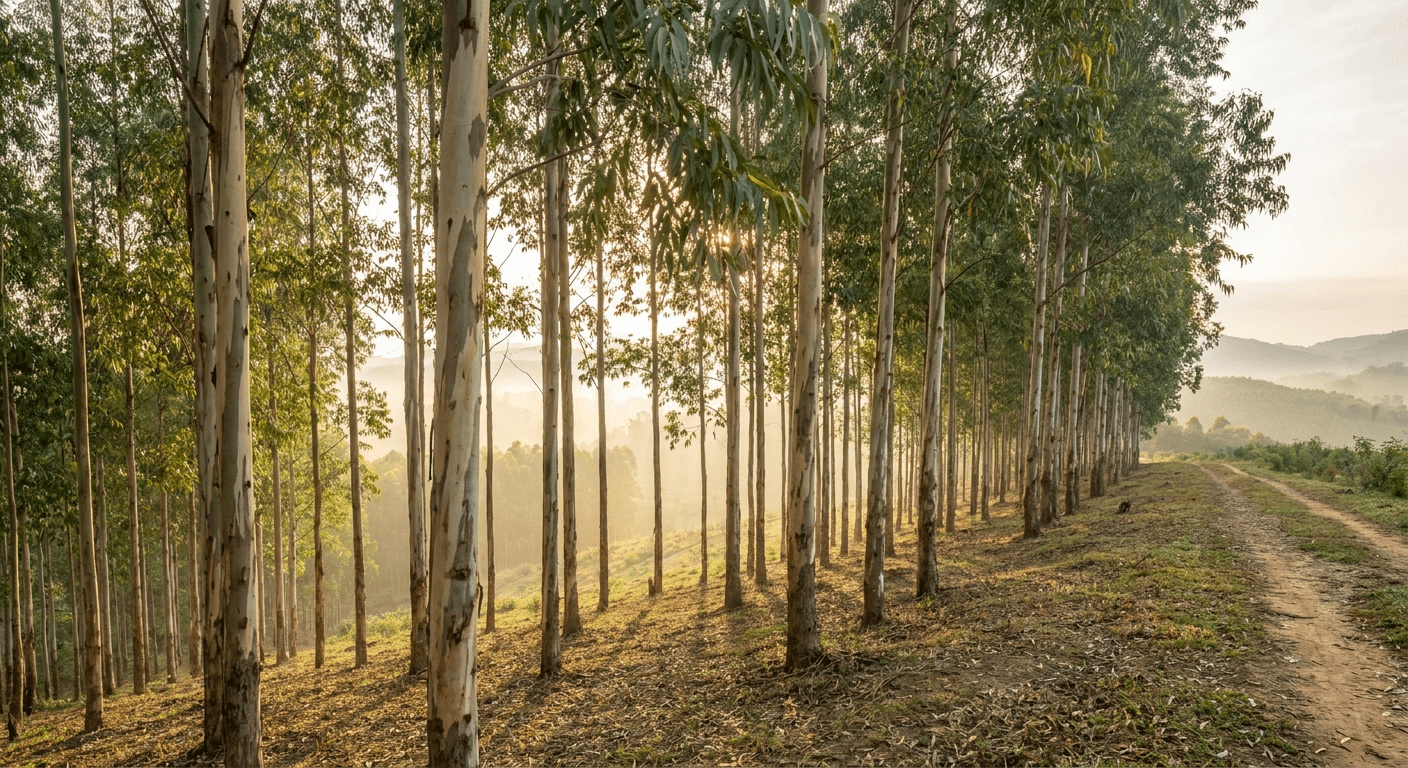
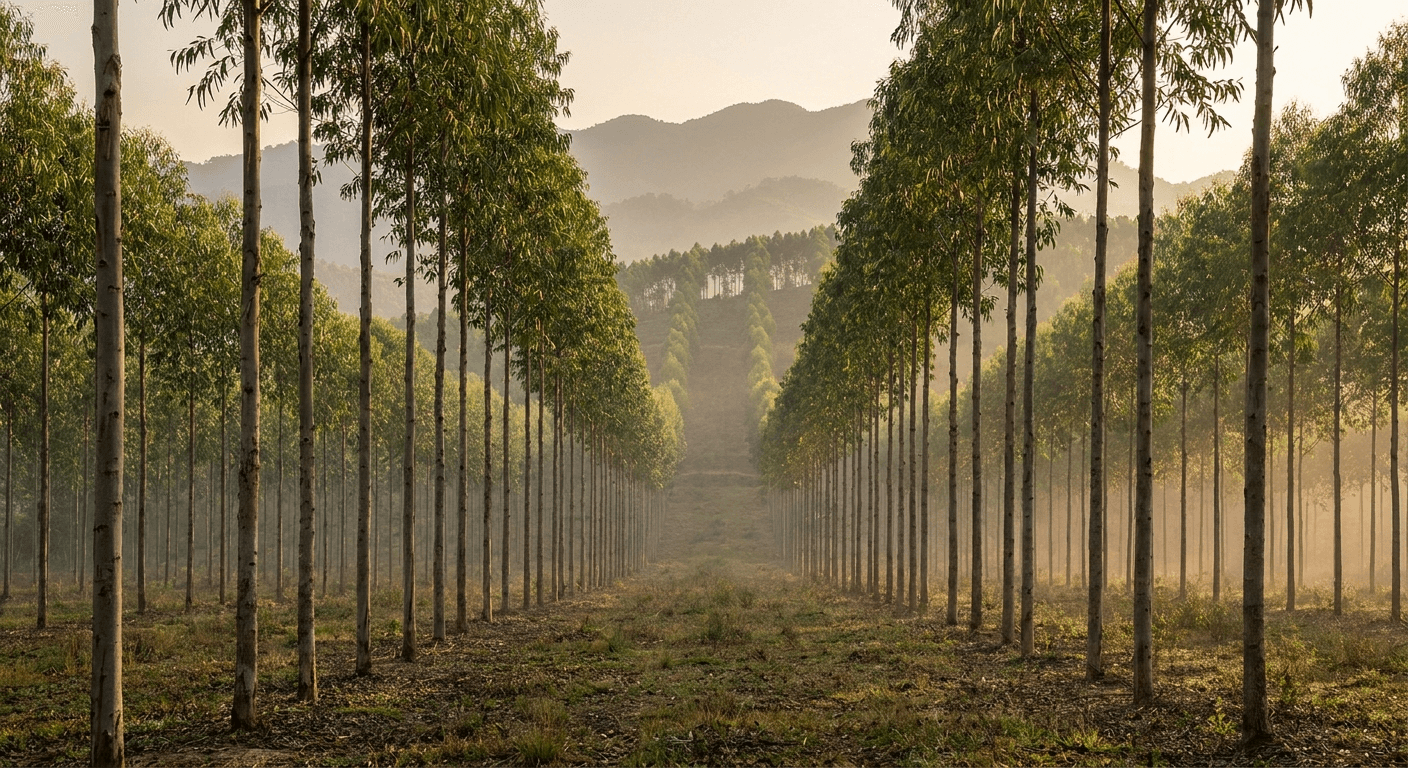
Eucalyptus Plywood from Vietnam: The Denser Core
Eucalyptus is Vietnam's denser plantation-grown plywood core, chosen when a panel needs more stiffness and screw-hold than acacia. Here is where it grows and how the extra weight changes its use.
Glossary
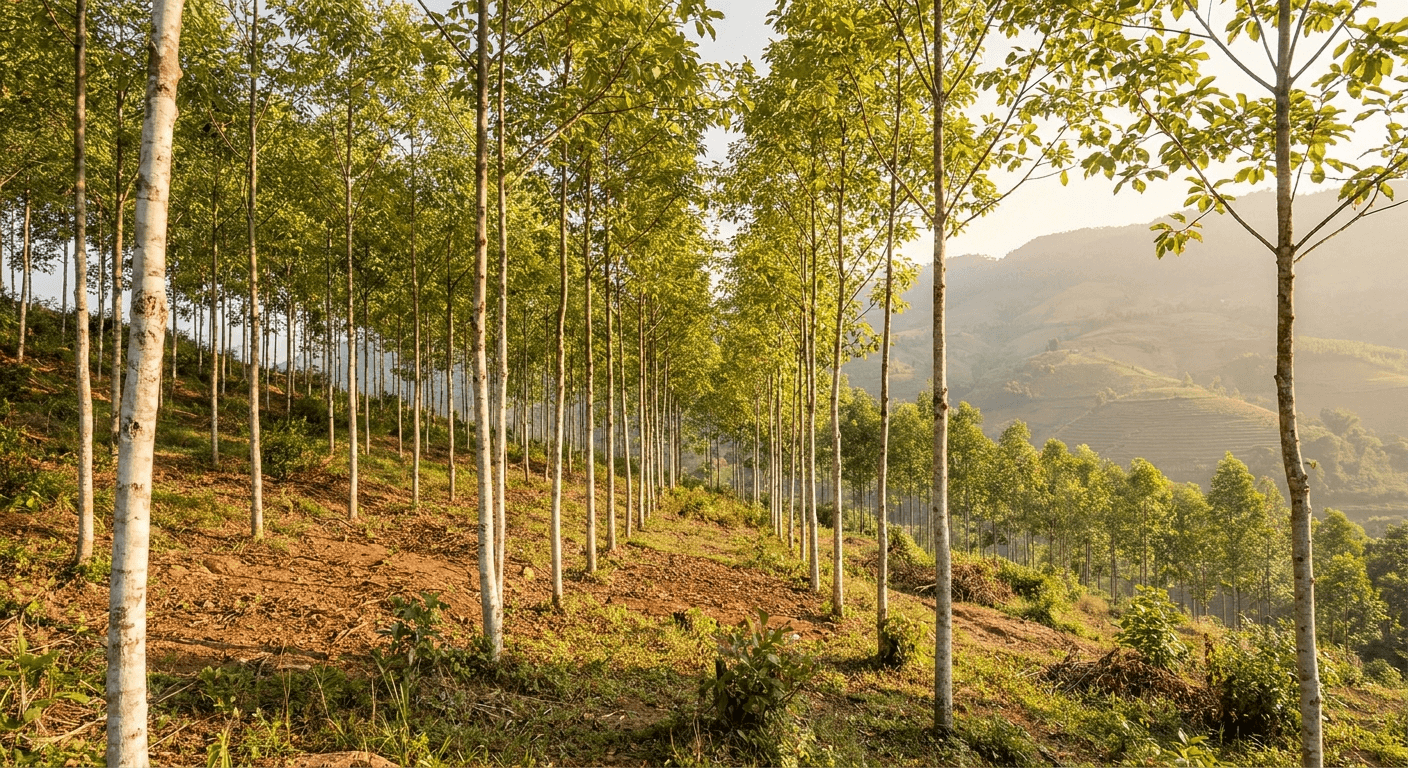
Styrax (Full-White Core) Plywood from Vietnam
Styrax (Styrax tonkinensis, known in Vietnam as bồ đề) is the pale, uniform "full white core" species Vietnamese mills use for painted and visible plywood. Where it grows, how it's farmed, and when to specify it over denser cores.
Glossary
Acacia Plywood from Vietnam: The Workhorse Core
Acacia is the plantation-grown core behind most Vietnamese plywood. How and where it is farmed, why it became the workhorse core, and where it is used.