
Guides/Glossary
Acacia Plywood from Vietnam: The Workhorse Core
Acacia is the core behind most Vietnamese plywood. How it is plantation-grown by smallholders, why it became the workhorse core, and its typical uses.
Acacia is the core species behind most plywood made in Vietnam. It grows on plantations across the country's central and northern hills, much of it on small family plots, and it became the default core for a plain reason: the trees mature in a handful of years and peel cleanly into veneer.
This page tells the origin story. Where acacia grows, how it is farmed, why mills reach for it first, and what that means for the panels it ends up inside. For planning density and the full spec sheet we point you to the manufacturer reference rather than repeat the numbers here.
Where does Vietnam's acacia come from?
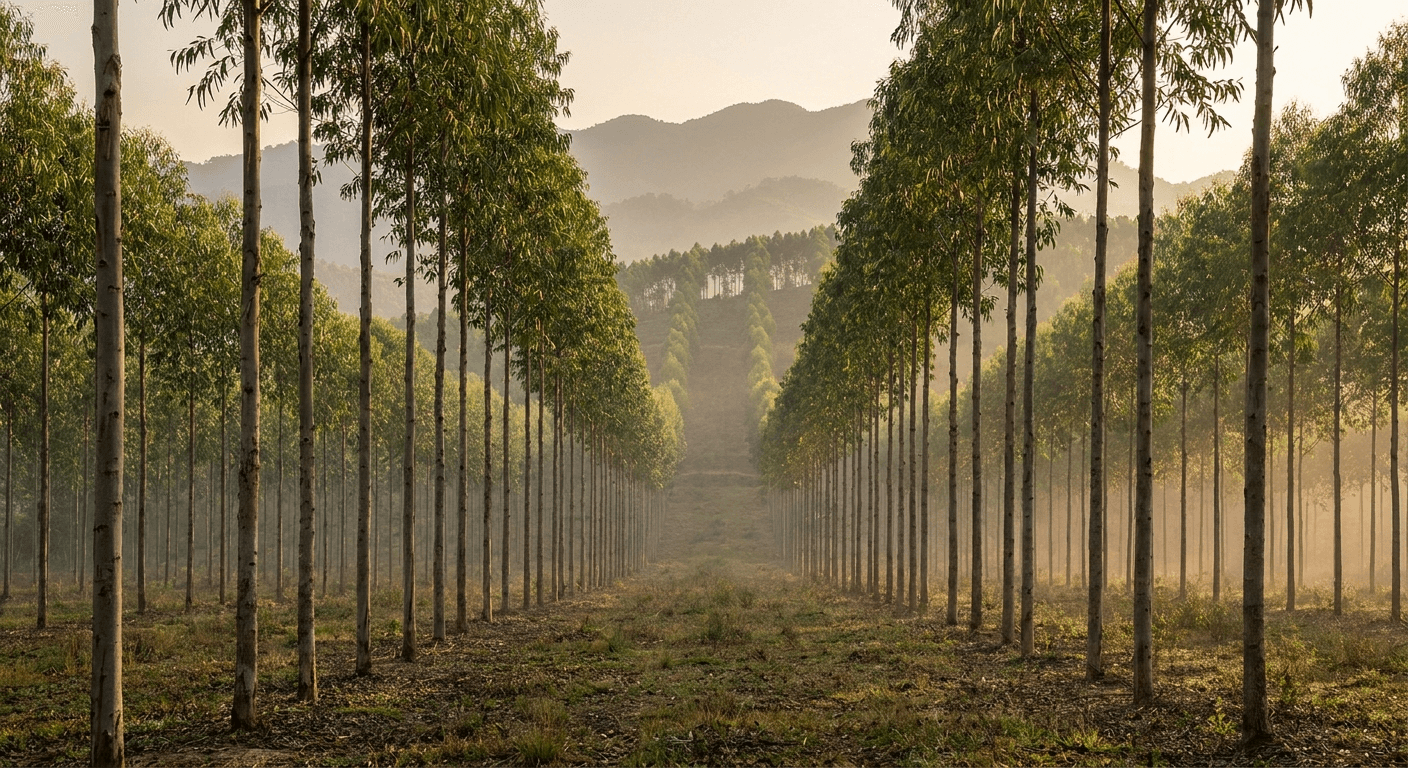
Two forms dominate. Acacia mangium arrived as a plantation species decades ago, and today most commercial planting uses the Acacia hybrid, a cross between A. mangium and A. auriculiformis that grows straighter and faster. Both are plantation-grown. None of it comes from natural forest.
The scale is large. Vietnam counted roughly 14.8 million hectares of forest by 2022, of which planted forest made up about a third, and acacia was the single most planted genus, near 40% of plantation area in the mid-2010s according to forestry research. Growers moved toward it as it gradually displaced eucalyptus.
Ownership is the part outsiders miss. Close to half of Vietnam's plantation area sits with individual households, most farming plots under five hectares. In provinces like Thua Thien Hue in the center, acacia covers the majority of planted land and props up rural incomes. So the chain that feeds a veneer mill often starts with a farmer and a few hectares of hillside, not a corporate estate.
Why did acacia become the workhorse core?
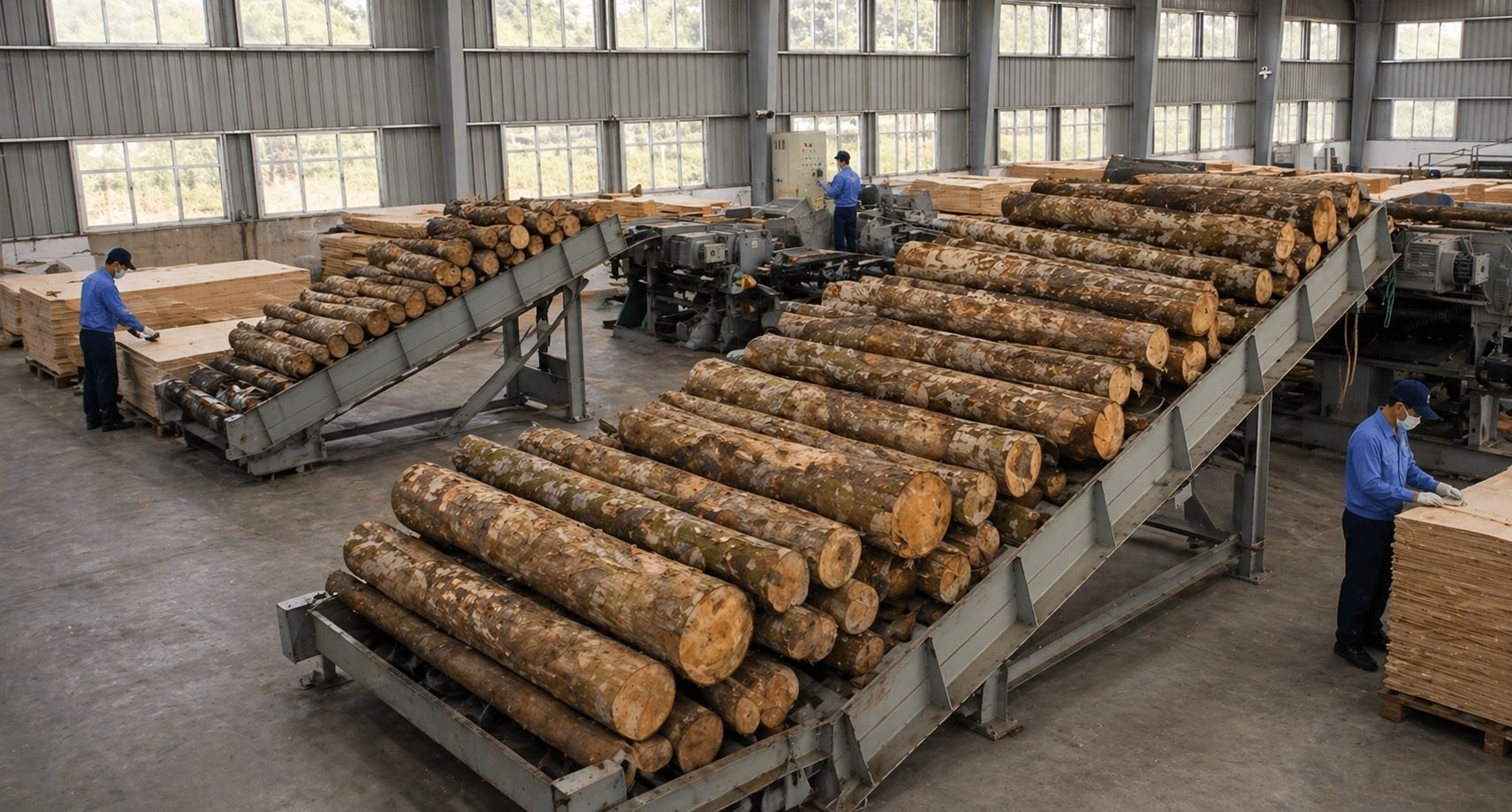
Speed. A stand of acacia can be cut at four to five years for woodchips, or held to seven or eight for larger logs. That short rotation lets a mill count on a steady, nearby flow of raw material instead of waiting a generation for trees to size up.
Availability follows from that. With millions of hectares in the ground and thousands of smallholders selling into the same buyers, acacia is the cheapest reliable peeler log in the country. It peels into even veneer, dries without much fuss, and bonds well under standard phenolic and urea glues. For a commercial-grade panel where the core sits hidden, that mix is hard to beat.
One trade-off is worth naming. Fast-grown acacia runs lighter and softer than a slow tropical hardwood, and short-rotation logs are smaller, so mills work around knots and juvenile wood. That is why grading and the mill certificate matter more than the species name on its own.
How does acacia move from plantation to plywood?
The same plantation can feed very different products depending on when it is cut.
| Rotation age | What the tree becomes | Typical destination |
|---|---|---|
| 4-5 years | Small-diameter roundwood | Woodchips for pulp and export |
| 6-7 years | Peeler logs | Rotary-peeled veneer, plywood core |
| 7-8+ years (often FSC-certified) | Larger sawlogs | Sawn timber, furniture, higher-value veneer |
Most plywood core comes from the middle band, logs old enough to peel but still on a short cycle. Growers with FSC certification tend to hold their stands longer, which lifts log size and opens the door to sawn timber and better veneer.
What is acacia like as a core?
Machinable and predictable. Acacia planes and drills cleanly, and it takes fasteners without splitting the way some denser species do, which is why it shows up as furniture substrate and general panel stock as well as construction board. Colour runs pale brown to light reddish, though that rarely matters under a film face or an overlay.
On weight, treat acacia as a mid-range core. Plan around a typical panel density near 580 kg/m3, lighter than eucalyptus or rubberwood, and confirm the figure on the mill certificate for the batch you buy. The full density table and specs live on the manufacturer reference: see Vinawood's acacia core plywood specifications for planning density and grades instead of a restated table here.
What is acacia plywood used for?
It is the everyday board. Paired with a phenolic film face, acacia core goes into concrete formwork. Left with a raw or sanded face, it becomes furniture backing, cabinet carcass, packing-grade sheet, and general construction panel. Where a buyer wants a balance of price and performance rather than the last increment of strength, acacia core is usually the answer.
For heavier structural work or a harder, denser panel, a eucalyptus or rubberwood (Hevea) core may suit better. Many Vietnamese mills mix species in the core or offer a full-acacia build, so it pays to ask what is actually inside the panel. For how acacia fits alongside Vietnam's other core species, see our Vietnam plywood industry guide.
Related guides
Frequently asked
Is acacia plywood the same as hardwood plywood?
Acacia is a plantation-grown hardwood, so acacia-core panels are a type of hardwood plywood. But "hardwood plywood" is a vague label that covers many species. It is clearer to ask for the core species by name, since acacia, eucalyptus, and rubberwood (Hevea) behave differently on weight and hardness.
Where is the acacia in Vietnamese plywood grown?
On plantations across central and northern Vietnam, with heavy concentration in provinces such as Thua Thien Hue. Close to half of Vietnam's plantation area is managed by individual households on small plots, so much of the supply comes from smallholder farms rather than large estates.
How fast does plantation acacia grow?
Fast. Stands are commonly cut at four to five years for woodchips, six to seven years for peeler logs used in plywood, and seven to eight years or more for sawlogs. FSC-certified growers tend to hold their trees longer for larger, higher-value wood.
How heavy is an acacia core?
Treat it as a mid-range core, lighter than eucalyptus or rubberwood. A typical planning density is around 580 kg/m3, but you should confirm the value on the mill certificate for your batch. See Vinawood's acacia core plywood specifications for the density table and grades.
Is acacia plywood sustainable?
The acacia used is plantation-grown, not cut from natural forest, and Vietnamese producers can supply it under FSC or PEFC chain-of-custody certification. Longer rotations and certified management give larger logs and stronger traceability for buyers in regulated markets.
Related in the atlas
Continue reading
Same topic first, then what others on the atlas read most.
Glossary
Plywood Grade-Stamp Decoder: How to Read the Marks
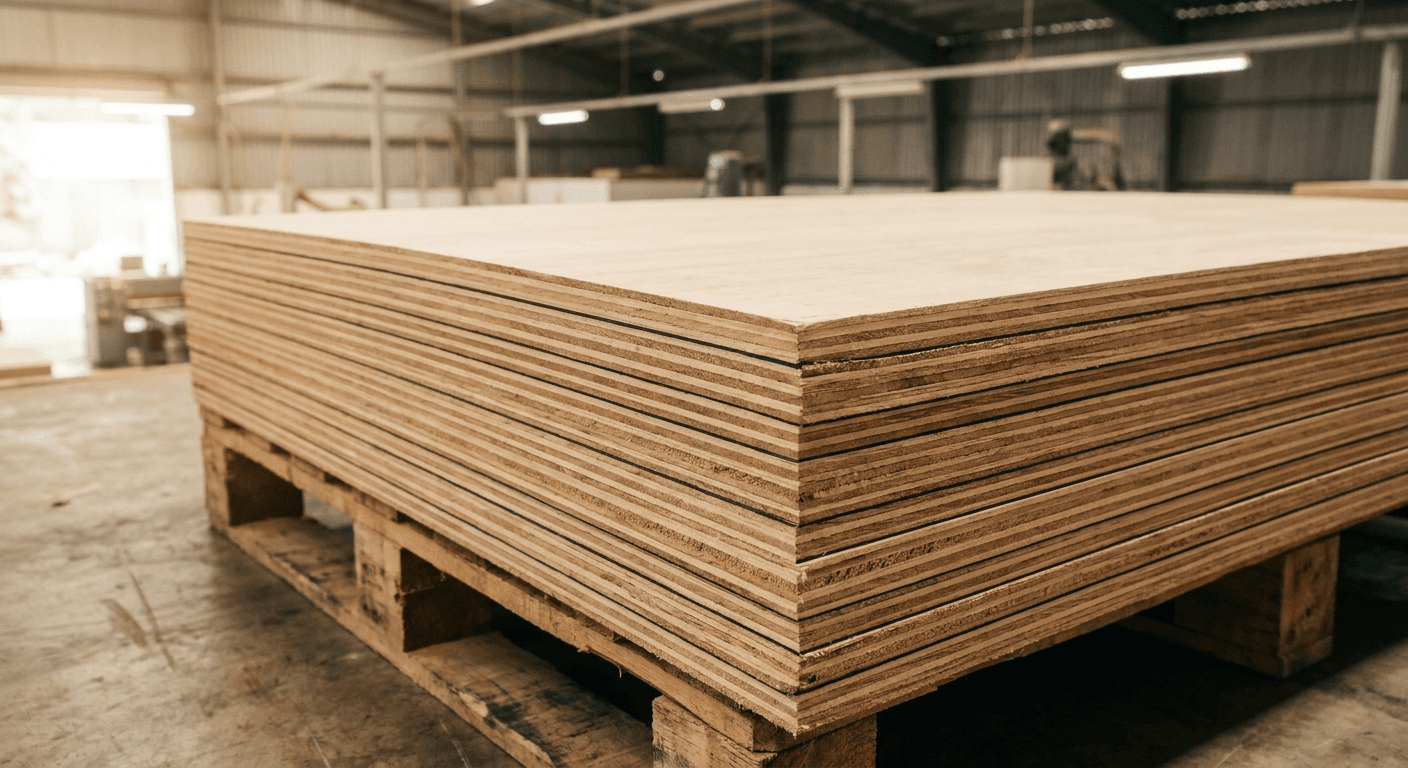
A visual key to the stamps and ink-marks on export plywood: mill code, standard reference, bond and emission class, and FSC/PEFC/CE/CARB marks, plus how to verify each against the shipment paperwork.
Glossary
Rubberwood (Hevea) Plywood from Vietnam
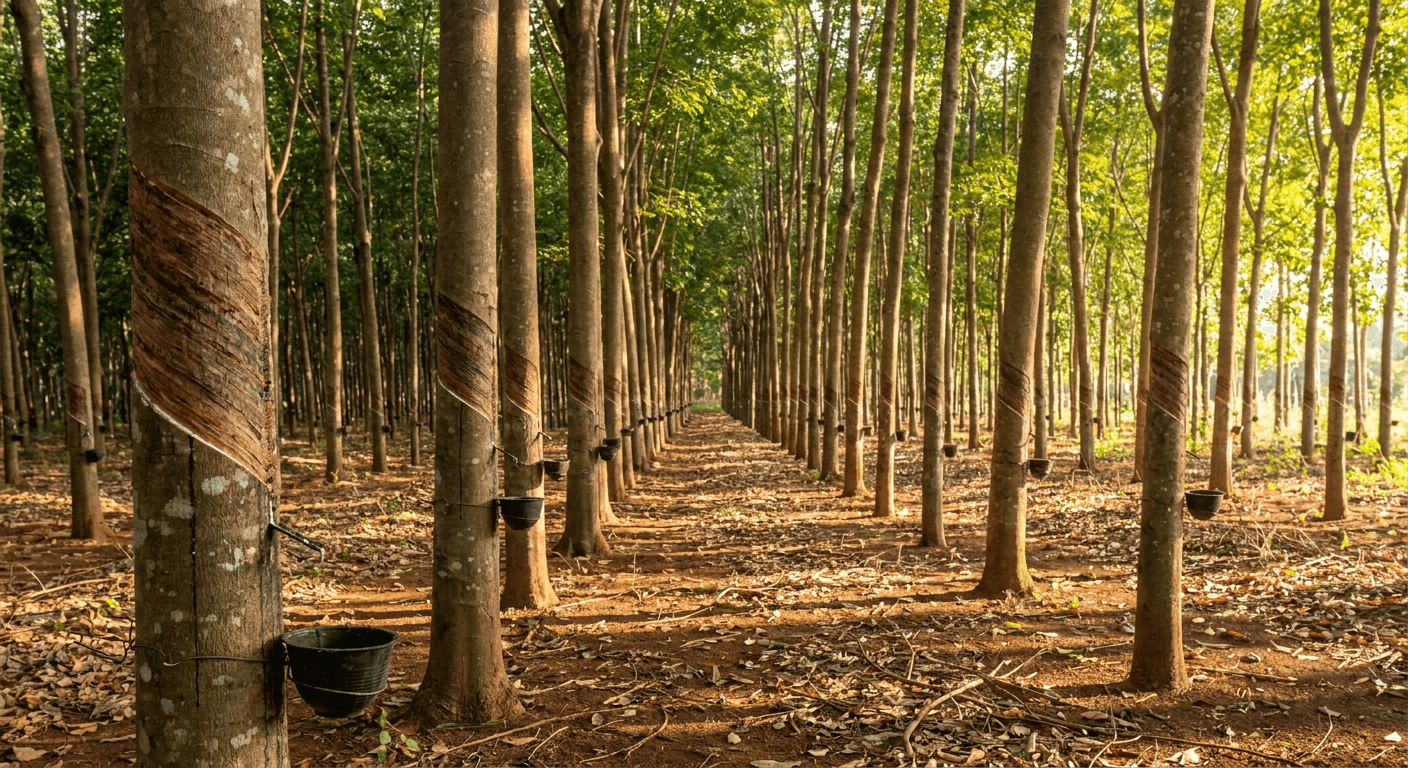
How the rubber tree becomes plywood: rubberwood (Hevea) is a second harvest from Vietnam's latex estates, favoured for furniture and joinery for its density and pale, easy-to-finish grain.
Glossary
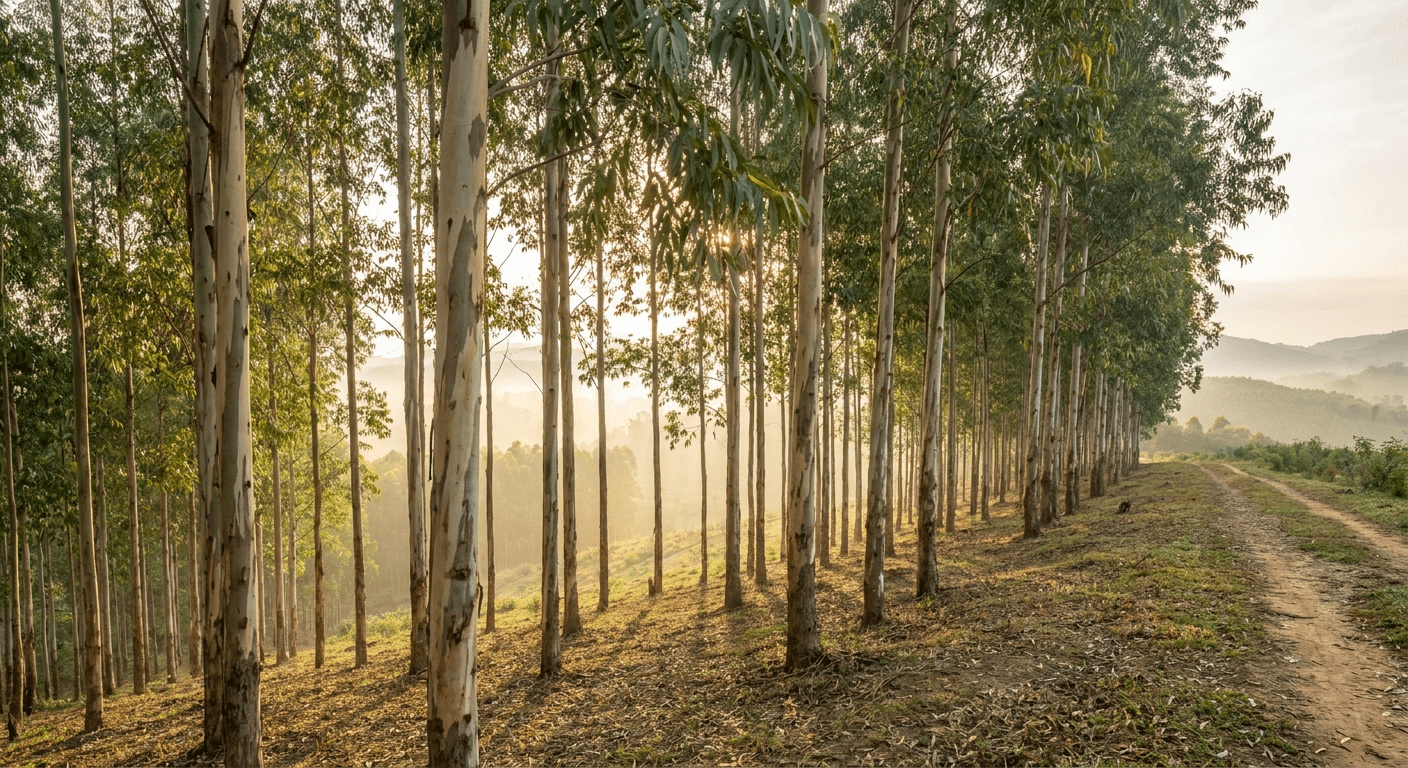
Eucalyptus Plywood from Vietnam: The Denser Core
Eucalyptus is Vietnam's denser plantation-grown plywood core, chosen when a panel needs more stiffness and screw-hold than acacia. Here is where it grows and how the extra weight changes its use.
Glossary
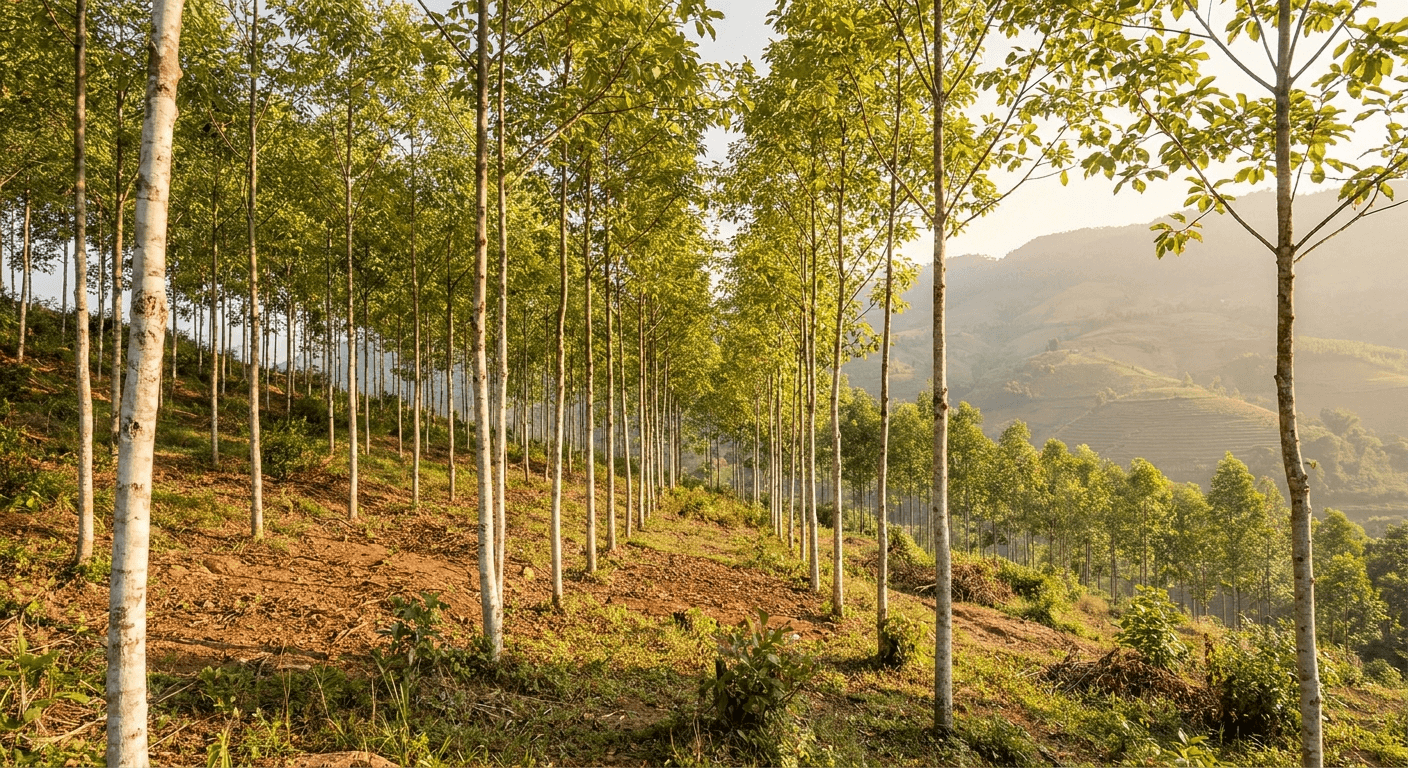
Styrax (Full-White Core) Plywood from Vietnam
Styrax (Styrax tonkinensis, known in Vietnam as bồ đề) is the pale, uniform "full white core" species Vietnamese mills use for painted and visible plywood. Where it grows, how it's farmed, and when to specify it over denser cores.