
Guides/Glossary
Eucalyptus Plywood from Vietnam: The Denser Core
Why Vietnamese mills choose plantation-grown eucalyptus for a denser, stiffer plywood core, where it grows, and how the added weight changes panel use.
Eucalyptus is one of four plantation-grown species Vietnamese mills use for plywood cores, and it earns its spot when a panel needs more density and stiffness than acacia can give. The wood comes from managed plantations across the country's midlands and coastal hills, not from natural forest, which keeps the supply steady and legal under Vietnam's ban on commercial natural-forest logging.
Where does Vietnam's eucalyptus plywood come from?
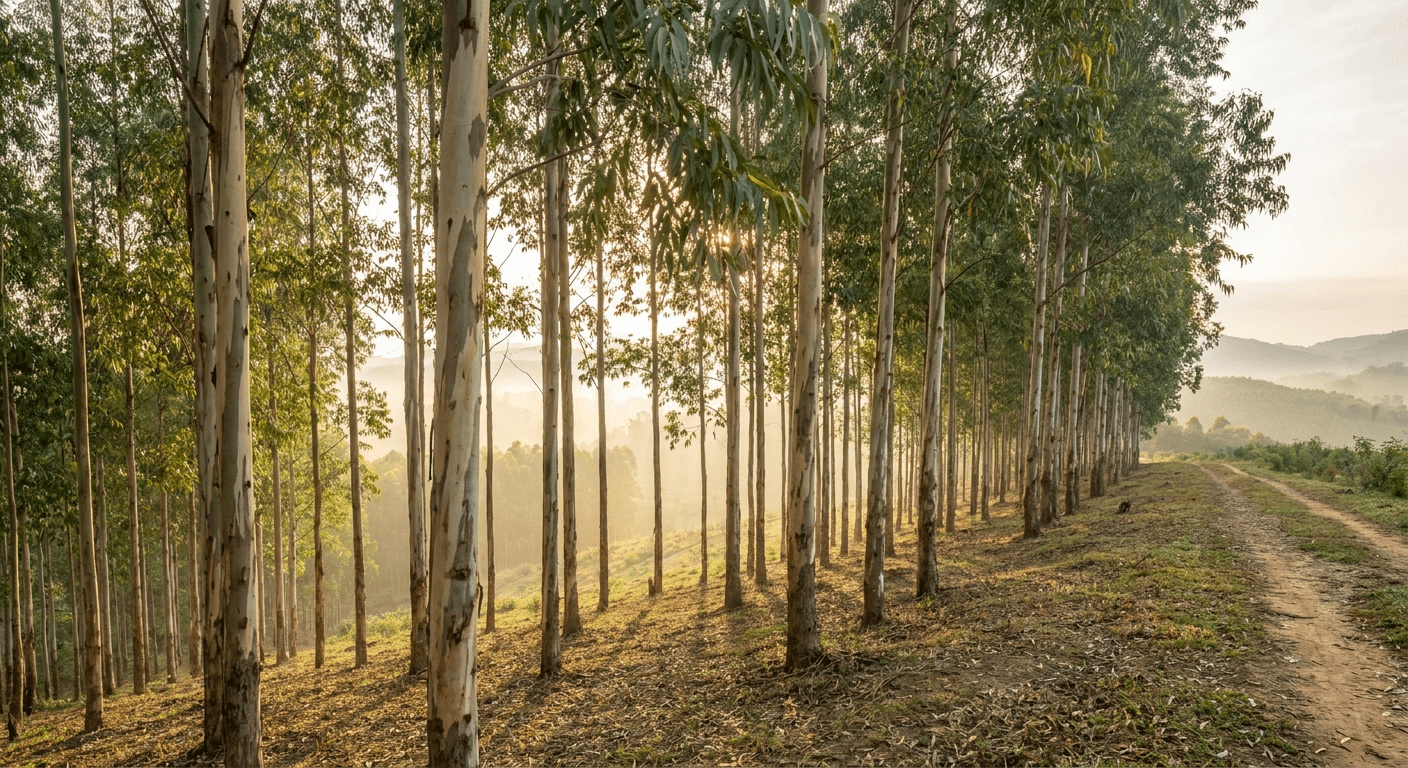
Eucalyptus is not native here. It was introduced in the 1930s, with early trial stands at Cau Cam in Nghe An, and seed imports around 1959-60 pushed it out across the denuded hills of the north. After 1975 the planting moved south. By the time the FAO documented the sector, Vietnam already carried several hundred thousand hectares of concentrated eucalyptus plus a much larger spread of scattered plantings.
The picture is bigger now. Vietnam holds close to 4.9 million hectares of planted forest, and eucalyptus sits alongside acacia and rubberwood as one of the species that feed its wood-processing mills. Most of it grows on short rotations, often five to seven years, on land farmed by smallholders rather than in old-growth stands. Common types include Eucalyptus urophylla and Eucalyptus camaldulensis, plus fast hybrid clones bred for pulp and veneer. In 2019 plantation forests supplied roughly 16 million cubic metres of logs to the domestic industry.
That origin matters for a buyer. Plantation stock is traceable, and it sidesteps the legality risk that shadows timber pulled from natural forest.
Why pick eucalyptus over acacia for a core?
Density. Eucalyptus veneer carries more mass per cubic metre than acacia, so a core built from it deflects less under load and grips a screw harder. Vinawood's spec sheet plans eucalyptus at about 650 kg/m³, against roughly 580 for acacia. That gap looks small on paper. On a loaded shelf or a flooring substrate it is the difference between a panel that stays flat and one that starts to sag.
The trade-offs are real. A denser core costs more to buy and weighs more to ship, and the harder wood can be tougher on saw blades and drills. Not every job needs it. For light packaging or a panel that will never see much load, acacia does the work at lower weight and lower cost. Eucalyptus earns its keep where stiffness and screw-holding are the point. Think furniture carcasses, flooring substrate, or a site panel that has to carry real weight.
How does the denser core change panel weight and use?
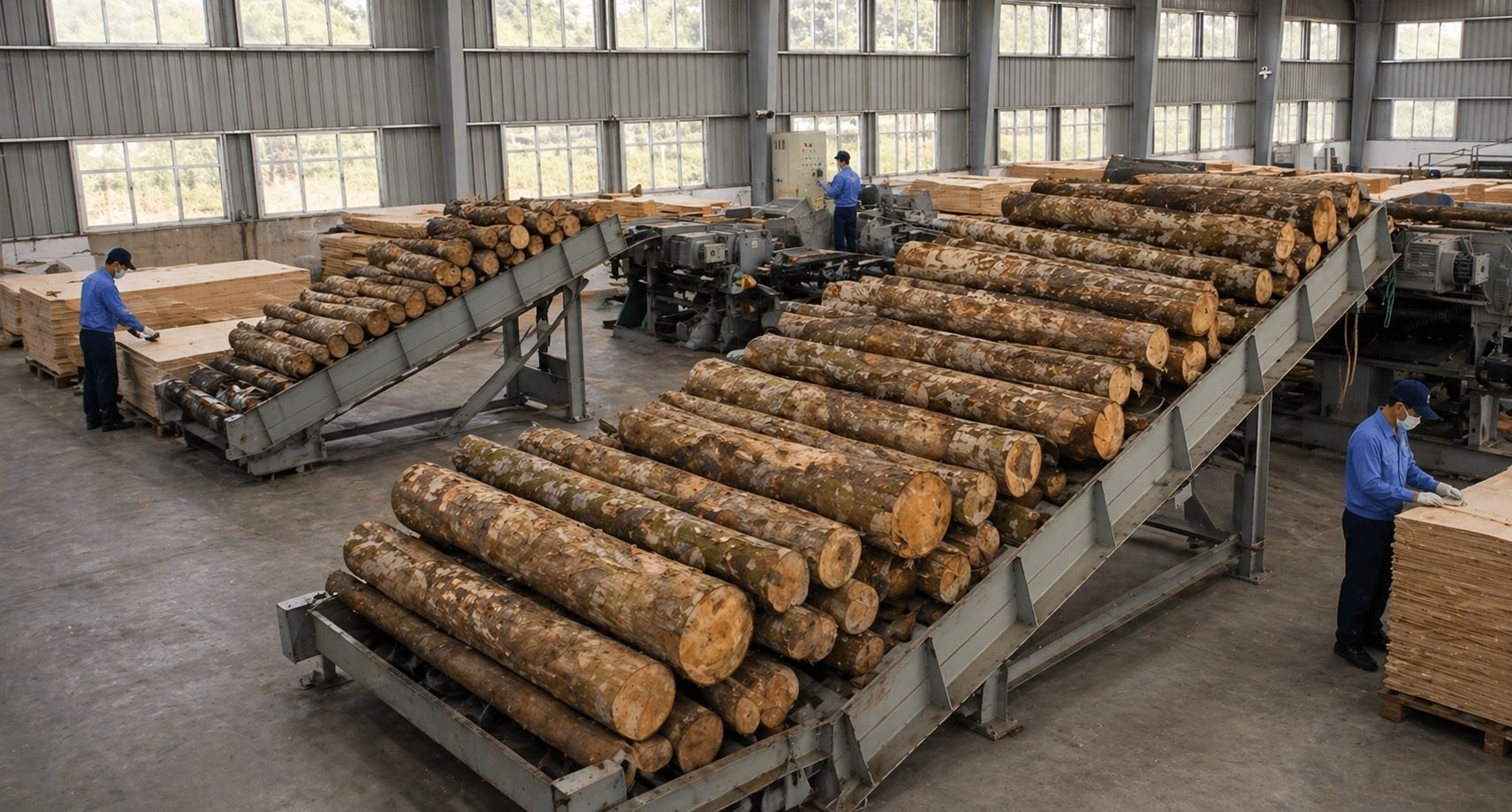
Weight is the headline. A eucalyptus-core sheet weighs more than an acacia-core sheet of the same thickness and size, and that shows up fastest inside a shipping container. Payload limits often bite before the box is physically full, so a heavier core can mean fewer sheets per container. Anyone planning a load needs to run the weight math and the volume math side by side.
On the build side the extra mass pays back. The panel feels solid, takes fasteners near the edge without splitting as readily, and holds its shape under sustained load. For a specifier weighing an 18 mm (3/4 in) panel for a cabinet run or a mezzanine deck, the denser core is often the reason eucalyptus gets named on the drawing.
Where does eucalyptus sit between acacia and hevea?
Vinawood plans its three main cores in a clear density order: hevea (rubberwood) on top near 700 kg/m³, eucalyptus in the middle around 650, acacia lightest near 580. These are planning values. The real figure for any batch is confirmed on the mill certificate that ships with the order, so treat the numbers below as a guide for weight and stiffness, then read the cert for what actually landed.
| Core species | How it grows in Vietnam | Relative core density | Where it tends to fit |
|---|---|---|---|
| Acacia | Fast plantation hybrid, short rotation, very widely planted | Lightest of the three | Packaging, general panels, weight-sensitive loads |
| Eucalyptus | Plantation-grown on midlands and coastal hills, short rotation | Middle, denser than acacia | Furniture, flooring substrate, heavier site work |
| Hevea (rubberwood) | Recovered from retired rubber plantations | Densest of the three | Jobs that want the most mass and screw-hold |
For the full density figure, thickness range and panel specs, read Vinawood's eucalyptus core plywood specifications rather than a general guide. The numbers there are kept in step with what the mill certifies.
Is plantation eucalyptus a sustainable source?
Short rotations make eucalyptus a renewable feedstock, and the plantation model is what lets Vietnam supply veneer at volume without cutting natural forest. The wood carries certification when the grower and mill hold it. Vietnam had roughly 868,000 hectares of forest certified for sustainable management at last report, with eucalyptus and acacia estates making up a large share. The flip side is real. Fast monoculture plantations draw criticism over soil and water, so buyers who care about chain-of-custody should ask for FSC or PEFC paperwork rather than assume it.
Related guides
Frequently asked
Is Vietnamese eucalyptus plywood plantation-grown or from natural forest?
Plantation-grown. Eucalyptus in Vietnam comes from managed short-rotation estates across the midlands and coastal hills, not natural forest, which Vietnam bans from commercial logging. That keeps the supply traceable and lower-risk for legality.
Is a eucalyptus core stronger than an acacia core?
It is denser and stiffer. Vinawood plans eucalyptus around 650 kg/m3 against roughly 580 for acacia, so a eucalyptus core resists deflection better and holds screws harder. It also weighs and costs more, so it gets chosen when that extra stiffness is worth it.
Does a eucalyptus core make the finished panel heavier?
Yes. At the same thickness and size a eucalyptus-core sheet weighs more than an acacia-core one. That matters most for shipping, where a container can hit its payload limit before it is physically full.
How does eucalyptus rank against hevea and acacia by density?
For planning, the order is hevea (rubberwood) densest near 700 kg/m3, eucalyptus in the middle near 650, and acacia lightest near 580. These are typical values; the exact density for a batch is confirmed on the mill certificate.
What density should I plan a eucalyptus core at?
Around 650 kg/m3 as a planning figure. For the full spec, thickness range and confirmed numbers, see Vinawood's eucalyptus core plywood specifications page and check the mill certificate for your order.
Related in the atlas
Continue reading
Same topic first, then what others on the atlas read most.
Glossary
Plywood Grade-Stamp Decoder: How to Read the Marks
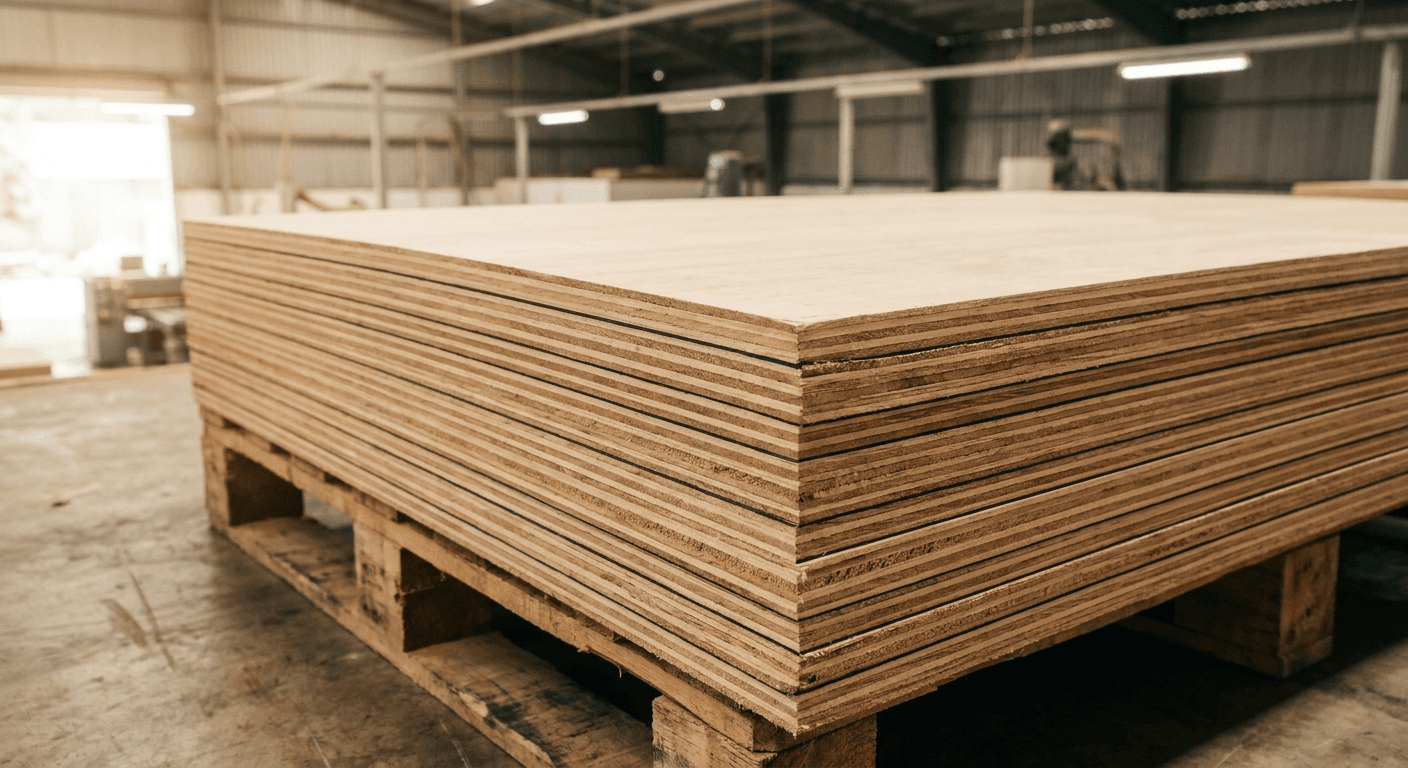
A visual key to the stamps and ink-marks on export plywood: mill code, standard reference, bond and emission class, and FSC/PEFC/CE/CARB marks, plus how to verify each against the shipment paperwork.
Glossary
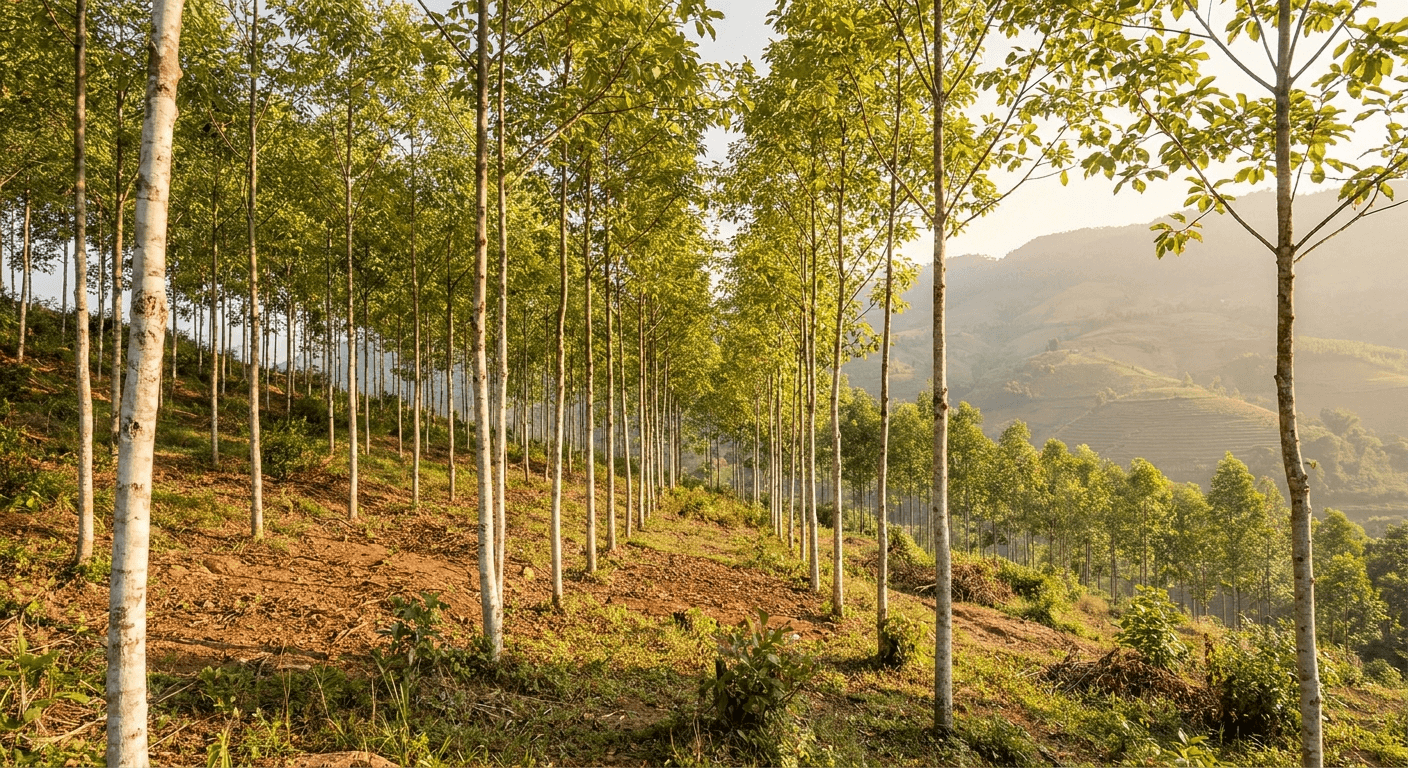
Rubberwood (Hevea) Plywood from Vietnam
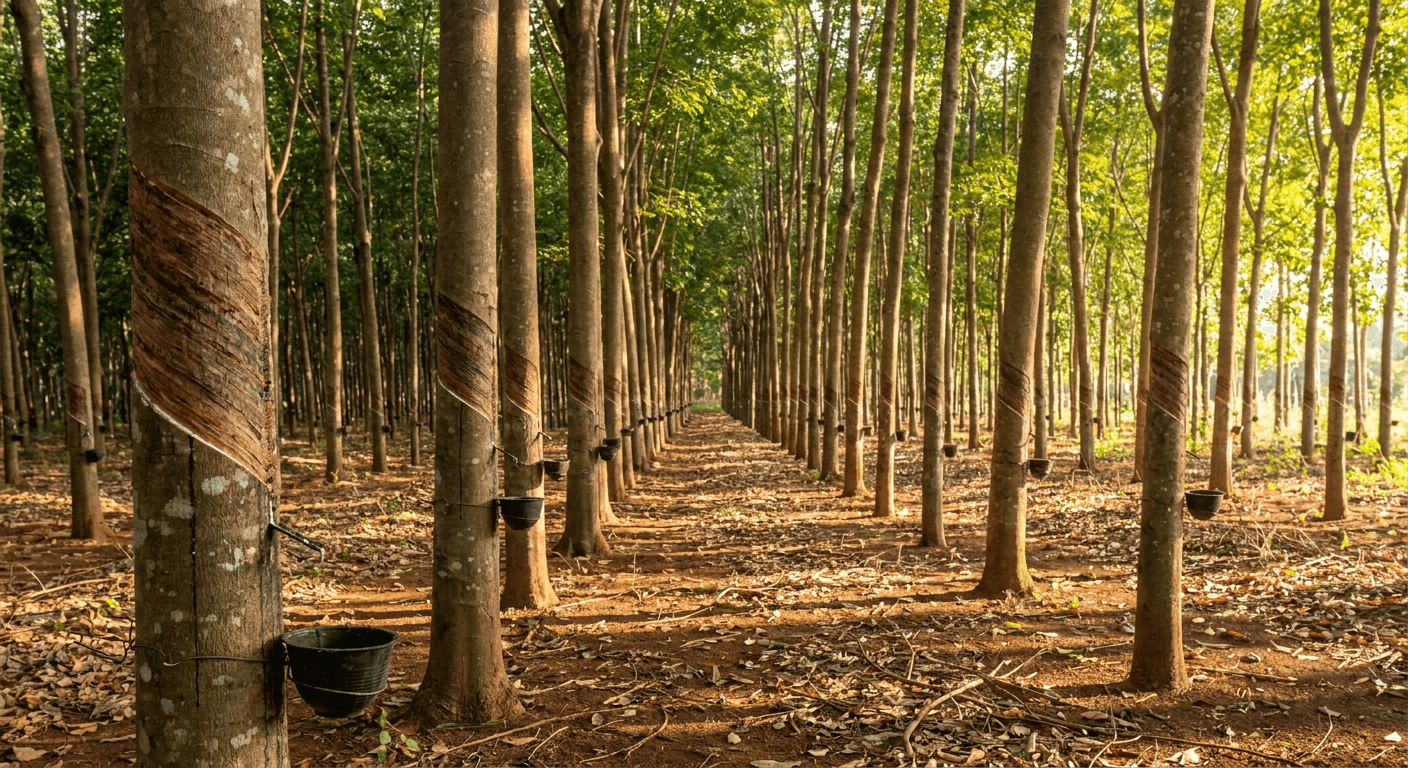
How the rubber tree becomes plywood: rubberwood (Hevea) is a second harvest from Vietnam's latex estates, favoured for furniture and joinery for its density and pale, easy-to-finish grain.
Glossary
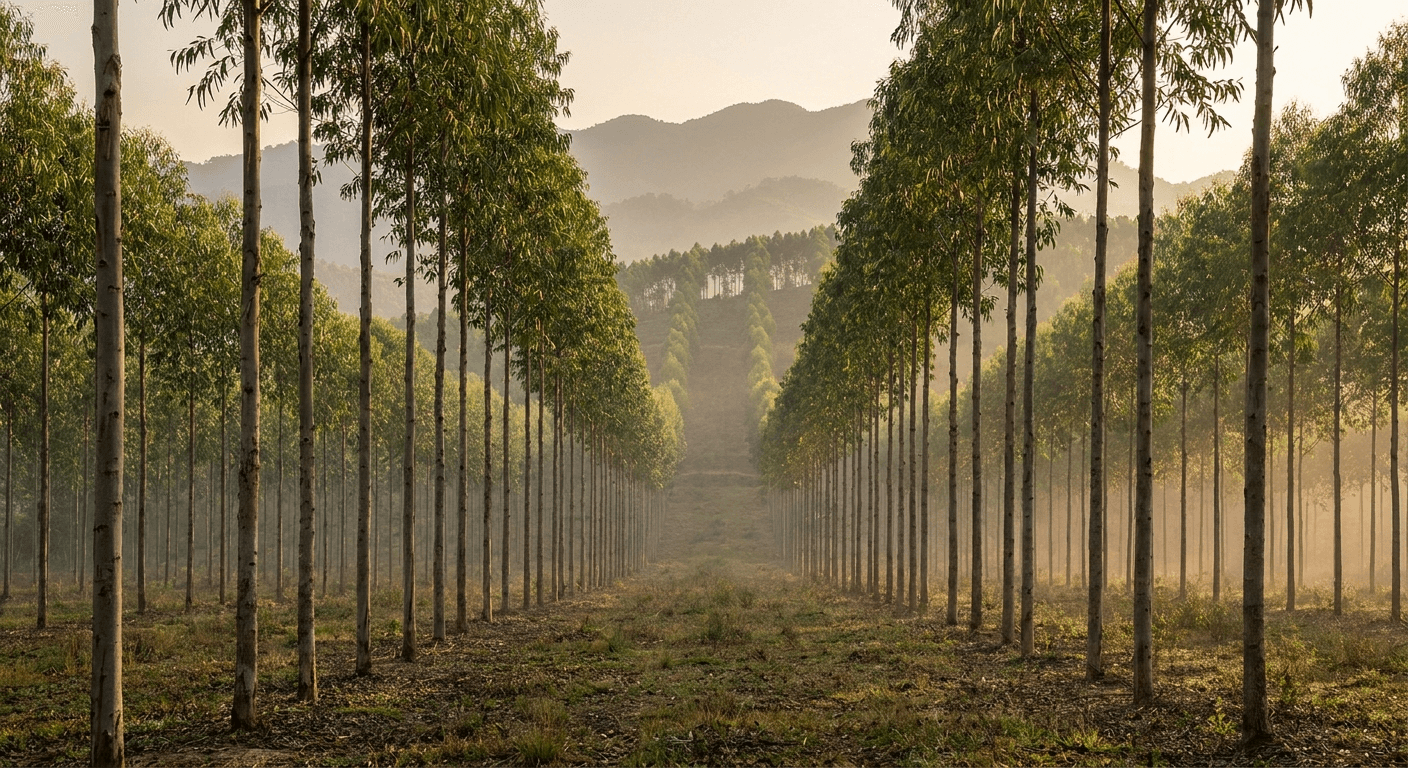
Styrax (Full-White Core) Plywood from Vietnam
Styrax (Styrax tonkinensis, known in Vietnam as bồ đề) is the pale, uniform "full white core" species Vietnamese mills use for painted and visible plywood. Where it grows, how it's farmed, and when to specify it over denser cores.
Glossary
Acacia Plywood from Vietnam: The Workhorse Core
Acacia is the plantation-grown core behind most Vietnamese plywood. How and where it is farmed, why it became the workhorse core, and where it is used.