
Guides/Overview
The Vietnam Plywood Industry: A Complete Overview
How Vietnam became a top-five plywood exporter: its plantation species base, main export product types, certifications, and place among global origins.
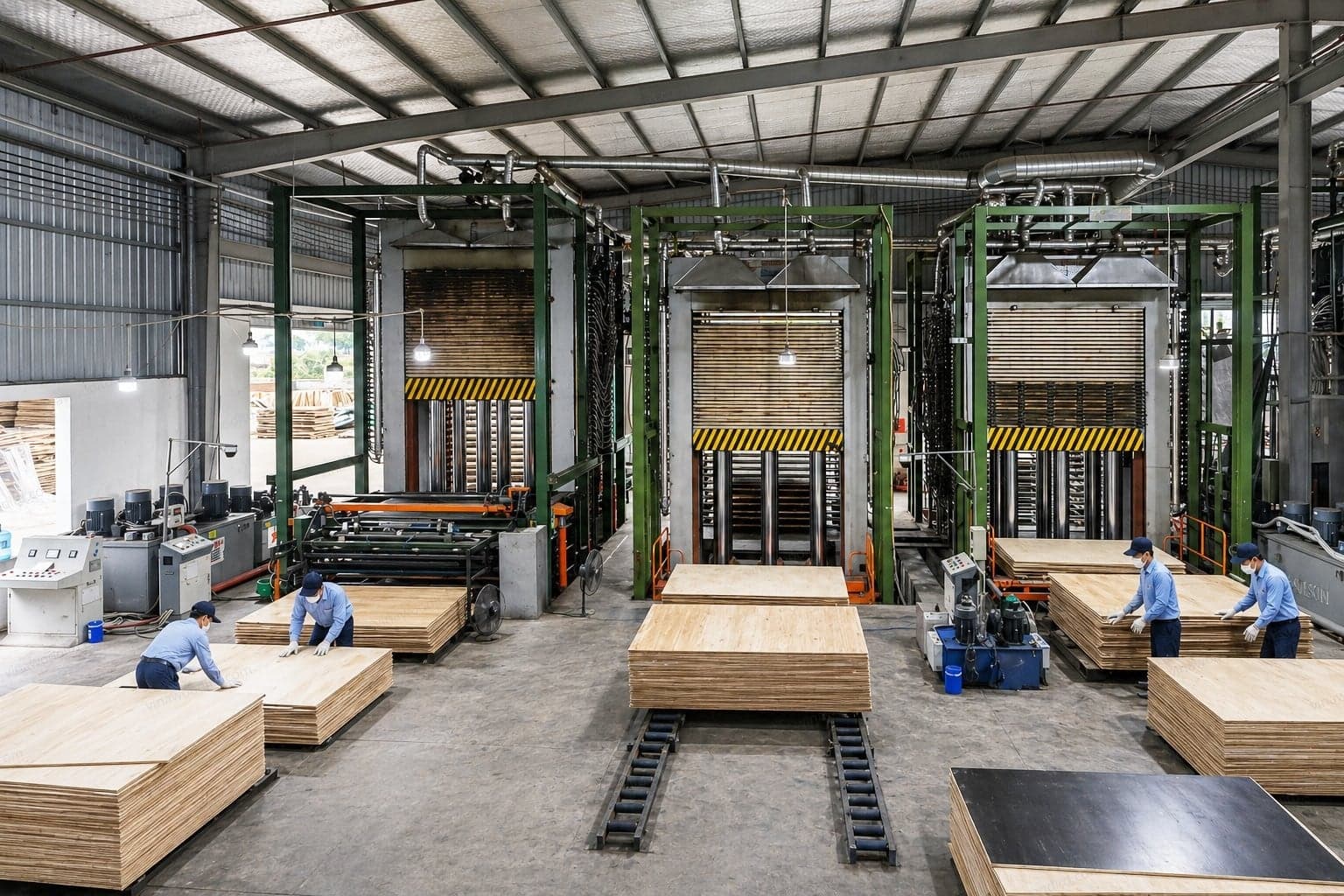
Vietnam is one of the world's five largest plywood exporters. The country ships on the order of USD 1.1 to 1.2 billion of plywood a year, built almost entirely on fast-growing plantation timber rather than natural forest. This page maps the industry at origin level: how it grew, which species feed the mills, what product types leave the ports, and how the certification picture works. For panel specifications, sizes and grades, the manufacturer site vinawoodltd.com carries the detail.
How large is Vietnam's plywood industry, and how fast did it grow?
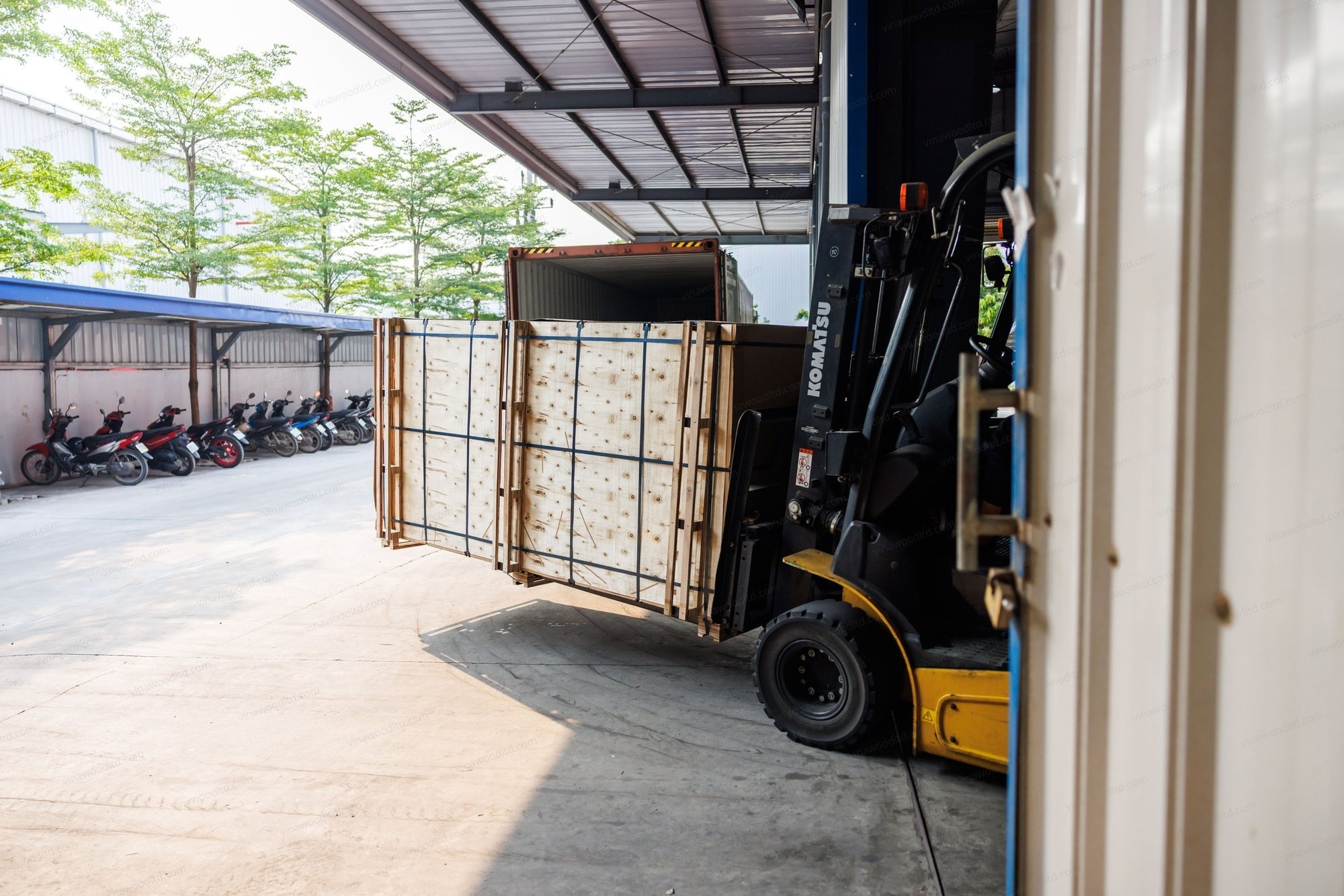
Plywood sits inside a much bigger wood economy. Vietnam's wood and wood-product exports reached roughly USD 16 billion in 2024 and crossed USD 17 billion in 2025, the first year above that threshold, according to figures reported by Vietnam's agriculture ministry and the General Statistics Office. Furniture makes up most of that total. Plywood is a smaller but fast-moving slice, worth an estimated USD 1.1 to 1.2 billion in 2024 and forecast higher for 2025.
The growth came from several directions at once. Domestic plantation supply matured, mill capacity expanded across the north and south, and buyers in the United States, Korea and Japan moved orders toward Vietnam-origin panels. The United States alone accounts for around 55 percent of Vietnam's total wood exports, with Japan and China each above 12 percent. Wood chips and pellets, made largely from plantation thinnings and mill offcuts, add several billion dollars more and show how completely the country now runs on planted wood. Wood pellet exports alone passed the USD 1 billion mark, from a material that started as timber scrap.
What wood species go into Vietnamese plywood?
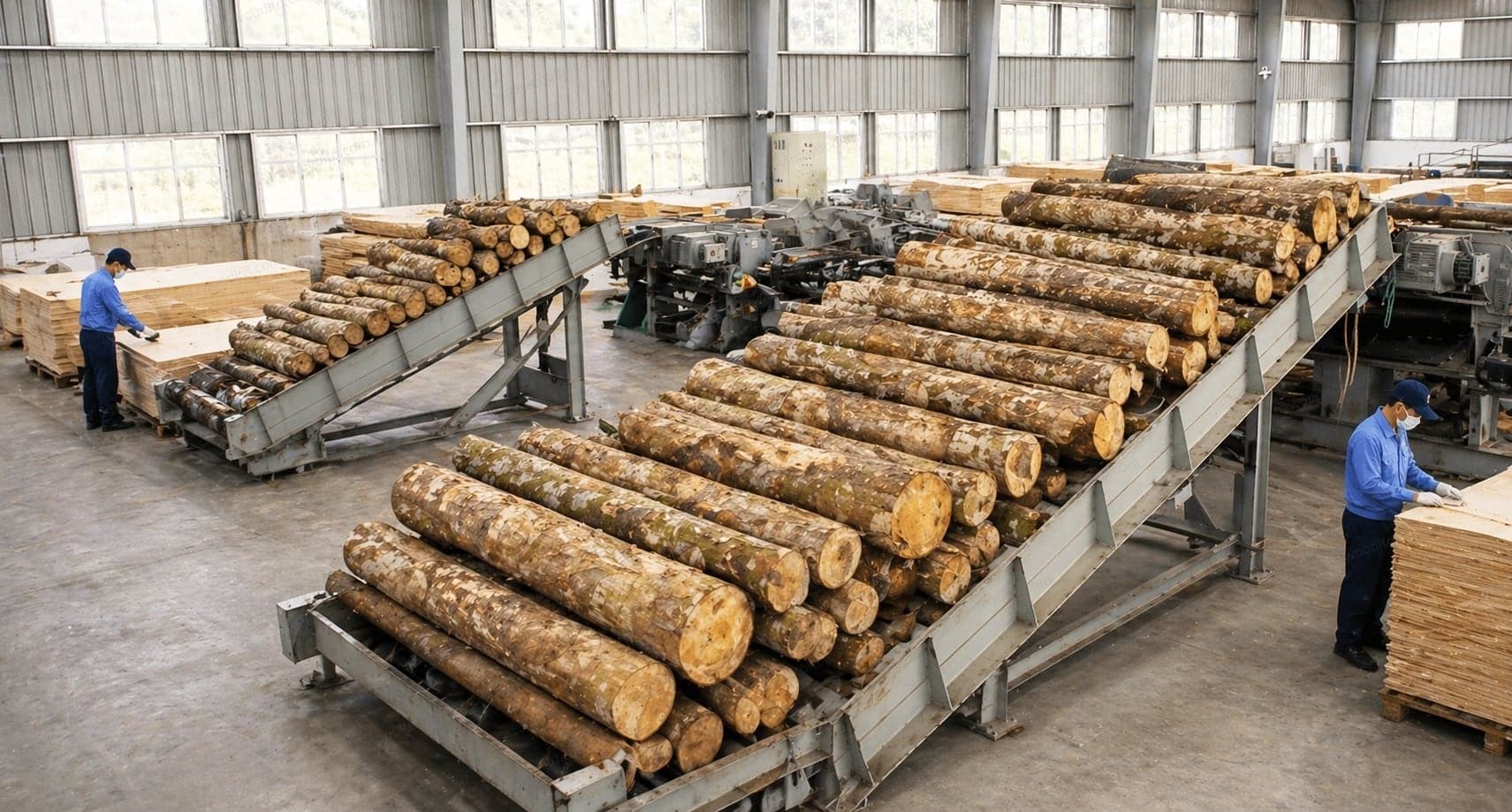
Four plantation-grown species do most of the work: Acacia, Eucalyptus, Hevea (rubberwood) and Styrax. None of these come from tropical natural forest. They are grown on planted land, much of it held by smallholders on short rotations of six to ten years, then peeled into veneer. Acacia and Eucalyptus dominate by volume. Rubberwood arrives as a by-product of the rubber-latex industry, harvested once trees stop producing latex. Styrax, known locally as bồ đề, is a lighter species used where a low-density core is useful.
Density drives how a species behaves inside a panel, so it helps to see typical planning values side by side. Treat these as indicative. The figure that counts for any given batch is the one printed on the mill certificate.
| Species | Typical density (kg/m³) | Role in the panel |
|---|---|---|
| Hevea (rubberwood) | ~700 | Densest of the four; firm, uniform core |
| Eucalyptus | ~650 | Strong, widely planted, common face and core |
| Acacia | ~580 | The workhorse plantation species |
| Pine | ~520 | Softwood, sometimes blended in |
| Styrax | ~500 | Light local species for lower-density cores |
These are planning values, not guarantees, and the same species varies with age and growing site. For a species-by-species breakdown covering grain, colour and grade behaviour, see the species detail on vinawoodltd.com.
What types of plywood does Vietnam export?
Vietnamese mills produce a broad range rather than one signature product. The main export categories are:
- Film-faced plywood for concrete formwork, usually carrying a phenolic surface film.
- Structural and commercial plywood for sheathing, furniture, cabinetry and general construction.
- Overlaid panels such as MDO and HDO for signage, transport bodies and repeat-use forming.
- Packing-grade plywood for crates, pallets and industrial packaging.
- Marine and specialty grades built for higher moisture exposure.
Glue class, face grade and core makeup change with the order and the destination market. Exact thicknesses, sheet sizes, overlay options and glue-bond classes belong on the product pages, not here. The specification detail lives on vinawoodltd.com; this atlas stays at origin level and does not restate panel specs.
Where does Vietnam rank among global plywood origins?
Trade data places Vietnam inside the top five plywood-exporting countries. The approximate order by export value in recent years:
| Rank | Origin |
|---|---|
| 1 | China |
| 2 | Indonesia |
| 3 | Brazil |
| 4 | Russia |
| 5 | Vietnam |
Trade policy shapes these positions. Chinese-origin hardwood plywood carries United States antidumping and countervailing duties, which pushed some buying toward other origins, Vietnam among them. Vietnam-origin plywood has itself drawn US scrutiny through circumvention and transshipment inquiries, so origin documentation and a genuine local supply chain matter for buyers. That is a case-specific picture rather than any blanket duty exemption, and it is worth reading the current scope before assuming a given shipment qualifies.
What does certification look like for Vietnam-origin plywood?
Two questions drive buyer due diligence. Is the wood legal and responsibly sourced, and does the finished panel meet the destination market's product rules. On sourcing, FSC and PEFC chain-of-custody certification covers plantation legality and traceability, and Vietnam has been expanding certified plantation area to meet EU Deforestation Regulation (EUDR) and timber-legality expectations. The country's total forest area was about 14.87 million hectares in 2024, of which plantation forest made up roughly 4.74 million hectares, according to national forestry data.
On the product side, the relevant marks depend on where the panel is headed. CE marking under EN 13986 applies in the EU, UKCA in Britain, EPA TSCA Title VI (CARB Phase 2) for US formaldehyde limits, Korea's KS mark for that market, and BIS for India. A mill exporting widely usually holds ISO 9001 alongside several of these. This overview keeps certification high level; the market-by-market compliance detail sits on the manufacturer's certification pages.
What is distinctive about Vietnam's supply base?
The plantation model is the thing to understand. Because Vietnamese plywood rests on planted Acacia, Eucalyptus and rubberwood rather than harvested natural forest, supply scales with planting rather than with logging concessions. That gives the industry room to grow and a clearer legality story for EU and US buyers. It also brings trade-offs. Smallholder plantations vary in management, short rotations produce smaller-diameter logs, and quality between mills is uneven, which is why certification, documentation and per-batch mill certificates carry real weight. Buyers who verify those details tend to get consistent panels; buyers who skip them can be surprised.
Where to go deeper
This overview is the hub of the atlas. From here you can follow the deeper threads:
- Why Vietnam became a plywood export hub
- Vietnam's plywood manufacturing regions
- The plantation forestry behind the panels
For product specifications, grades and a working manufacturer example, see Vinawood at vinawoodltd.com. If you are ready to source panels, Vinawood's official distribution partner lists available stock.
Related guides
Frequently asked
Is Vietnamese plywood made from tropical hardwood?
No. Vietnamese plywood is made from plantation-grown species, mainly Acacia, Eucalyptus and Hevea (rubberwood), plus lighter Styrax. These are grown on planted land on short rotations, not harvested from tropical natural forest, which is why the term plantation-grown is more accurate than tropical or the vague label hardwood plywood.
How big is Vietnam's plywood export industry?
Plywood exports were worth an estimated USD 1.1 to 1.2 billion in 2024 and are forecast higher for 2025. That sits inside a wider Vietnamese wood-export economy of roughly USD 16 billion in 2024 that crossed USD 17 billion in 2025, in which furniture is the largest category.
Where does Vietnam rank among plywood exporters?
Vietnam is generally counted among the world's top five plywood-exporting countries by value, behind China, Indonesia, Brazil and Russia. Its main plywood buyers are the United States, Korea and Japan.
What species are used in Vietnamese plywood?
Four plantation species do most of the work: Acacia (typical density around 580 kg/m3), Eucalyptus (around 650), Hevea or rubberwood (around 700, the densest) and Styrax (around 500). Pine is sometimes blended in. Treat these as planning values; the batch figure appears on the mill certificate.
Is Vietnam-origin plywood subject to US duties?
It depends on the specific product scope and any active investigation. Chinese-origin hardwood plywood carries US antidumping and countervailing duties, and Vietnam-origin plywood has drawn circumvention and transshipment scrutiny. There is no blanket duty exemption, so buyers should check the current scope and keep full origin documentation.
Related in the atlas
Continue reading
Same topic first, then what others on the atlas read most.
Overview
What is Vietnam plywood?
Vietnam plywood, defined: plywood made in Vietnam from plantation-grown acacia, eucalyptus, rubberwood and styrax and exported worldwide. How it differs by origin, and where to go deeper.
Overview
How Vietnam plywood is made
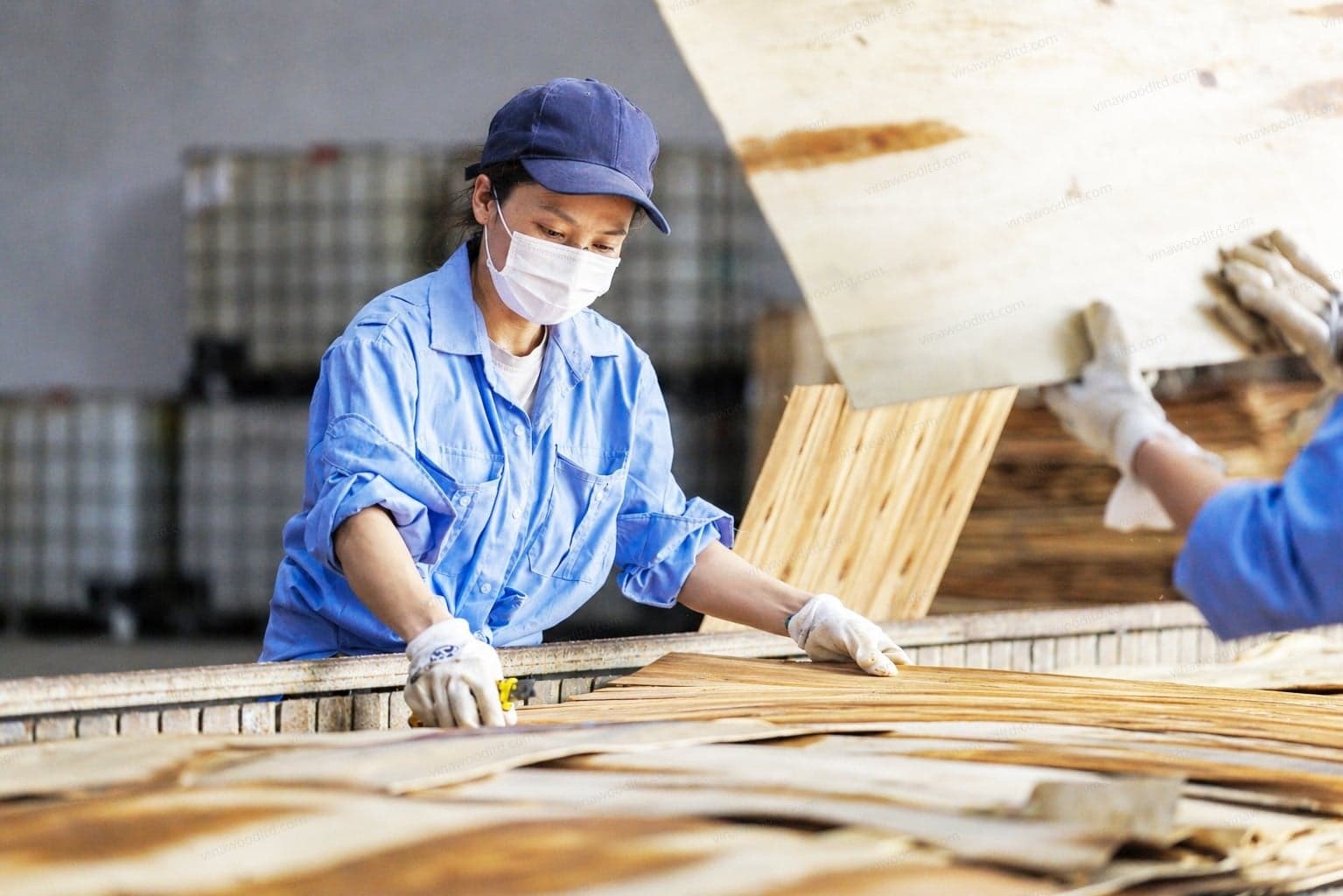
How a modern Vietnamese export mill turns plantation-grown logs into finished plywood, walked through all twelve production stages from log peeling to container loading.
Overview
Plantation Forestry Behind Vietnam's Plywood
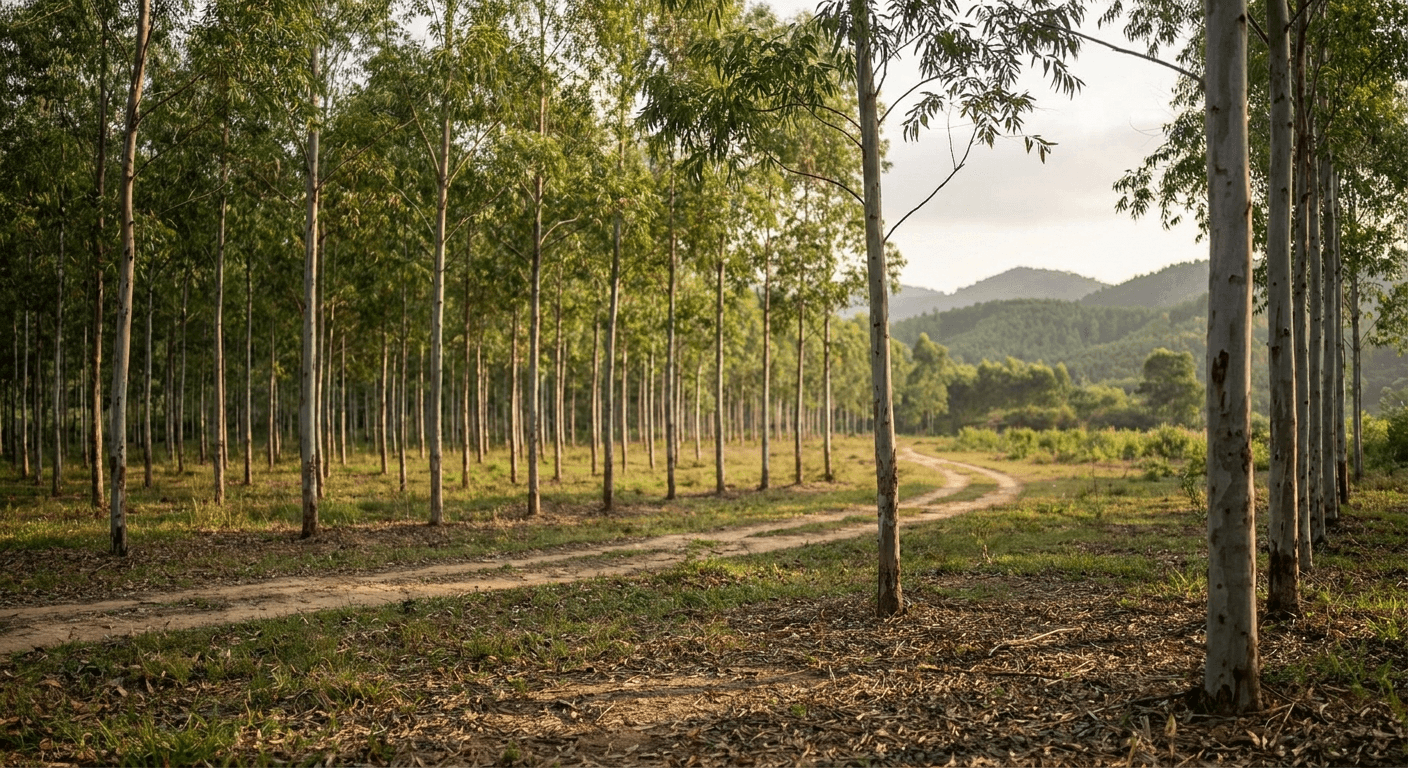
Vietnam's plywood is built on plantation-grown acacia, eucalyptus and rubberwood, much of it raised by smallholder farmers. A look at the timber base, rotation ages, FSC and PEFC certification, and EUDR legality context.
Overview
Vietnam's Plywood Manufacturing Regions and Clusters
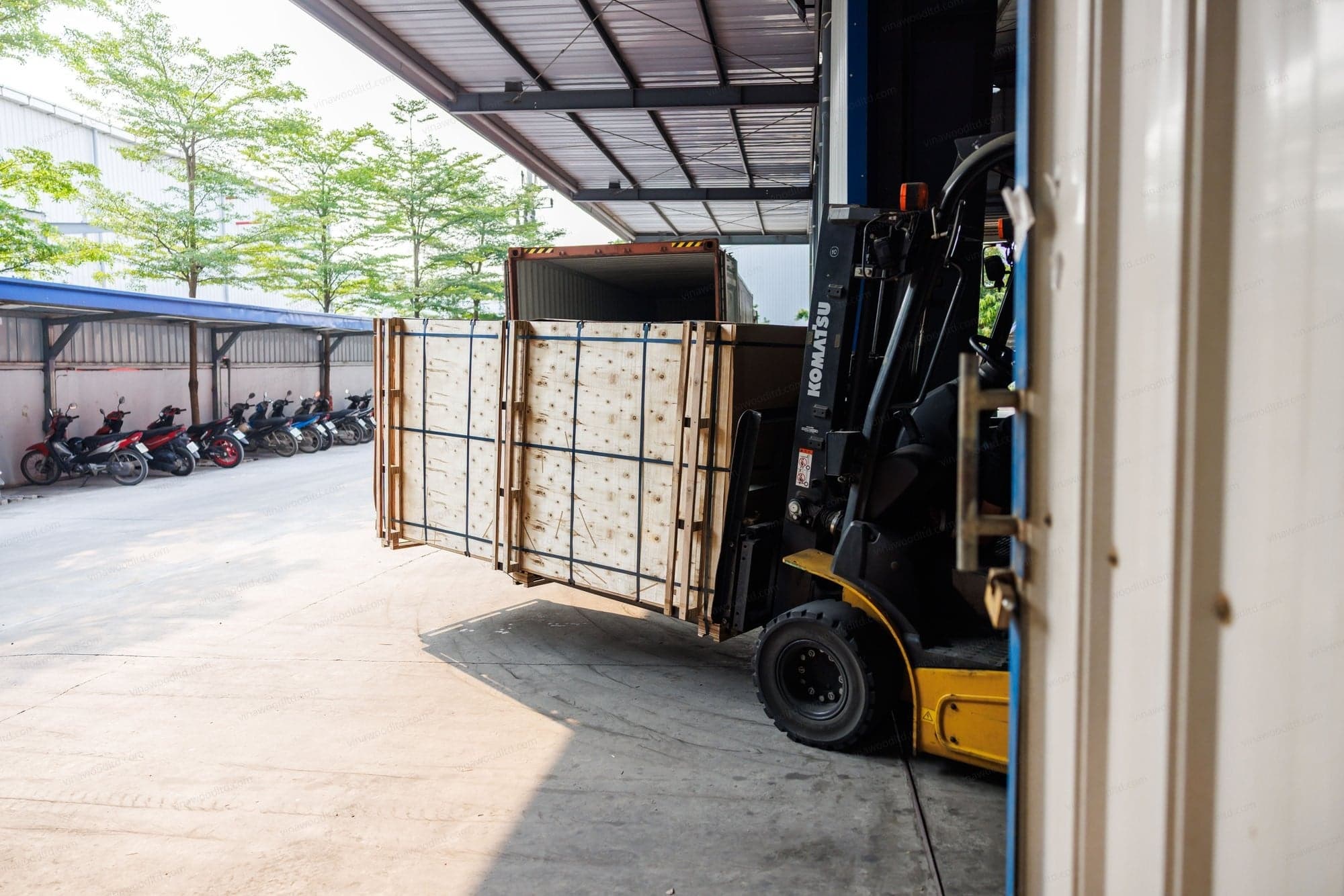
A map of where Vietnam makes plywood: the northern mill clusters around Bac Ninh and Phu Tho, the southern furniture belt, and how region maps to species supply and to the export ports that ship each.