
Guides/Markets
Vietnam vs China Plywood: An Origin Comparison
Compare Vietnam and China plywood by origin: species, scale, quality, certification, and the US antidumping duties that reshaped sourcing.
China and Vietnam grow their plywood from different forests, build it at very different scale, and sit under very different US trade treatment. For an importer, that last difference usually decides the sourcing question before quality or price enters the conversation. This page compares the two origins on forestry base, industry maturity, quality reputation, legality norms, and the antidumping and countervailing duty picture that reshaped the trade after 2018.
What forest does each origin's plywood come from?
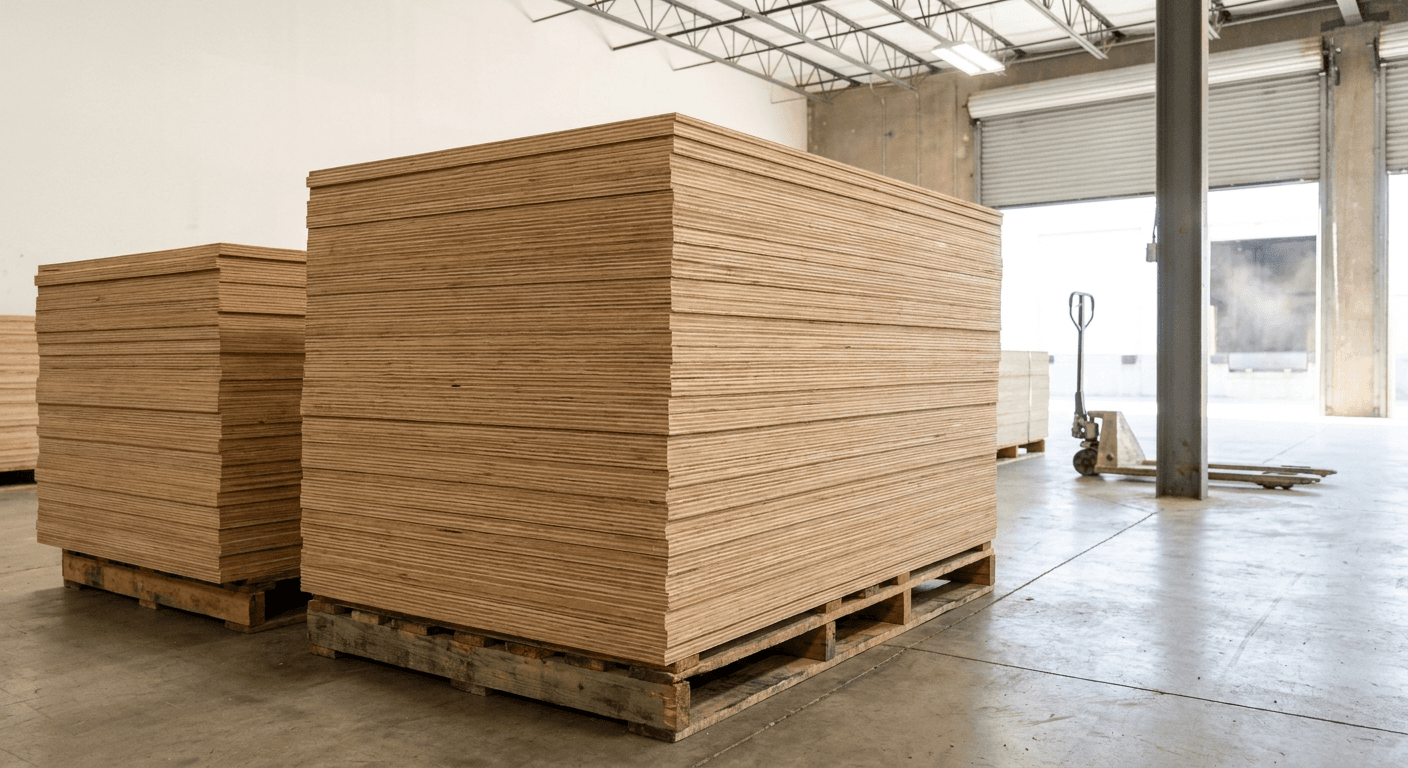
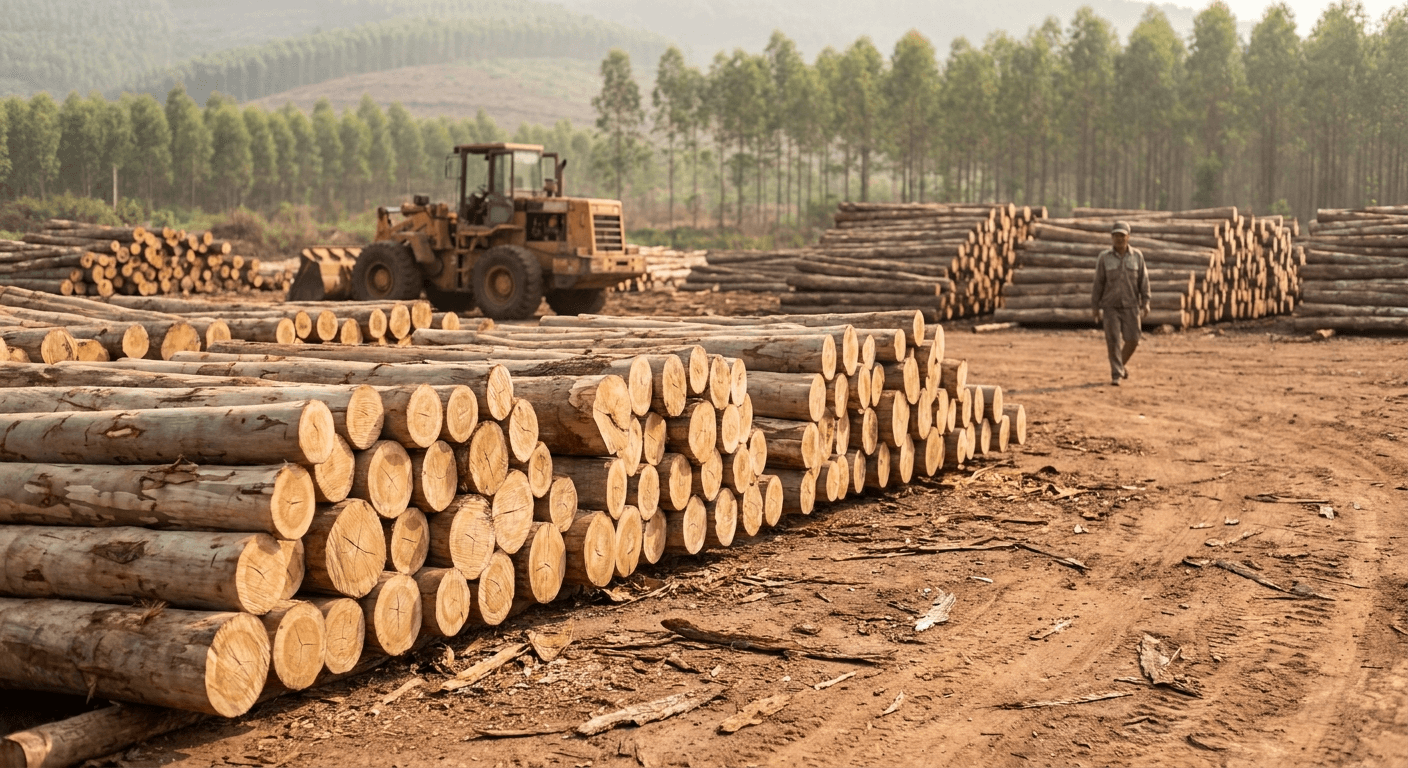
Vietnam builds its plywood on fast-growing plantation species: Acacia, Eucalyptus, Hevea (rubberwood), and Styrax. Rubberwood sits at the heavy end near 700 kg/m3, eucalyptus around 650, acacia closer to 580. Those are planning values; the confirmed density lives on each mill certificate. The country runs roughly 4.9 million hectares of planted forest, and rubber plantations alone cover more than 900,000 hectares, per Forest Trends. Most of that is smallholder-grown on short rotations.
China draws mainly on poplar and eucalyptus from its own plantation belt, supplemented by imported logs and veneers for face layers. Poplar gives a light, uniform core that machines cleanly and glues well at volume. The species base is broadly plantation-grown on both sides, so the honest headline is that neither origin is a "tropical hardwood" source in the old sense. For the full species density table and panel specs, see the manufacturer reference on vinawoodltd.com rather than treating this page as a spec sheet.
How do scale and industry maturity compare?
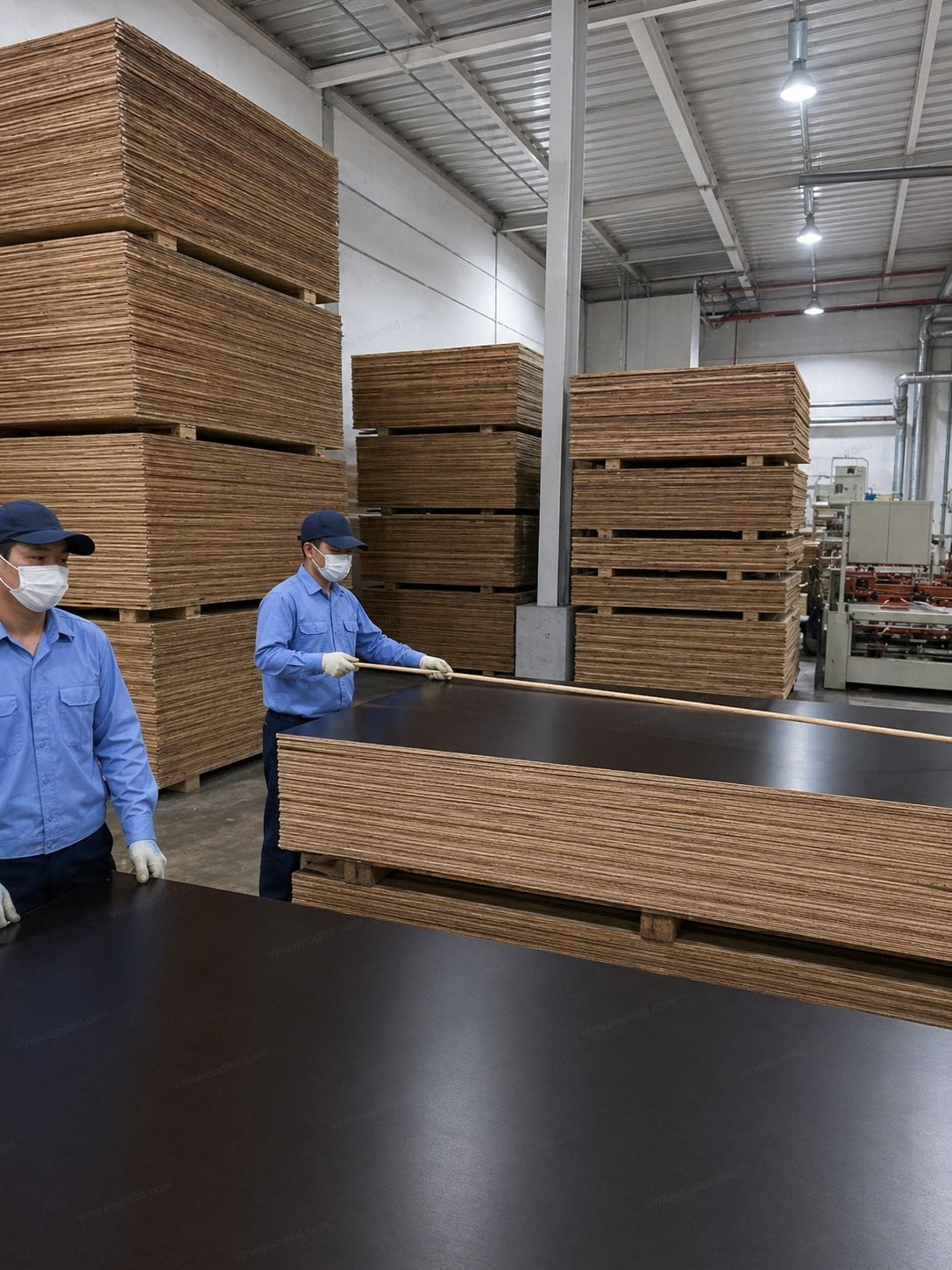
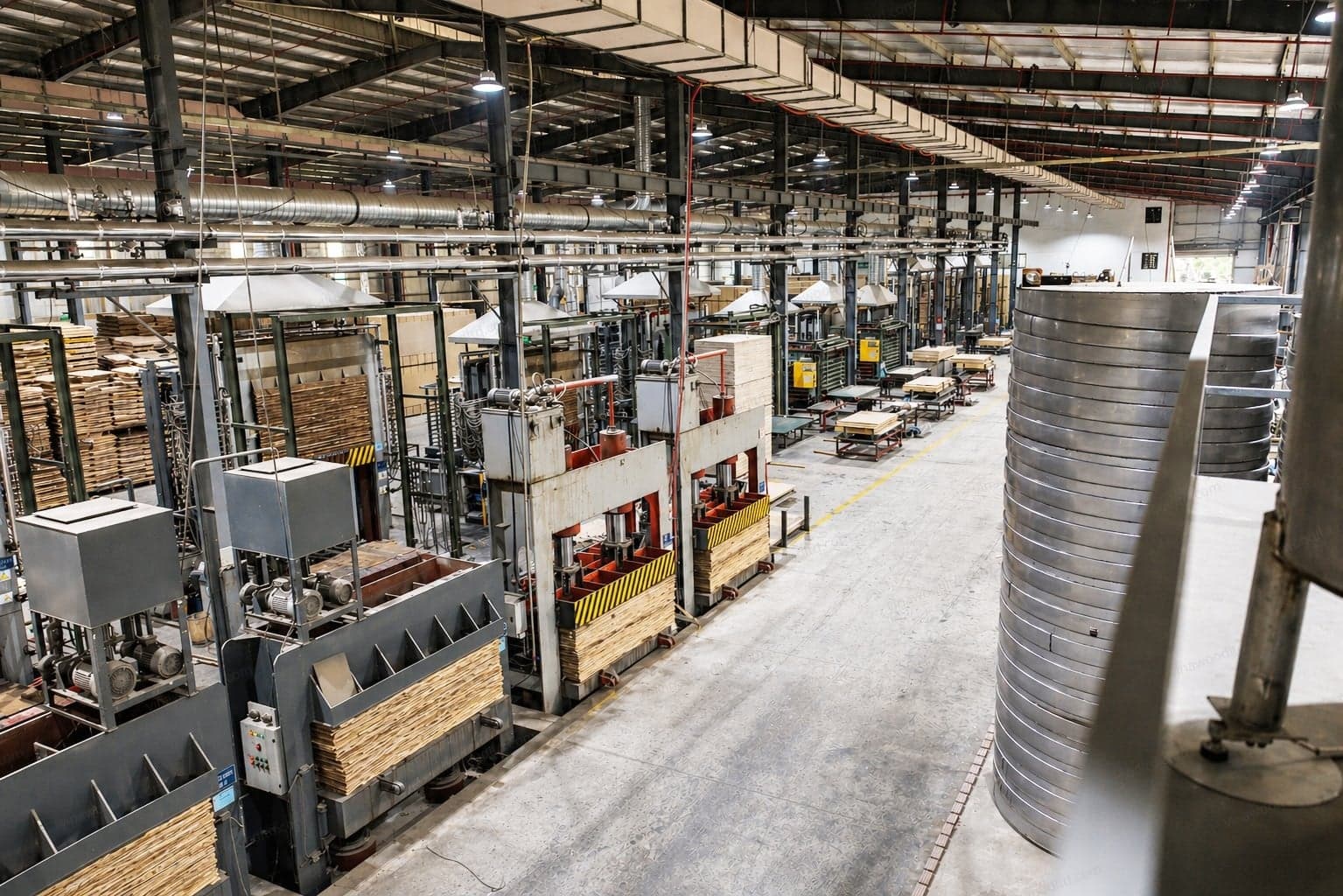
China is the larger and older industry by a wide margin. Two provinces carry most of it. Shandong alone holds around 46 million cubic metres of annual plywood capacity across more than 1,400 mills, and Guangxi adds roughly 35 million, according to timber-industry trade press. That depth shows up as short lead times, wide format and grade availability, and cost efficiency that a smaller origin struggles to match.
Vietnam's plywood sector is younger and smaller, but it grew fast. Plywood exports (HS 4412) reached about 1.11 billion USD in 2021 before easing to 1.01 billion in 2022, with the United States the single largest destination at roughly 36% of that value, per UN Comtrade data. The wider Vietnamese wood-products sector cleared 17 billion USD in 2024. Capacity is real and expanding. It is not China's scale, and buyers who need very large single-format runs on short notice still feel that gap.
Vietnam vs China plywood at a glance
| Factor | Vietnam origin | China origin |
|---|---|---|
| Core species | Acacia, Eucalyptus, Hevea (rubberwood), Styrax | Poplar, eucalyptus, some imported hardwood faces |
| Industry scale | Growing mid-size base; ~1B USD plywood exports/yr | World's largest; 80M+ m3 capacity in two provinces alone |
| Maturity | Younger, expanding rapidly since ~2018 | Deep, decades-old supply chain |
| Cost position | Competitive; less volume leverage | Strong on high-volume, standard formats |
| Certification norms | FSC/PEFC expanding; ~520,000 ha FSC planted forest | FSC available; legality scrutiny higher for US buyers |
| US AD/CVD posture | No blanket China order; anti-circumvention rules apply; new 2025-26 case at ITC injury stage | AD/CVD order in force since Jan 2018, continued 2023 |
Is one origin's quality more consistent than the other?
Both origins ship excellent panels and poor ones. The difference an importer feels is variance, not a ceiling. China's mature base runs the full quality range, from commodity board sold on price to tightly specified export product, so buyer specification and QC do the sorting. Vietnam's reputation improved as the export base matured, and the better mills hold gap-free cores, low formaldehyde, and stable moisture. On either side the mill certificate and a real inspection protocol matter more than the flag on the container. Buy to a written spec, not to a country.
How do certification and legality norms compare?
Both origins can supply FSC or PEFC chain-of-custody plywood, and both host mills certified to the standards US and EU buyers ask for. Vietnam has pushed certified plantation area upward, with more than 520,000 hectares of FSC-certified planted forest and a national target near one million by 2030, per Forest Trends. Legality due diligence still falls on the importer under US Lacey Act and EU rules. China-origin product tends to draw closer scrutiny on face-veneer sourcing, partly because some hardwood faces are imported rather than domestically plantation-grown. Ask for species-level documentation from either origin.
What is the US trade posture on each origin?
This is the factor that moved the market. In January 2018 the US put antidumping and countervailing duty orders in place on certain hardwood plywood from China, with a China-wide antidumping rate around 183% and countervailing rates that ran well into the triple digits (US Department of Commerce / Federal Register). A 2023 sunset review continued the orders. Cash deposits at those rates still apply to covered Chinese product today. That order, more than anything else, pushed US importers toward Vietnam and other origins after 2018.
Vietnam's position is more layered than "duty-free," and stating it that way would be wrong. Two things apply. First, in 2020 Commerce opened anti-circumvention and scope inquiries and found that plywood assembled in Vietnam using Chinese inputs (Chinese face or back veneer, assembled cores, or core veneers) circumvents the China order and carries the China rates unless the producer certifies genuine non-circumvention. Genuinely Vietnam-origin plywood, made from Vietnamese veneers and cores, was not covered by that China order. Second, and more recent: a fresh petition led to a new US investigation of hardwood and decorative plywood from China, Indonesia, and Vietnam. In July 2026 Commerce issued a final affirmative determination that Vietnam-origin product was sold at less than fair value, with a weighted-average dumping margin of 90.12% and a cash-deposit rate of 84.95%. Whether that becomes a standing duty order depends on the US International Trade Commission's injury determination, which was pending at the time of writing. These cases are scope-specific and subject to ongoing review, so verify the current status against the primary notices before you commit a purchase order.
Which origin fits your import program?
If your program lives or dies on landed cost for large, standard-format volumes and you can manage the duty exposure and documentation, China's scale is hard to argue with. If your priority is US market access with a cleaner trade-posture story and plantation species traceability, Vietnam-origin product has been the practical answer since 2018, with the caveat that the 2025-26 case is live. Most buyers we hear from run both angles and let total landed cost, including any duty deposits, settle it. Whichever way you lean, buy to a written specification and confirm the mill's certificates.
Related guides
Frequently asked
Are there US duties on Vietnam-origin plywood?
Not a single blanket duty, and never assume duty-free. The January 2018 antidumping and countervailing duty order covers certain hardwood plywood from China, and genuine Vietnam-origin plywood was outside it. But plywood assembled in Vietnam from Chinese veneers or cores can be found circumventing that order and carries the China rates unless the producer certifies non-circumvention. Separately, a 2025-26 US case reached a final affirmative dumping determination on Vietnam-origin plywood in July 2026 (90.12% margin), with the ITC injury determination pending. Verify current status before purchasing.
Why did US importers shift from China to Vietnam?
The 2018 US antidumping and countervailing duty orders on certain hardwood plywood from China, with a China-wide antidumping rate near 183% plus countervailing duties, made covered Chinese product far more expensive to land. A 2023 sunset review continued those orders. Vietnam and other origins absorbed much of the redirected demand, and the US became Vietnam's largest plywood export market.
What species does each origin's plywood use?
Vietnam-origin plywood is built mainly on plantation-grown Acacia, Eucalyptus, Hevea (rubberwood), and Styrax. China-origin plywood leans on poplar and eucalyptus from its plantation belt, often with imported hardwood face veneers. Both are largely plantation-grown rather than old-growth tropical hardwood. For the full density and specification table, see the manufacturer reference on vinawoodltd.com.
Which origin is cheaper?
China's scale generally gives it a cost edge on high-volume, standard-format orders, and its supply chain depth supports short lead times. That headline unit price is only part of the story for a US buyer, because covered Chinese product also carries antidumping and countervailing cash deposits. Compare total landed cost, including any duty exposure, rather than mill price alone. This page does not quote prices.
Is Vietnamese plywood always safe from the China duties if it uses local veneers?
It has to be genuinely Vietnam-origin, meaning the veneers and cores are Vietnamese rather than Chinese-sourced. Commerce's anti-circumvention findings target specific scenarios where Chinese inputs are finished in Vietnam. Producers can certify non-circumvention, and importers should keep species-level and mill documentation on file. Note that the newer 2025-26 case concerns Vietnam-origin product directly and is a separate matter still at the ITC stage.
Related in the atlas
Continue reading
Same topic first, then what others on the atlas read most.
Markets
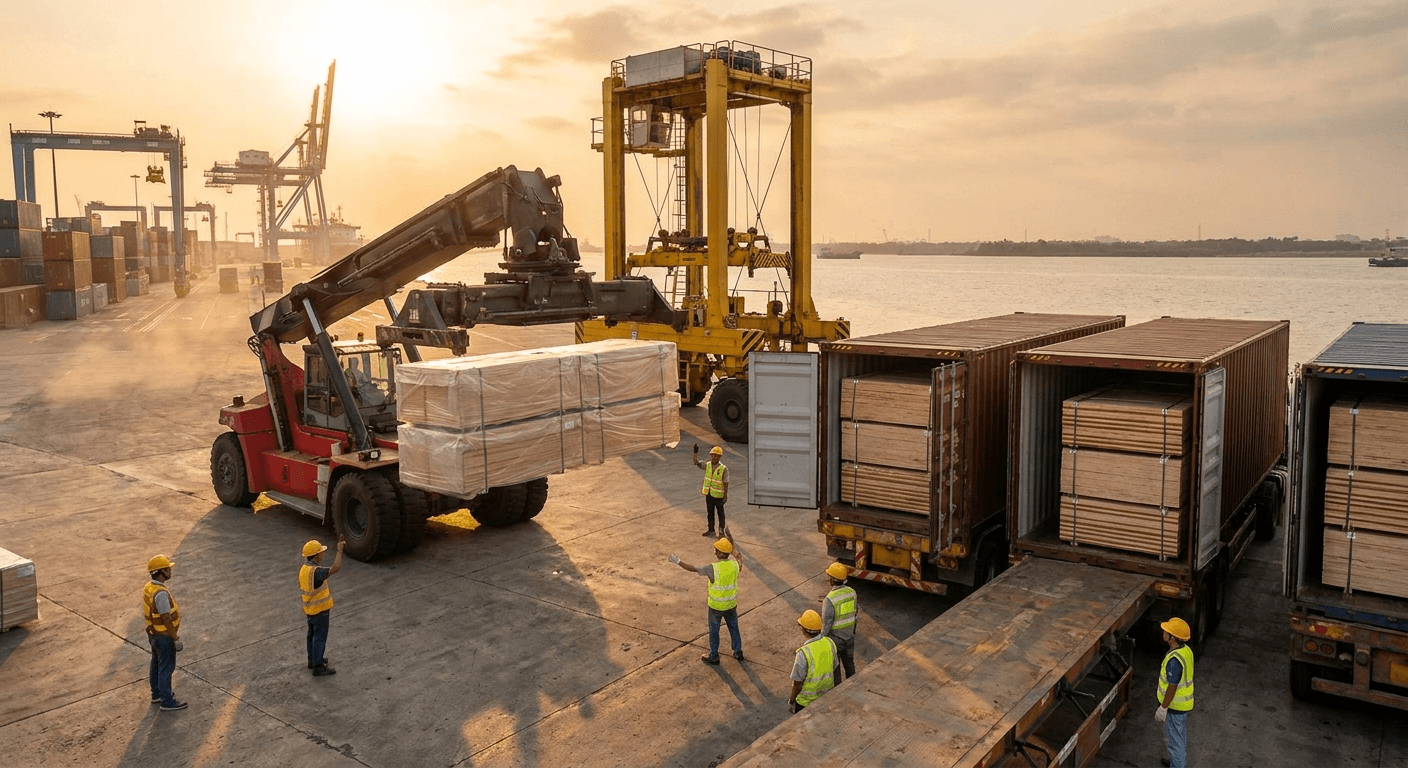
Where Vietnam's Plywood Ships: Export Markets Overview
A buyer-facing look at where Vietnam's plywood (HS 4412) actually ships: Korea, the US, Malaysia, Japan and a long tail of smaller markets, with rough shares, recent trends, and what the mix means for supply stability.
Markets
North America buyer path
Contractors and wholesalers: when to buy local stock via OnePly vs when a mill program with Vinawood makes sense.
Markets
Vietnam vs Indonesia and Malaysia Plywood
An even-handed comparison of the three main Southeast Asian plywood origins on species base, timber-legality systems, mill capacity and market positioning.
Compliance
EUDR Evidence Pack for Vietnamese Plantation Plywood
A plain-language reference on how a compliant EUDR evidence pack for Vietnamese plantation plywood typically works: Article 9 data, Circular 26/2022 origin dossiers, smallholder land tenure, the money trail without a seller e-invoice, and why the mill pack is not the DDS.