
Guides/Markets
Vietnam vs Indonesia and Malaysia Plywood
How Vietnam, Indonesia and Malaysia plywood origins compare on species base, timber-legality systems, mill capacity and market positioning.
Three Southeast Asian countries supply most of the region's plywood to global buyers, and they are not interchangeable. Indonesia and Malaysia built their names decades ago on tropical hardwood veneers pulled from natural and managed forests. Vietnam grew later, and mostly on planted fast-growing timber. Each origin carries genuine strengths, and the right pick depends on what an importer values: legality paperwork, veneer density, mill scale, or landed cost.
What species does each origin build its plywood from?
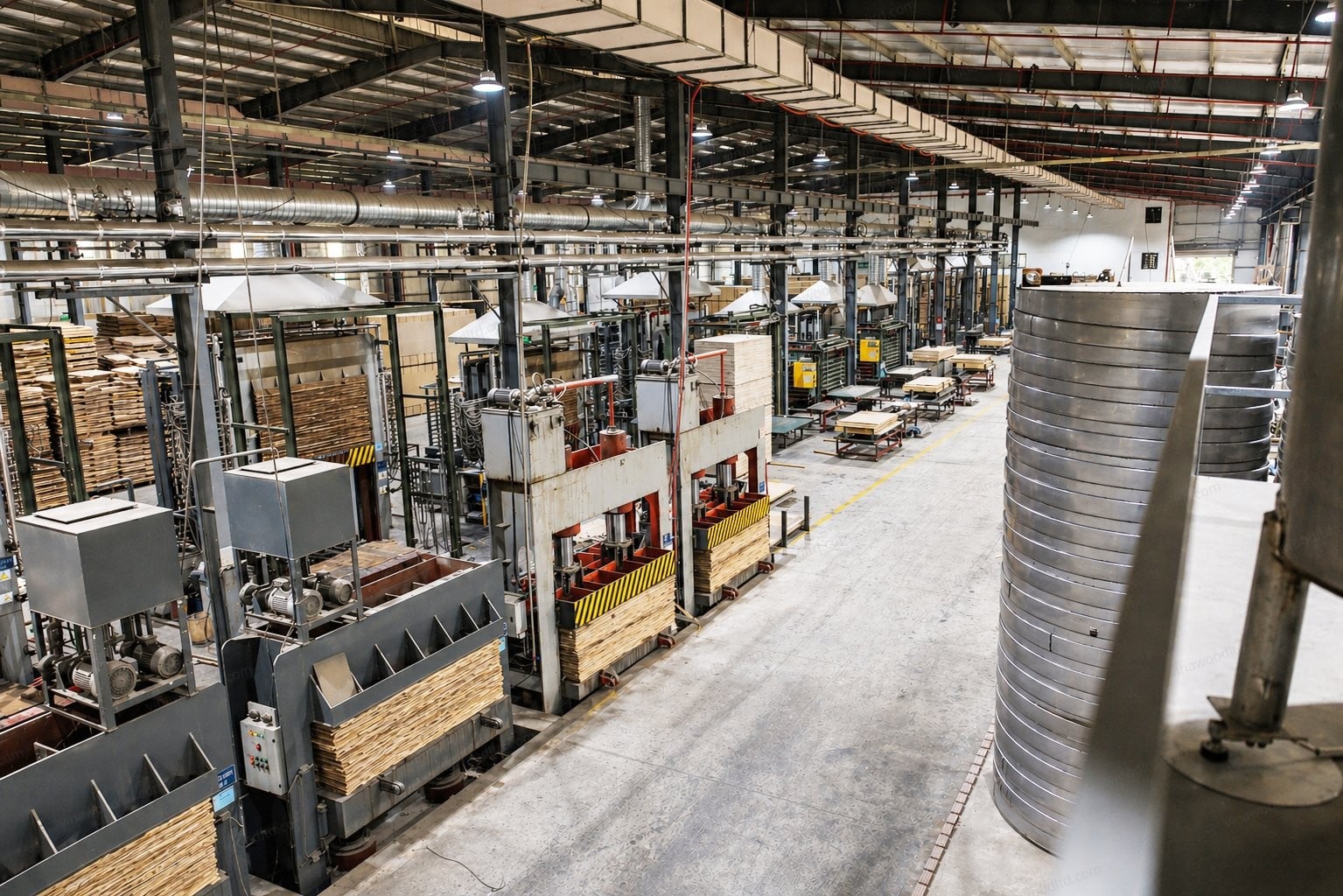
This is where the three diverge most. Vietnam runs almost entirely on plantation-grown species: acacia, eucalyptus, hevea (rubberwood), and styrax, with some pine. These are fast-rotation planted stands, not natural forest, which shapes both the supply story and the veneer character. Planning densities used across the Vietnamese industry run roughly hevea ~700, eucalyptus ~650, acacia ~580, styrax ~500 kg/m³ (order: hevea > eucalyptus > acacia), always confirmed on the mill certificate rather than assumed. For the full species and specification detail, see the manufacturer references rather than this page.
Indonesia sits in the middle. Its plywood mixes light plantation species such as sengon (falcata) with heavier tropical hardwood veneers like meranti that the country has worked with since the 1980s. That gives Indonesian mills a wider veneer palette than Vietnam, spanning very light packaging-grade panels through denser hardwood faces.
Malaysia leans hardest on tropical hardwood. Sarawak and Sabah mills historically built plywood from meranti and mixed light hardwoods, with rubberwood coming out of Peninsular Malaysia. The result is a denser, structurally stiff panel with a long track record in concrete formwork and marine-adjacent uses. The catch is raw material. Malaysian mills have wrestled with log supply tightness and export restrictions, including Sabah's log export ban, which has squeezed output and pushed the sector toward higher-value work.
How do the three timber-legality and certification systems compare?
All three have formal legality systems, but they sit at different stages of maturity.
Indonesia is furthest along. Its SVLK legality assurance system underpins a Voluntary Partnership Agreement with the EU, and Indonesia became the first country in the world to issue FLEGT licences, back in November 2016. For an EU importer, a FLEGT licence carries a legal presumption of compliance under the EU Timber Regulation, which is a real paperwork advantage at the border.
Malaysia runs the Malaysian Timber Certification Scheme (MTCS), operational since 2001 and endorsed by PEFC, alongside its MyTLAS legality assurance system. MTCS forest-management and chain-of-custody certificates run five years with annual surveillance audits. Malaysia negotiated a VPA with the EU but has not concluded FLEGT licensing, so its route to buyers rests on PEFC certification and MyTLAS documentation rather than a FLEGT licence.
Vietnam is the newest. Its VNTLAS system came in under Decree 102 in 2020, following a VPA signed in 2018 that entered force in June 2019. Vietnam is not yet FLEGT-licensed. Certified plantation area is climbing but started from a modest base, with FSC-certified forest area recorded around 199,000 hectares in 2021 and PEFC/VFCS uptake following later. Supply is fragmented too, with a large share coming from smallholder growers, which is both a traceability challenge and the reason the FSC push matters so much in Vietnam right now.
Which origin has the most manufacturing capacity and maturity?
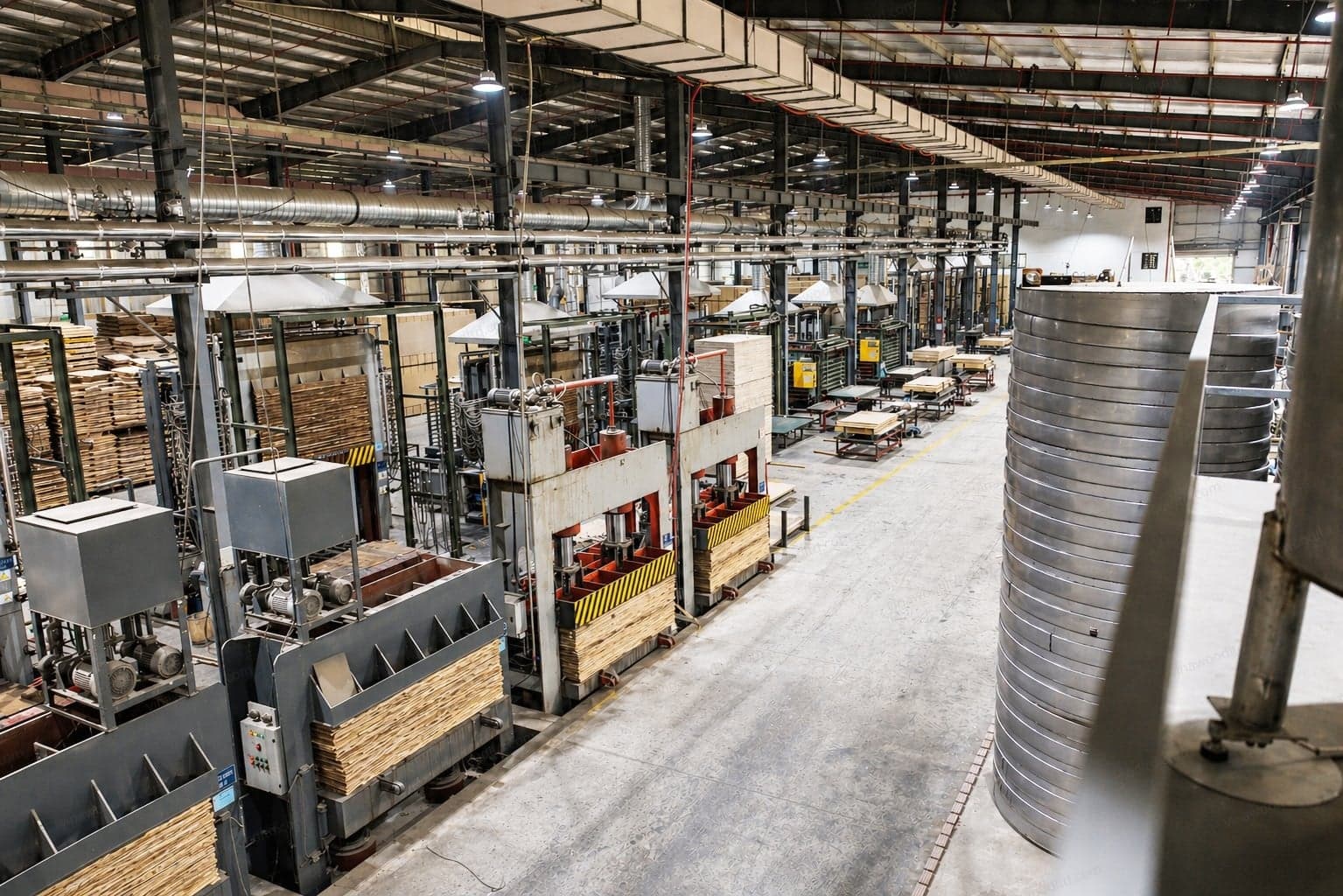
Indonesia has the oldest, most established plywood industry of the three. It dominated global tropical plywood exports through the 1980s and 1990s and still runs large integrated mills. Malaysia's industry is mature but contracting, held back by the raw-material shortage rather than by know-how; the expertise is there, the logs are harder to get. Vietnam is the youngest and the fastest-growing. It is now the region's largest wood-products exporter overall, and plywood volumes have risen quickly, though the mill base is more fragmented and still modernizing. Vietnamese plywood exports were already worth on the order of US$866 million by 2020 and have grown since.
How is each origin positioned in the market?
Positioning follows from species and supply. Malaysia sits at the premium end, offering dense tropical hardwood panels where stiffness and a hard face matter, with Japan a long-standing key market. Indonesia spans a broad middle, from light sengon packaging panels to denser hardwood-faced grades, and its FLEGT licence gives it a clean EU story. Vietnam competes on plantation-grade plywood at scale and on value, with the United States and South Korea as major destinations.
One trade note for US-bound buyers: Vietnam-origin hardwood plywood has been the subject of US anti-dumping and countervailing-duty proceedings, including a circumvention inquiry tied to Chinese-origin inputs. Scope and rates are product- and case-specific, so confirm current status against the relevant US Commerce Department determinations rather than assume any origin is exempt or covered.
Vietnam, Indonesia and Malaysia plywood at a glance
| Factor | Vietnam | Indonesia | Malaysia |
|---|---|---|---|
| Main species base | Plantation-grown: acacia, eucalyptus, hevea (rubberwood), styrax | Light plantation (sengon/falcata) plus tropical hardwood veneers (meranti); some rubberwood | Tropical hardwood (meranti, mixed light hardwoods); rubberwood from Peninsular |
| Legality system | VNTLAS (Decree 102, 2020) | SVLK | MyTLAS |
| EU FLEGT licence | Not yet (VPA in force 2019) | Yes, since Nov 2016 (first in world) | No (VPA negotiated, not concluded) |
| Main forest certification | FSC growing (~199k ha in 2021), PEFC/VFCS emerging | SVLK-based; FSC/PEFC also present | MTCS, PEFC-endorsed since 2009 |
| Industry maturity | Youngest, fastest-growing; fragmented mills | Oldest, most established; large integrated mills | Mature but supply-constrained |
| Typical positioning | Plantation-grade panels at scale; value; US and Korea markets | Broad middle, light to hardwood-faced; strong EU access | Premium dense hardwood panels; Japan a key market |
So which origin should an importer choose?
There is no single winner. If your priority is EU border paperwork, Indonesia's FLEGT licence is hard to beat. If you need a dense, stiff hardwood face and are willing to pay for constrained supply, Malaysia earns its premium. If you want plantation-grown panels at volume with a traceable smallholder story and competitive landed cost, Vietnam is the growth origin, provided you check US trade scope and ask for FSC or PEFC where you need it. Match the origin to the spec and the destination, then verify legality documents on the actual mill certificate.
Related guides
Frequently asked
Is Vietnam or Indonesia plywood easier to import into the EU?
Indonesia has an edge on paperwork. It has issued EU FLEGT licences since November 2016 under its SVLK system, which carries a legal presumption of compliance at the EU border. Vietnam has a VPA in force since 2019 but is not yet FLEGT-licensed, so EU buyers rely on FSC, PEFC or standard due-diligence documentation instead.
What species is Vietnamese plywood made from versus Indonesian and Malaysian?
Vietnam uses plantation-grown acacia, eucalyptus, hevea (rubberwood) and styrax. Indonesia mixes light plantation sengon (falcata) with tropical hardwood veneers like meranti. Malaysia leans on tropical hardwoods such as meranti plus rubberwood, giving denser panels.
Which origin has the most established plywood industry?
Indonesia. It dominated global tropical plywood exports through the 1980s and 1990s and still runs large integrated mills. Malaysia is mature but supply-constrained, and Vietnam is the youngest and fastest-growing, now the region's largest wood-products exporter overall.
Are there US trade duties on Southeast Asian plywood?
Vietnam-origin hardwood plywood has faced US anti-dumping and countervailing-duty proceedings, including a circumvention inquiry linked to Chinese-origin inputs. Scope and rates are product- and case-specific, so importers should confirm current status against US Commerce Department determinations rather than assume any origin is exempt.
Which certification systems apply to each origin?
Indonesia uses SVLK; Malaysia uses MTCS (PEFC-endorsed since 2009) and MyTLAS; Vietnam uses VNTLAS with growing FSC and emerging PEFC/VFCS uptake. Always check the specific certificate on the mill's documents rather than assume country-level coverage.
Related in the atlas
Continue reading
Same topic first, then what others on the atlas read most.
Markets
Where Vietnam's Plywood Ships: Export Markets Overview
A buyer-facing look at where Vietnam's plywood (HS 4412) actually ships: Korea, the US, Malaysia, Japan and a long tail of smaller markets, with rough shares, recent trends, and what the mix means for supply stability.
Markets
Vietnam vs China Plywood: An Origin Comparison
An even-handed, origin-level comparison of Vietnam and China plywood across forestry base, scale, quality, certification, and the US antidumping duties that reshaped sourcing after 2018.
Markets
North America buyer path
Contractors and wholesalers: when to buy local stock via OnePly vs when a mill program with Vinawood makes sense.
Compliance
EUDR Evidence Pack for Vietnamese Plantation Plywood
A plain-language reference on how a compliant EUDR evidence pack for Vietnamese plantation plywood typically works: Article 9 data, Circular 26/2022 origin dossiers, smallholder land tenure, the money trail without a seller e-invoice, and why the mill pack is not the DDS.