
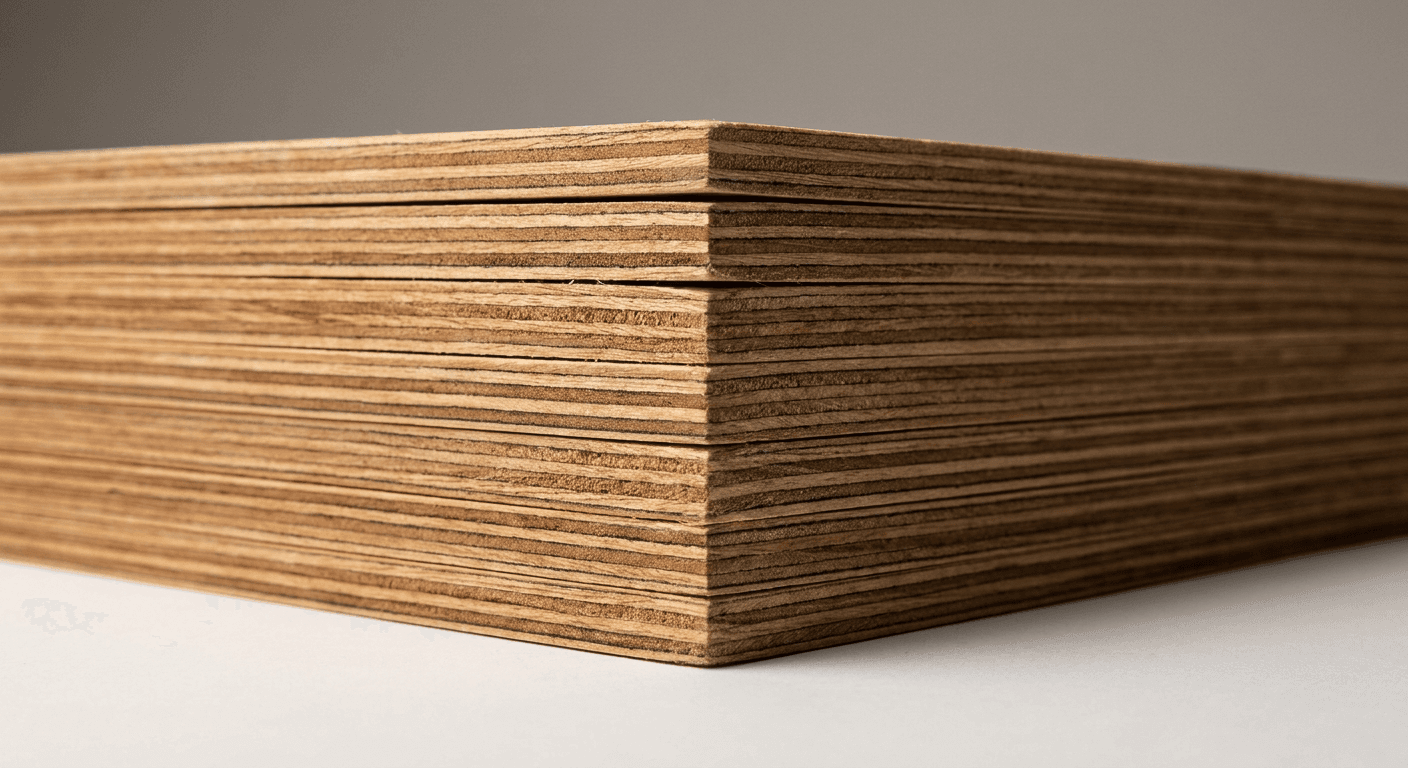
Guides/Grades
Plywood Standards Cross-Reference Matrix (EN, BS, IS, JAS, AS/NZS, ASTM)
Map plywood bond, durability and formaldehyde classes across EN, BS 1088, IS 710, JAS, AS/NZS and US PS 1 to translate a foreign spec for a Vietnam mill.
No plywood grade converts cleanly from one country's standard to another. What you can do is line the systems up side by side, pick the closest working equivalent, then ask a mill to build to that target and prove it on the certificate. This page is that side-by-side: bond and durability tiers across EN 314/636, BS 1088, IS 710/303, JAS, AS/NZS 2270-2272 and US PS 1, plus how the formaldehyde emission classes map across markets.
vinawoodltd.com already explains each system in prose. For the detail, read its walkthrough of EN, APA and ANSI formwork grades, the ISO plywood standards reference, and the Vietnam plywood certifications guide. This atlas page is the matrix, not the explainer.
Why can't you just say one grade equals another?
Because the standards measure different things. EN 314 is a bond test only, graded Class 1, 2 or 3. EN 636 is the whole-panel use class, which folds bond quality together with biological durability and gives you 636-1 (dry), 636-2 (humid) and 636-3 (exterior). BS 1088 rolls bond, veneer durability and construction into a single marine specification. India's IS 710 is a product spec that adds a mycological (fungal) test on top of a boiling-water bond. JAS grades the glue line into Special type, Type 1 and Type 2. AS/NZS splits marine, structural and interior plywood into three separate documents. US PS 1 does not use a bond class at all; it talks about exposure durability. So a panel can match on the bond test and still miss on veneer species or on the biological durability the target market assumes. Read every row below as closest working equivalent, not a legal swap.
Bond and durability: how the systems line up
Cross-references here are approximate. They group standards by the moisture exposure the bond is meant to survive, not by legal equivalence.
| Durability tier | Europe (EN 314 / EN 636) | UK (BS 1088) | India (BIS) | Japan (JAS) | Australia / NZ (AS/NZS) | US (PS 1 / HPVA) |
|---|---|---|---|---|---|---|
| Full exterior — weather and boil proof (marine, structural) | EN 314 Class 3 bond + EN 636-3 (exterior) | BS 1088 marine (WBP bond, durable face veneers) | IS 710 (BWP, marine grade) | Special type / Type 1 | AS/NZS 2272 marine and AS/NZS 2271 structural (Type A bond) | PS 1 Exterior; HPVA Technical / Type I |
| Humid / protected exterior — water resistant | EN 314 Class 2 bond + EN 636-2 (humid) | No direct BS class; use EN 636-2 | IS 303 BWR (boiling water resistant) | Type 2 | Type B / Type C bond (per AS/NZS 2098.2) | PS 1 Exposure 1; HPVA Type II |
| Interior / dry | EN 314 Class 1 bond + EN 636-1 (dry) | Not applicable (interior) | IS 303 MR (moisture resistant) / commercial | Type 2 or Type 3 (Type 3 largely withdrawn) | AS/NZS 2270 interior (Type C / Type D bond) | PS 1 Interior / Exposure 2; HPVA Type III |
Two notes on that table. "WBP" (weather and boil proof) is a legacy British descriptor from the old BS 6566, not a current bond class; EN 314 Class 3 is the modern test that carries the same intent. And a marine mark like BS 1088 or IS 710 is stricter than a bare Class 3 bond, because it also dictates face-veneer species, permitted defects and core gaps. A phenolic (PF) glue line gives you the exterior tier; urea-formaldehyde (UF) sits at the interior end.
How do the formaldehyde emission classes compare?
These are separate systems again, measured by different test methods and reported in different units, so the columns cannot be converted arithmetically. Line them up by tier.
| Tier | Europe (EN 13986 / EN 717-1 chamber, EN ISO 12460-5 perforator) | US (CARB Phase 2 / EPA TSCA Title VI) | Japan (JIS A 1460 desiccator / JAS F-star) | China (GB/T 39600) |
|---|---|---|---|---|
| Ultra-low | E0 (industry term, roughly ≤0.05 mg/m³; not a formal EN class) | Below the CARB/EPA cap | F★★★★ ≤0.3 mg/L avg (0.4 max) | E0 ≤0.05 mg/m³; ENF ≤0.025 mg/m³ |
| Regulated low (market floor) | E1 ≤0.124 mg/m³ (chamber) or ≤8 mg/100g (perforator) | CARB P2 / TSCA VI: hardwood plywood, veneer core ≤0.05 ppm | F★★★ ≤0.5 mg/L avg (0.7 max) | E1 ≤0.124 mg/m³ |
| Higher emission | E2 >0.124 mg/m³, up to 30 mg/100g | Not permitted for the US market | F★★ ≤1.5 mg/L avg (2.1 max) | E2 withdrawn in the current standard |
For hardwood plywood, CARB Phase 2 and EPA TSCA Title VI land in roughly the same territory as F★★★★ and a tight E1/E0, but they are compliance regimes with third-party certification and labelling rules, not just an emission number. If a US buyer asks for CARB P2, an E1 test report alone does not close it; the panel needs the TPC certification and the TSCA Title VI label. Vinawood's plywood is certified to EPA TSCA Title VI (CARB P2); the emission tier a buyer needs still has to be named in the order.
What a Vietnamese mill actually needs from your spec
Translate the foreign grade into four plain lines: bond class (or marine spec), face and back appearance grade, formaldehyde class, and species plus thickness. A mill in Vietnam can build to most of the systems above. The panel is usually laid up from plantation-grown Acacia, Eucalyptus, Hevea (rubberwood) or Styrax, so if your source spec assumes a particular tropical face species, say whether a plantation equivalent is acceptable or whether you need a specific durable face. Planning densities run from about 500 kg/m³ for Styrax up to about 700 kg/m³ for Hevea; the mill certificate carries the confirmed value for your batch. For the density and species detail, vinawoodltd.com keeps the species and standards references.
Then verify on paper. The single most useful habit is to cross-check the stamp on the panel against the test report on the commercial invoice. When those two disagree, treat the stamp as the claim and the report as the evidence. Ask for the bond-test result to the named standard (EN 314-2, IS 710, AS/NZS 2098.2, or the PS 1 boil test), the formaldehyde certificate for the class you named, and the chain-of-custody paperwork if FSC or PEFC is part of the order.
A plain caveat
Every equivalence on this page is approximate and for sourcing guidance only. It is not a statement of legal or code equivalence. National building codes, marine registers and green-building schemes reference their own standards by name, and a project that specifies (say) BS 1088 or a CARB P2 label will usually require that exact mark, not a "roughly equivalent" one. Use this matrix to write a buildable spec and to open the conversation with a mill; use the named standard, the mill's test report, and where needed an accredited third-party certificate to close it.
Related guides
Standards cross-reference
Bond class and service environment — the core cross-reference for exterior vs humid vs interior plywood.
| Concept | EN (EU) | BS (UK) | IS (India) | JAS (Japan) | AS/NZS | ASTM / US PS |
|---|---|---|---|---|---|---|
| Exterior / fully weatherproof (phenolic, WBP) | ||||||
| Humid / intermittently wetApproximate |
Frequently asked
Is EN 636-3 the same as BS 1088 marine plywood?
Not the same. EN 636-3 means the panel is rated for exterior use and carries an EN 314 Class 3 bond. BS 1088 is stricter: it is a marine product specification that also dictates face-veneer species, permitted defects and core-gap limits. A BS 1088 panel will meet the exterior bond tier, but an EN 636-3 panel is not automatically BS 1088.
Does an E1 test report satisfy a CARB P2 or EPA TSCA Title VI requirement?
No. E1 and CARB P2 land in a similar low-emission range, but CARB Phase 2 and EPA TSCA Title VI are certification regimes, not just an emission number. US-market plywood needs third-party certification and the TSCA Title VI label. Name the requirement (CARB P2 / TSCA VI) in the order rather than substituting an E1 report.
What is the closest equivalent to India's IS 710 grade?
IS 710 is a boiling-water-proof marine grade with an added fungal-resistance test. Its closest working equivalents are BS 1088 marine, EN 314 Class 3 with EN 636-3, JAS Special type, AS/NZS 2272, and PS 1 Exterior. Treat these as the same durability tier, not as interchangeable certificates.
Can a Vietnamese mill build to these foreign standards?
Yes, most of them. Give the mill four lines: bond class or marine spec, appearance grade, formaldehyde class, and species plus thickness. The mill builds to that target and issues a certificate with the confirmed bond, emission and density values for your batch.
Are these cross-references legally binding?
No. They are approximate sourcing guidance. Building codes, marine registers and green-building schemes reference their own standards by name, so a project that specifies a particular mark usually requires that exact mark. Use the matrix to write a spec; use the named standard and the mill's test report or an accredited certificate to prove compliance.
Related in the atlas
Continue reading
Same topic first, then what others on the atlas read most.
Grades
Plywood grades & applications
A supplier-neutral map of the plywood grade families Vietnamese mills produce, each tied to a typical glue class and end use, so a specifier can write an RFQ to spec instead of to a brand name.
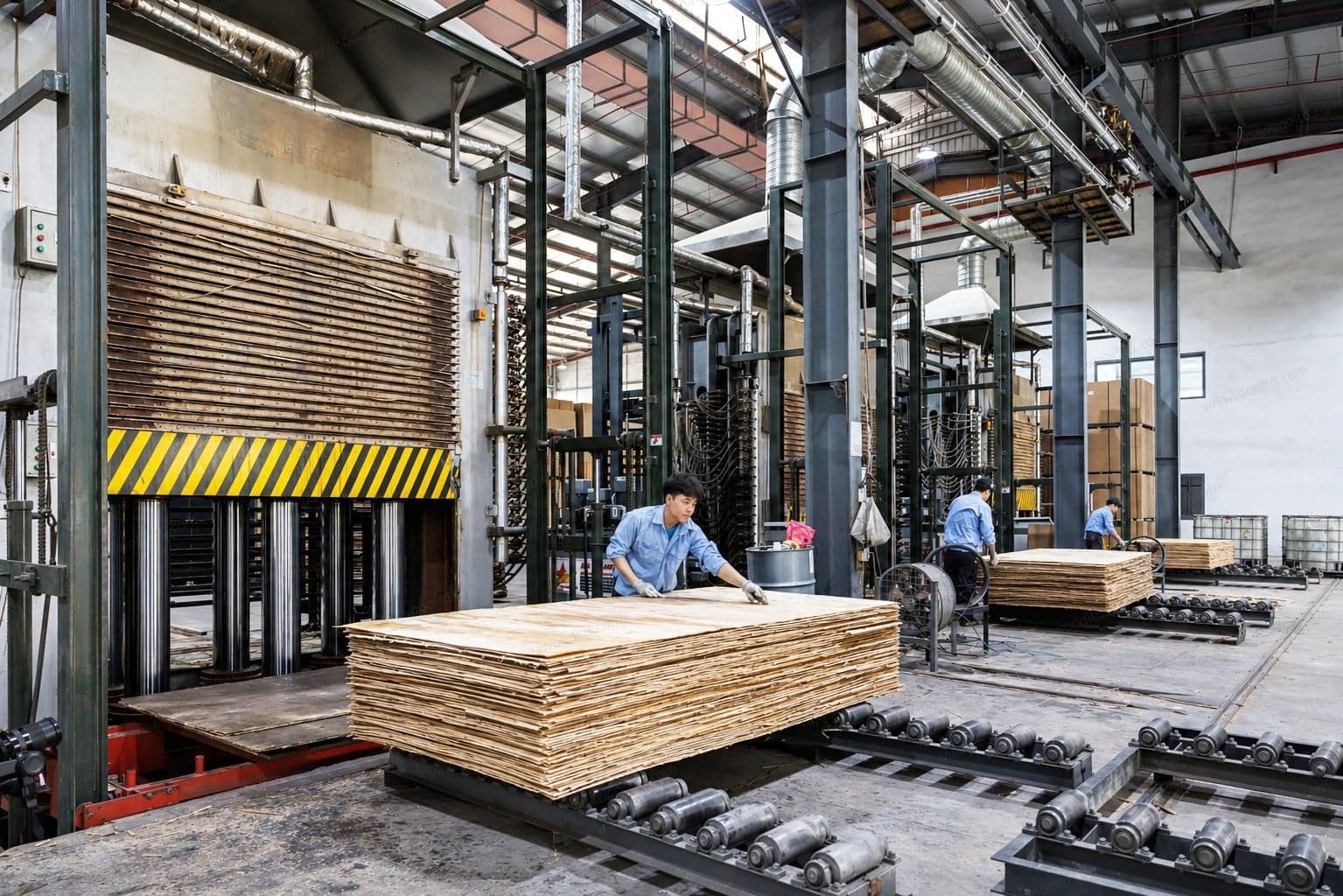
Grades
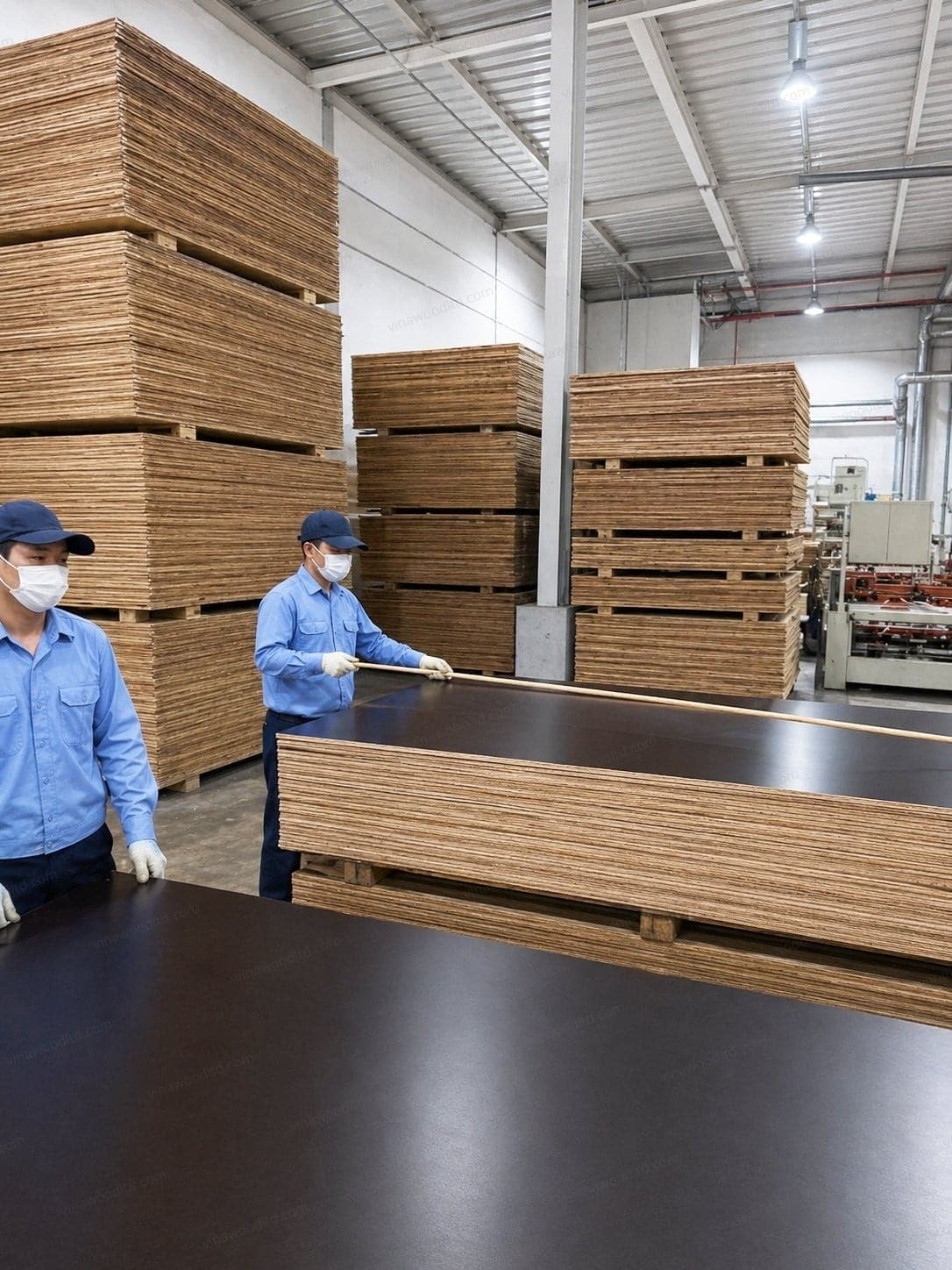
Vietnam film faced plywood: origin, phenolic face, formwork
Vietnam film faced plywood is plantation-grown phenolic-film formwork plywood pressed in Vietnam. Origin, face vs glue, mill vs trader.
Grades
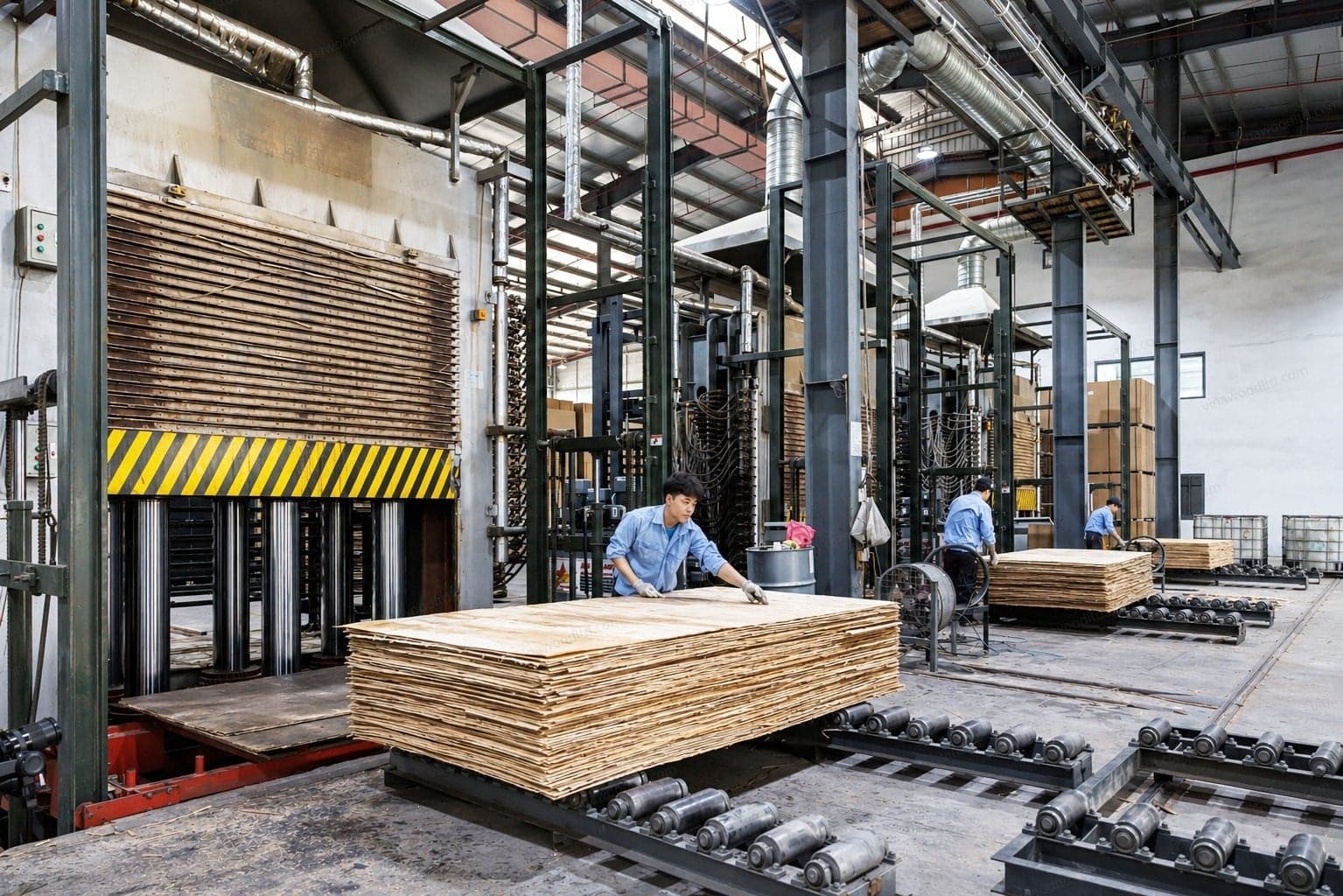
Formwork plywood: what it is, and how Vietnam-origin panels fit
Formwork plywood is the overlay sheet crews pour against, not a steel or aluminum formwork system. How Vietnam-origin panels fit that job, P-Form vs Pro Form, mill vs trader.
Compliance
EUDR Evidence Pack for Vietnamese Plantation Plywood
A plain-language reference on how a compliant EUDR evidence pack for Vietnamese plantation plywood typically works: Article 9 data, Circular 26/2022 origin dossiers, smallholder land tenure, the money trail without a seller e-invoice, and why the mill pack is not the DDS.