
Guides/Import
How to Qualify a Vietnamese Plywood Manufacturer
How to vet a Vietnam plywood mill: verify real capacity, QC-lab test evidence, certificates tied to the actual factory, and transshipment red flags.
Qualifying a Vietnamese plywood mill comes down to proof rather than promises. A supplier that can show real production capacity, test data for the exact panel you are buying, and certificates that trace back to that one factory carries a very different risk than one that emails a glossy PDF and a low price. This guide sets out a framework a buyer can run before the first container ships.
Vietnam's export plywood sector is large and varied. Some mills are vertically integrated and audited every year. Others are small shops, or trading desks that never touch a panel. The work of qualification is telling them apart using documents you can check yourself.
What does qualifying a mill actually mean?
It means lining up three things: the company you are contracting with, the factory that makes the panels, and the paperwork that travels with the goods. When those match, you have a real manufacturer. When they do not, you may be buying from a trader who relabels stock of unknown origin. Both exist in the market. Only one gives you recourse when a shipment fails.
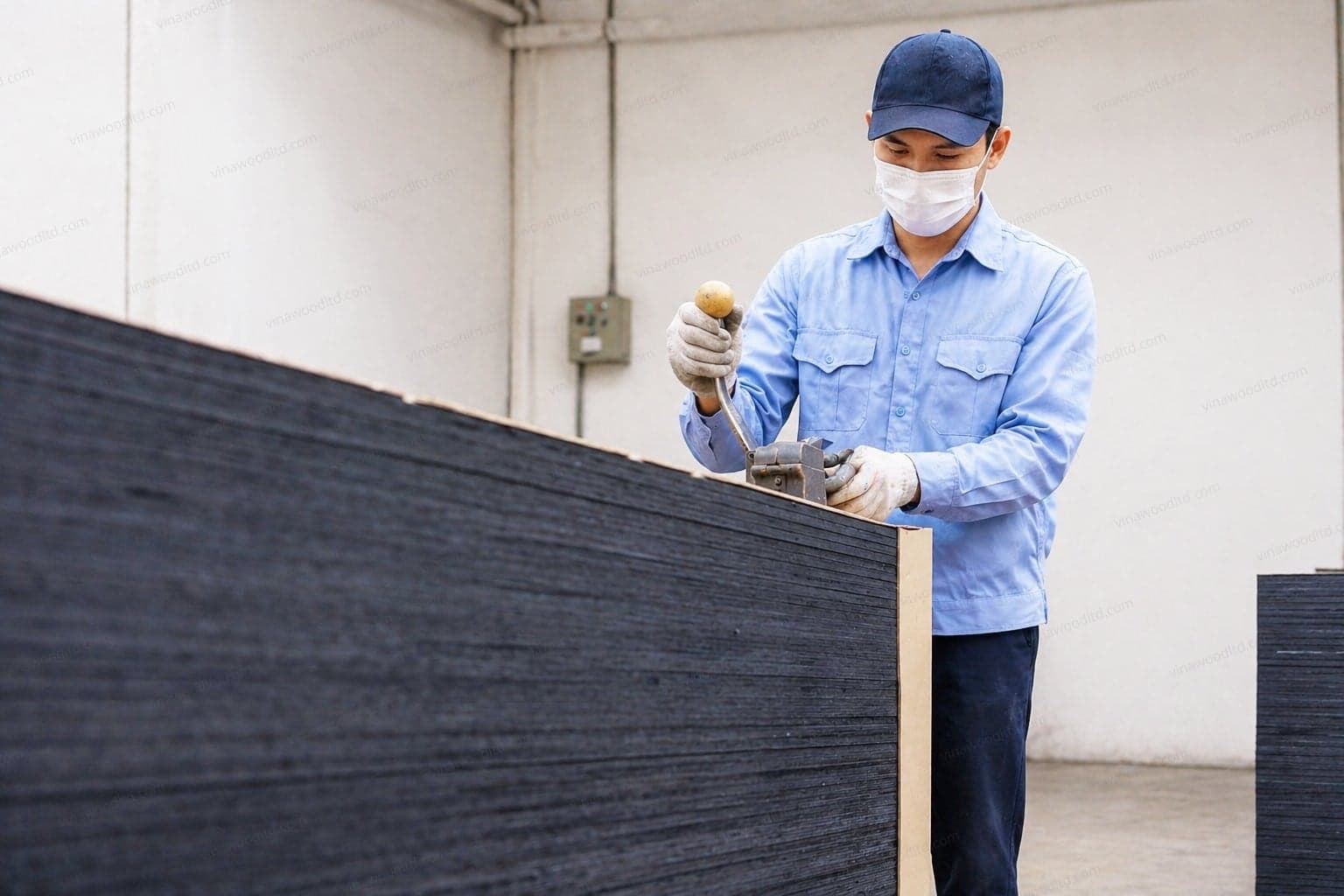
Start by separating the sales entity from the production site. Ask for the factory address, not just the office. Ask which panels are made on-site and which are bought in. A mill that peels its own veneer and runs its own presses answers plainly. Evasive answers are their own signal.
How do you check real production capacity?
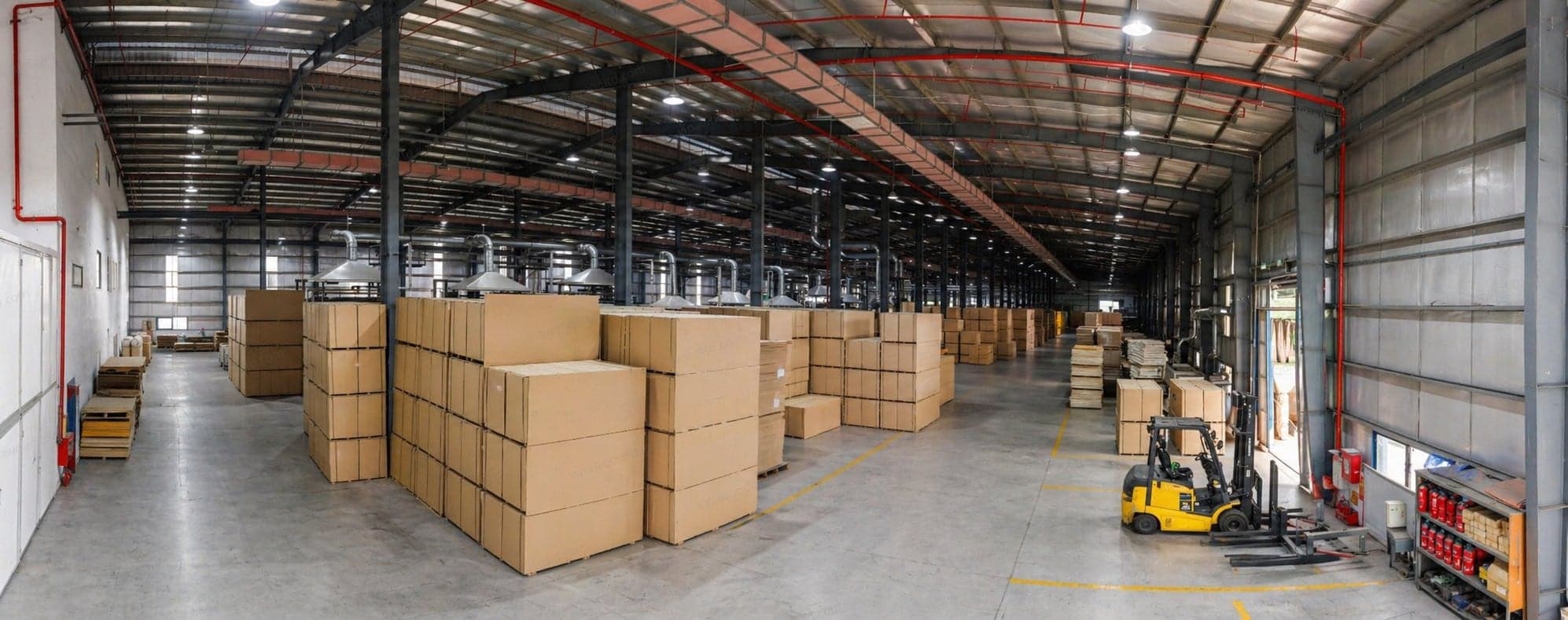
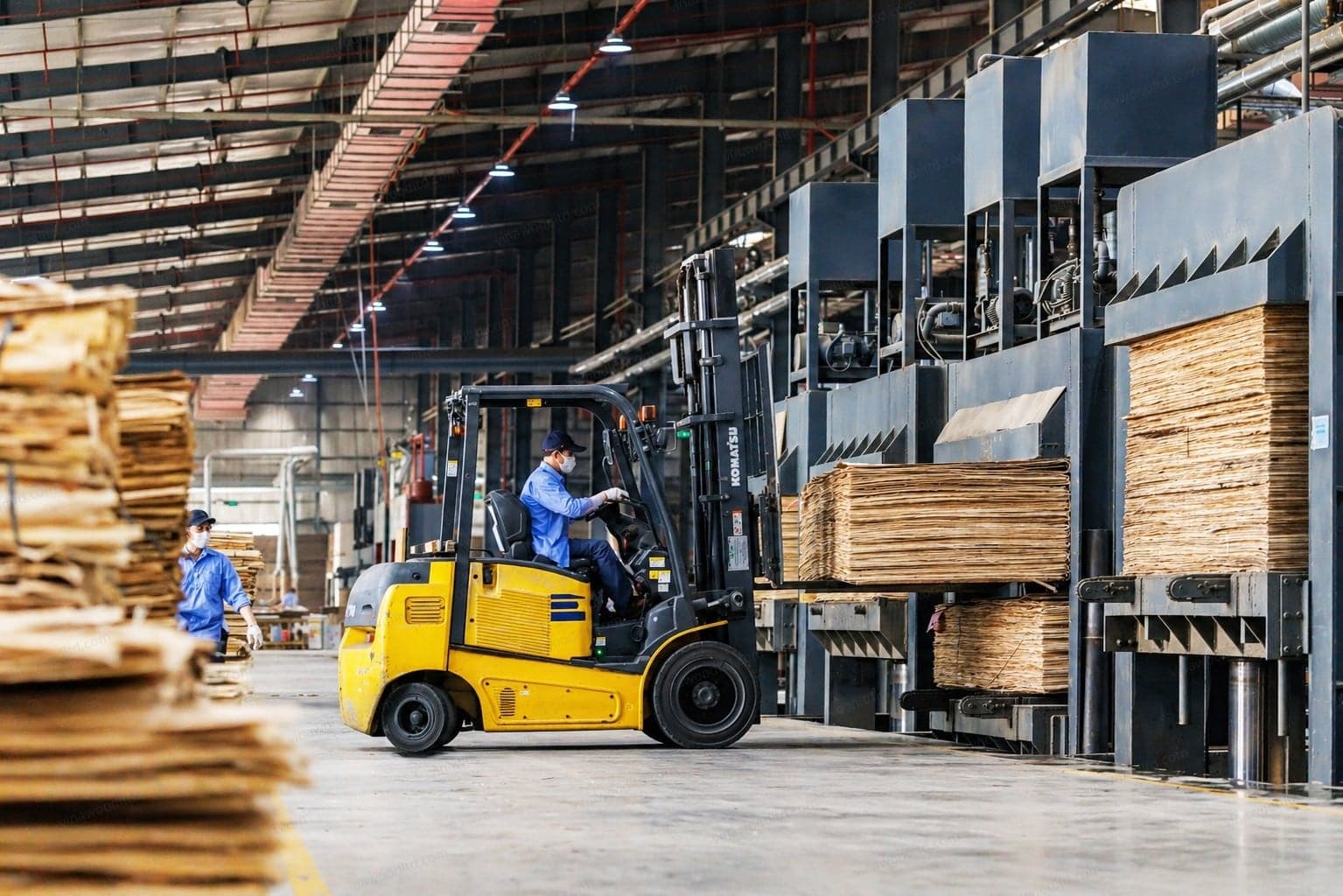
Capacity claims are easy to inflate, so verify them. Ask for monthly output by grade in cubic metres, the number and type of hot presses, and the daylight count per press. Cross-check that against the volume you need. A mill quoting 12,000 m³ a month should be able to describe the press line that produces it.
Two low-cost checks go a long way. A live video walk of the peeling line, dryers, presses, and QC bench tells you whether the factory exists as described. A short list of destination countries with container volumes, backed by bill-of-lading references you can spot-check, tells you the mill really exports at the scale it claims. Neither needs you to fly out. Both are hard to fake.
What QC-lab evidence should you ask for?
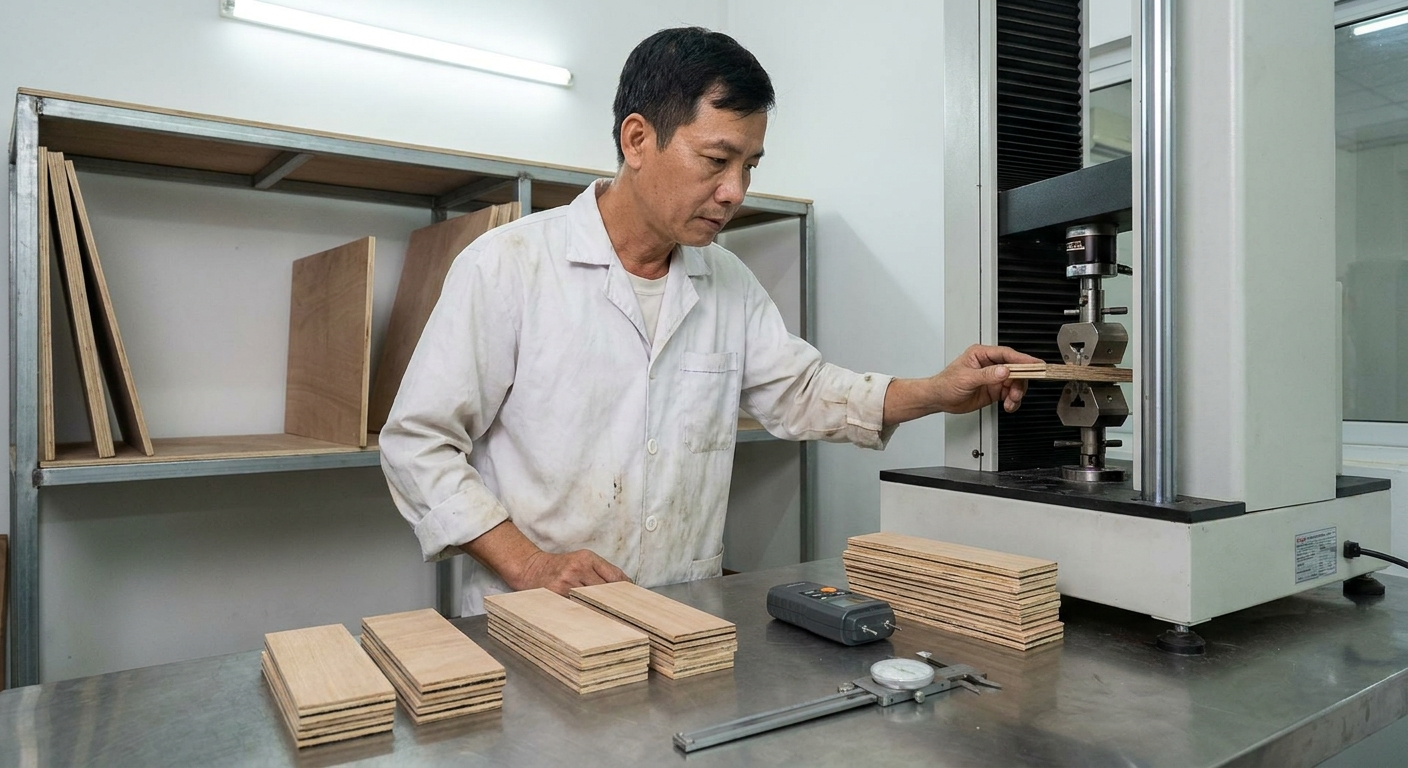
This is where serious mills separate from the rest. A real manufacturer runs an in-house lab and can hand you recent test records for the grade you are buying. Ask for four things by name.
- Bending strength and stiffness (MOR and MOE), typically tested to EN 310. These show whether the panel meets its structural claim.
- Bond quality, tested to EN 314. For exterior and formwork grades the glue line has to survive soaking or boiling, and a weak bond is the most common field failure.
- Moisture content at dispatch, usually 8 to 14 percent. Panels shipped wet move and delaminate once they reach a different climate.
- Formaldehyde emission, if the panels enter the United States or the EU. US imports must meet EPA TSCA Title VI, which is set at the same level as California's CARB Phase 2, with certification carried by a third-party certifier that EPA recognises.
Ask whether each report is batch-specific or a one-off type test from years ago. A mill that tests continuously can show you records from last month. For the underlying standards and the species-by-species specs behind those numbers, a manufacturer reference such as the certifications material published at vinawoodltd.com is a useful template for what complete documentation looks like.
How do you match a certificate to the actual mill?
A certificate PDF proves little on its own. Every major scheme runs a public registry, and the registry is where you confirm the document is live and tied to the factory you are buying from.
- FSC and PEFC chain-of-custody certificates carry a number you can look up. FSC's public database at info.fsc.org returns the holder's legal name, status, scope, and product types, and PEFC runs an equivalent search. Check that the name on the certificate matches the entity on your contract and invoice, and that plywood sits inside the certified scope.
- Chain of custody is the point. FSC-certified material has to be tracked through the mill, not merely present somewhere upstream. A certificate that covers a trading company but not the production site does not tell you the panels in your container are covered.
- EPA TSCA Title VI compliance rides on the panel's label and the recognised certifier behind it. EPA publishes its list of recognised third-party certifiers, so you can confirm the certifier named on the documents is genuinely recognised.
Match the legal name every time. A mismatch between the certificate holder, the sales company, and the shipper is the single most useful thing a buyer can catch on paper.
What should you ask on a factory audit?
Whether you send a third-party inspector or run a video audit yourself, a handful of questions do most of the work. Use the table below as a what-to-ask, what-to-verify checklist.
| Area | What to ask the supplier | What to verify independently |
|---|---|---|
| Production capacity | Monthly output by grade in m³; number and daylight count of hot presses | Live video of the running press line; match stated capacity to your volume |
| The factory | Full factory address; which panels are made on-site versus bought in | Video walk of peeling, drying, pressing, QC; check the address on a map |
| QC and testing | Recent MOR/MOE (EN 310), bond (EN 314), moisture, and formaldehyde records for your grade | Batch dates on the reports; an in-house lab visible on the walk |
| Certificates | FSC/PEFC certificate numbers; the EPA TSCA Title VI certifier name | info.fsc.org and PEFC registry lookups; EPA recognised-certifier list |
| Species and glue | Core species and glue class for the grade you are buying | Plantation-grown Acacia, Eucalyptus, Hevea or Styrax named on the certificate |
| Trade compliance | Country of origin; anti-dumping or CVD scope for your product | Names match across certificate, invoice, and bill of lading |
What are the red flags for transshipment or relabelling?
Vietnam-origin plywood carries a trade-access advantage in the United States and parts of the EU, which creates an incentive for goods of another origin to be relabelled as Vietnamese. That is illegal, and a buyer can be left holding the liability. Watch for the pattern.
- A "manufacturer" that cannot show a factory, only an office and a rented warehouse.
- Certificates and invoices in different company names, or a certificate scope that lists trading rather than production.
- Prices well below what the raw veneer and glue would cost a real mill.
- Reluctance to allow a live factory walk, or footage that never shows the presses actually running.
- Container seals, mill stamps, or grade marks that do not line up with the paperwork.
None of these alone proves wrongdoing. Two or three together are a reason to slow down and verify origin before you commit. On any US anti-dumping or countervailing-duty question, get scope-specific advice for your exact product rather than relying on a blanket claim from the seller.
Once a mill clears these checks, the remaining steps are commercial: sampling, a trial order, then terms. For how that fits into the wider import process, the guides below pick up from here.
Related guides
Frequently asked
How can I verify a Vietnamese plywood factory without visiting?
Ask for a live video walk of the peeling line, dryers, presses, and QC bench, then confirm export scale with bill-of-lading references you can spot-check. Cross-check the factory address on a map and match the legal name on the certificates against your contract and invoice.
Which lab tests should a plywood mill be able to provide?
Recent, batch-specific records for bending strength and stiffness (MOR and MOE, EN 310), bond quality (EN 314), moisture content at dispatch, and formaldehyde emission. For US or EU shipments, formaldehyde must meet EPA TSCA Title VI, which is set at the same level as CARB Phase 2.
How do I check whether an FSC or PEFC certificate is real?
Look up the certificate number in the public registries. FSC's database at info.fsc.org and the PEFC search return the holder's legal name, status, and scope. Confirm the name matches the company you are contracting with and that plywood sits inside the certified scope.
What are the warning signs of plywood transshipment?
An office and warehouse but no verifiable factory, certificates and invoices in different names, a certificate scope covering trading rather than production, prices below a real mill's material cost, and refusal to show a live factory walk.
Does Vietnam-origin plywood avoid US anti-dumping duties?
Vietnam origin can carry trade advantages, but the origin must be genuine and fully documented. Duty scope is product-specific, so get scope-specific advice for your exact product rather than relying on a blanket duty-free claim from a seller.
Related in the atlas
Continue reading
Same topic first, then what others on the atlas read most.
Import
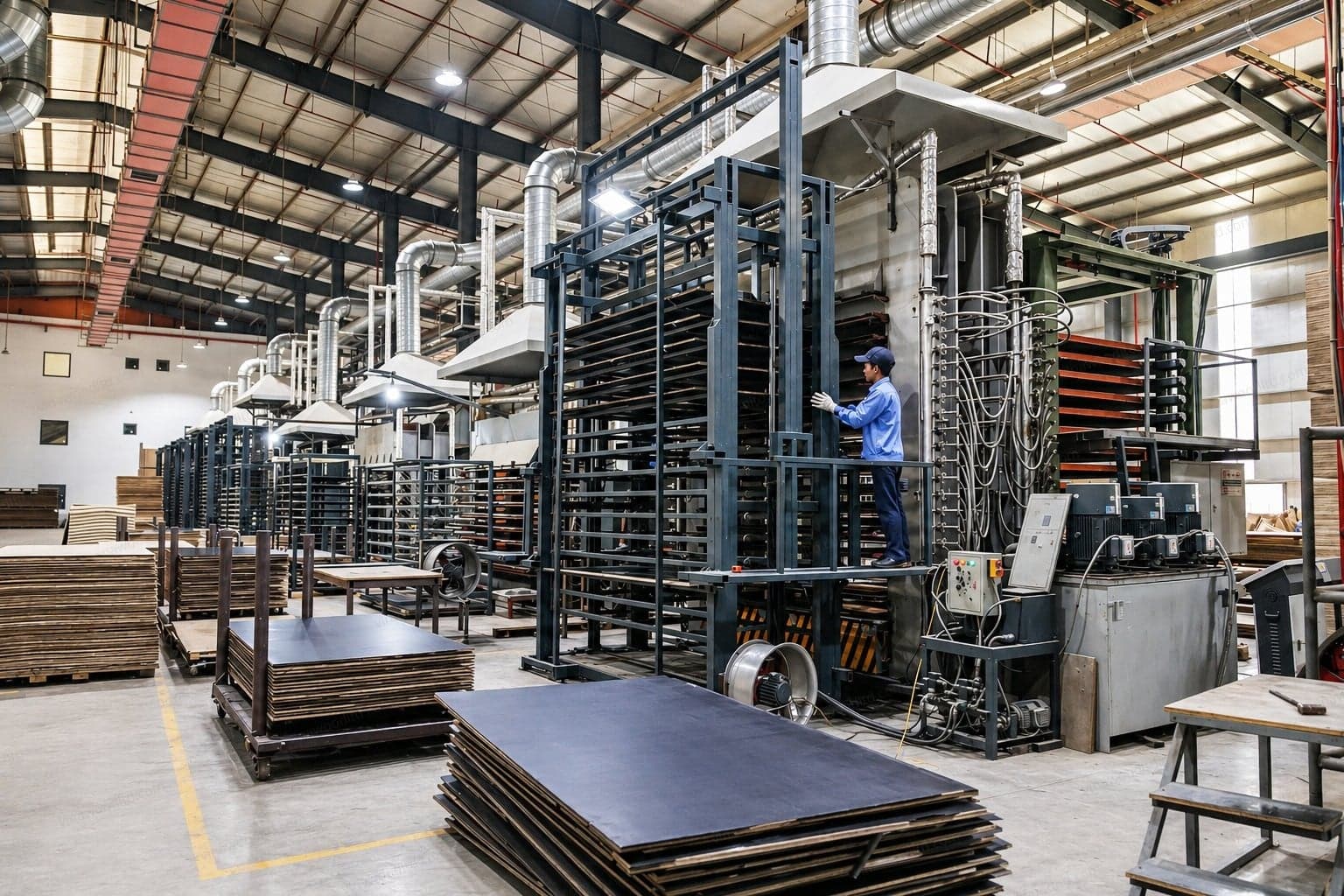
Importing plywood from Vietnam
The end-to-end importer's guide to sourcing plywood from Vietnam: vet a mill, lock the spec, agree Incoterms, watch QC, assemble the legality file, then load and clear the container.
Import
Vietnam Plywood HS Codes: The HS 4412 Breakdown
How Vietnam-origin plywood classifies across the HS 4412 subheadings by construction, ply thickness, and face species, and the import documentation each code triggers.
Import
Incoterms and Container Loading for Vietnam Plywood
A buyer's guide to choosing Incoterms (FOB, CIF, CFR, EXW, DAP) for plywood from Vietnam and reading container yield: CBM, weight limits and panels per 20ft, 40ft and 40HC.
Import
Vietnam Plywood Lead Times, MOQ and Payment Terms
What normal looks like when sourcing plywood from Vietnam: one-container MOQs, a few weeks of production plus sea transit, and TT-deposit or letter-of-credit payment terms.