
Guides/Import
Importing plywood from Vietnam
How to import plywood from Vietnam step by step: vet a mill, approve samples, set Incoterms, classify under HS 4412, gather compliance docs, clear customs.
Sourcing plywood from Vietnam runs on a repeatable sequence: find and vet a mill, lock the specification with an approved sample, agree Incoterms and a purchase order, watch production and in-line QC, assemble the legality and compliance file, then load the container and clear customs. This page is the hub. It walks each stage at a working level and points to the deeper guides where the detail lives.
Why source plywood from Vietnam?
Vietnam is one of Asia's largest plywood exporters, and its panels are built on plantation-grown species rather than natural-forest timber. The common core woods are Acacia, Eucalyptus, Hevea (rubberwood), and Styrax. For buyers in the United States and the European Union, Vietnam-origin panels can sit outside the anti-dumping and countervailing duty orders that apply to some China-origin plywood. Scope depends on the specific product and the active determination, so treat duty treatment as something to confirm against the live tariff schedule, never as a blanket promise.
Step 1: Identify and vet a mill
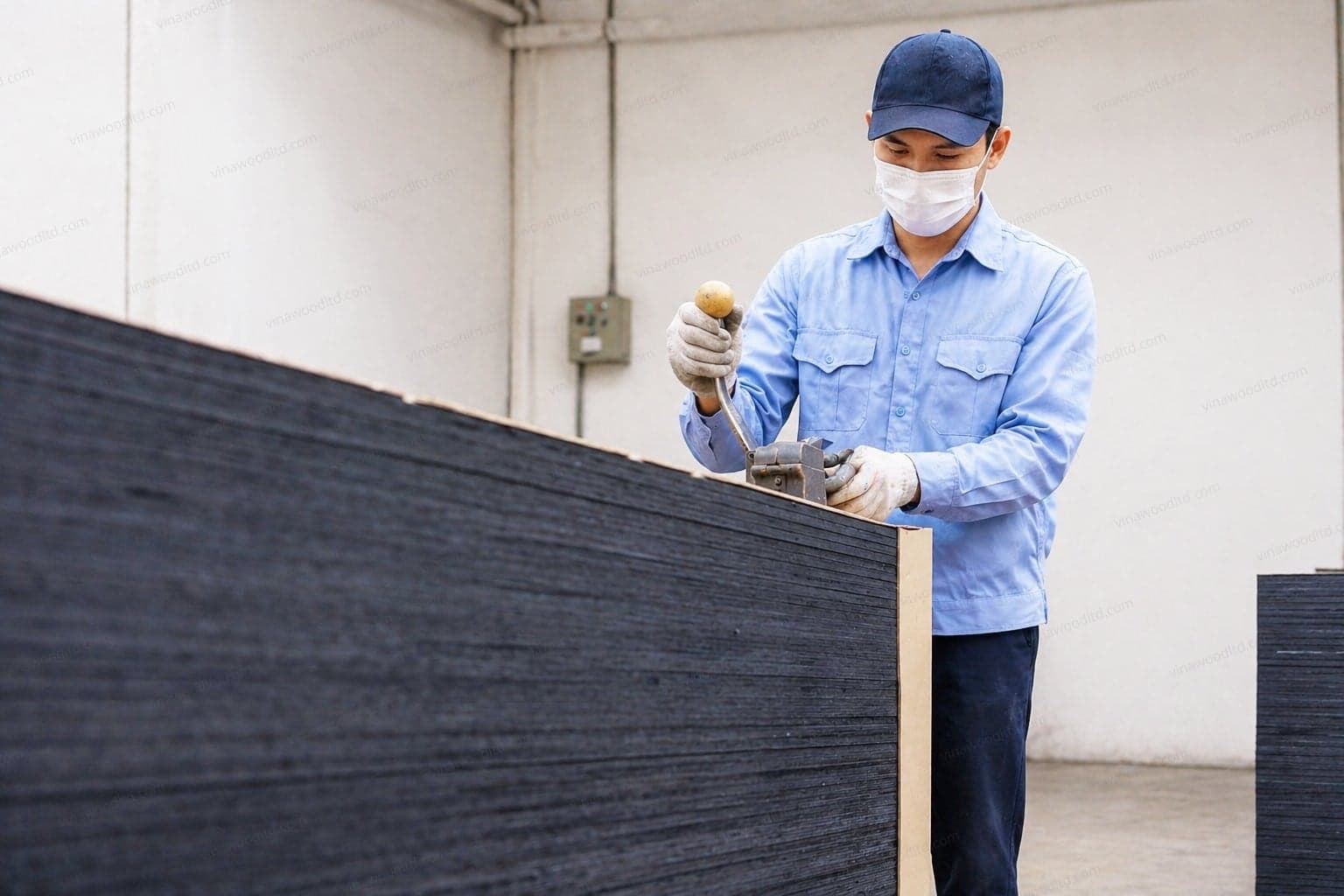
Start with capability, not the unit price. A mill worth a trial order can show certification scopes (ISO 9001, FSC-COC or PEFC, plus market marks such as CE under EN 13986 or EPA TSCA Title VI), an in-house QC lab, and a traceable paper trail from log to loading dock. Ask how the mill handles a claim, and note how fast it answers technical questions during quoting. Response speed at the RFQ stage tends to predict response speed when a shipment goes sideways. The child guide on qualifying a Vietnamese manufacturer covers audit questions, red flags, and capacity checks in depth.
Step 2: Request samples and approve the specification
Freeze the spec before money is on the table. Put the face system and overlay, thickness and tolerance, panel dimensions, glue class (phenolic WBP for exterior use, MR for interior), core species, emission class, moisture content, packing, and marking into a written specification. Vietnamese core species carry different planning densities (Hevea around 700, Eucalyptus around 650, Acacia around 580, Styrax around 500 kg/m³), so a panel's weight and stiffness move with the core mix. Those are typical values for planning; confirm the actual figure on the mill certificate. Approve a physical sample against the written spec, then reference that exact sample in the contract so later deliveries have a fixed benchmark.
Step 3: Agree Incoterms and issue the purchase order
Incoterms 2020, published by the International Chamber of Commerce, define who arranges and pays for carriage, insurance, and export or import clearance, and where risk passes from seller to buyer. FOB and CIF are common on Vietnam plywood contracts, though the ICC points out that FCA, CPT, and CIP are the better fit for containerised cargo because risk should pass when goods are handed to the carrier, not at the ship's rail. Match the term to how you actually take delivery. Your purchase order should name the Incoterm and the named port, the approved sample, payment terms, lead time, and the exact document set the seller must produce.
Which HS code applies, and why it matters
Plywood generally classifies under HS heading 4412, with subheadings that turn on construction and face species. The six-digit heading is harmonised worldwide, but the duty rate and any trade remedy are set by your destination. US importers confirm the ten-digit statistical suffix in the Harmonized Tariff Schedule at usitc.gov; EU importers check the same goods in TARIC. A misclassification can mean back-duties or a held container, so validate the code with your customs broker against the current schedule. The child guide on Vietnam plywood HS codes works through the 4412 subheadings.
Step 4: Production and in-line QC
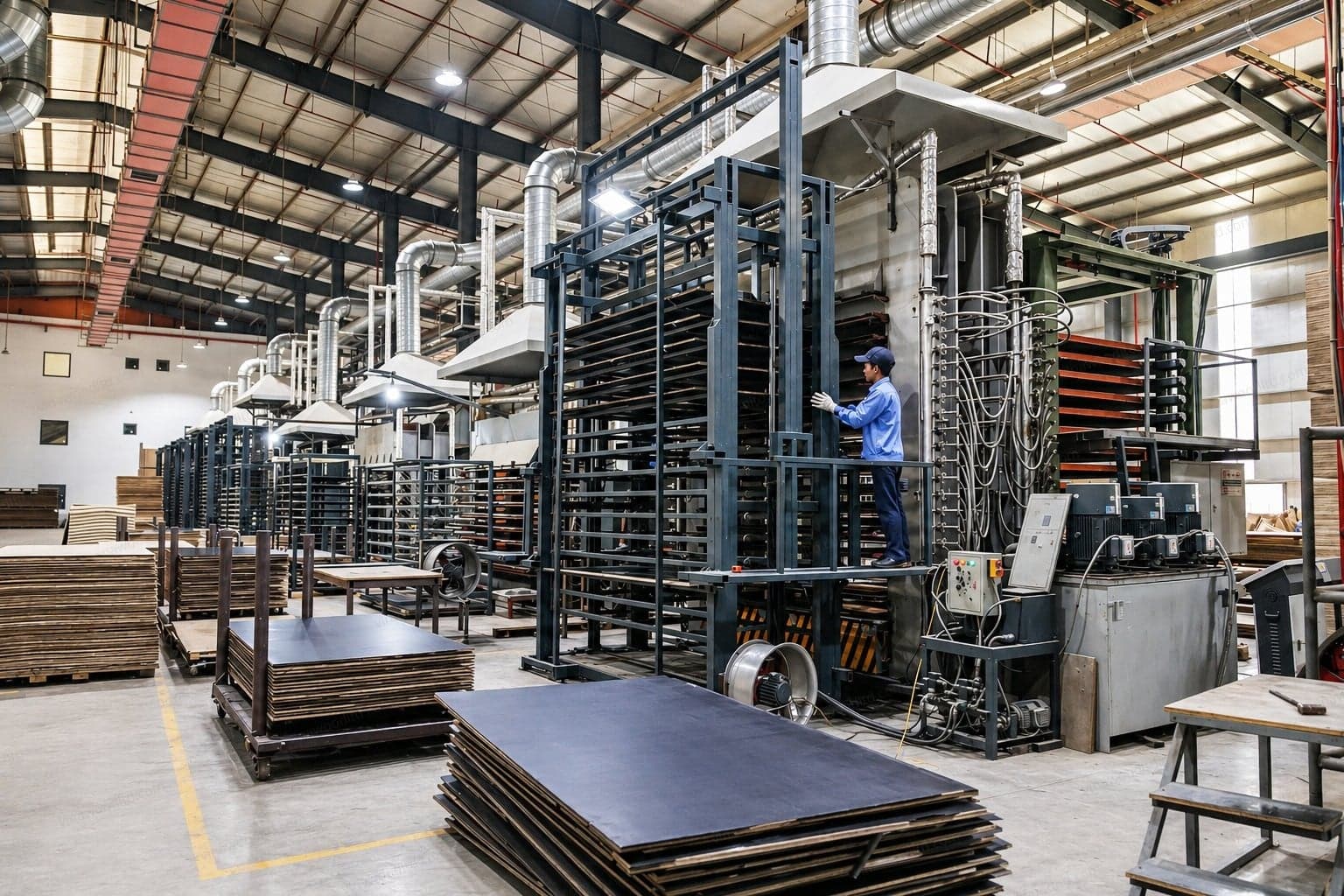
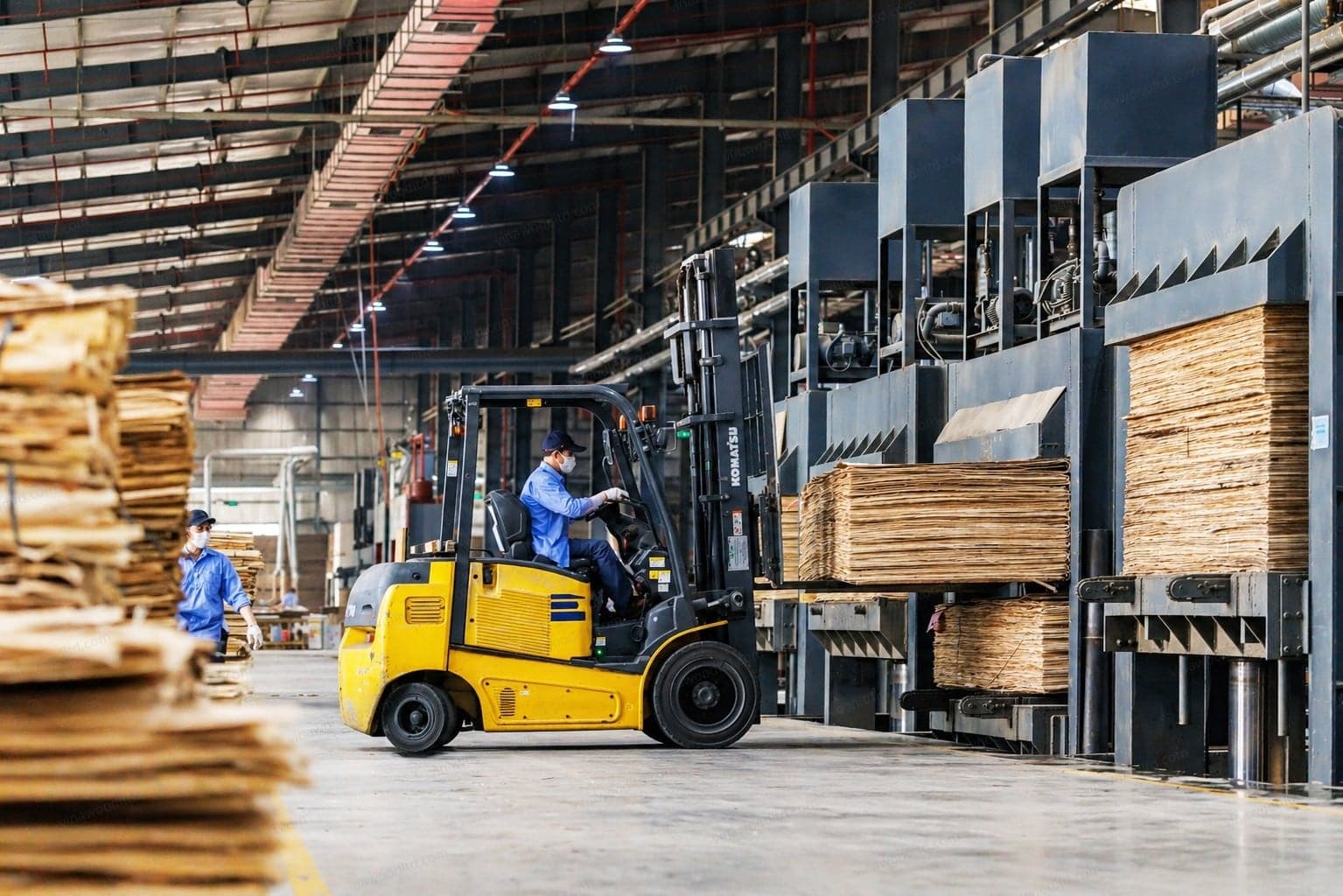
After the order is confirmed, the mill schedules veneer peeling and drying, glue lay-up, cold and hot pressing, sanding, and any surface lamination. In-line QC checks bond strength, moisture content, thickness, and face defects while panels are still on the floor, which is far cheaper than a post-shipment claim. For a first container, agree up front whether you want an in-house inspection report, a third-party inspection, or a pre-shipment photo set of loaded bundles before the doors close.
Step 5: Assemble the compliance and legality file
Documents belong in the contract, not in a scramble after the vessel sails. Legality and emissions paperwork carry the most risk because they gate market access. EU importers now fall under the EU Deforestation Regulation (EUDR), which requires due diligence and geolocation data for wood products placed on the EU market. US importers of composite wood panels must meet EPA TSCA Title VI, the federal formaldehyde standard aligned with CARB Phase 2. The checklist below is the working document set.
| Document | Why it matters | Where to verify |
|---|---|---|
| Commercial invoice | Basis for the customs value and the duty calculation | Your customs broker against the destination tariff schedule |
| Packing list | Reconciles quantity, weight, and CBM per container | Cross-check against the bill of lading and the loaded count |
| Bill of lading (B/L) | Contract of carriage and document of title | Issuing carrier or freight forwarder |
| Certificate of origin | Establishes Vietnam origin for duty and trade-remedy treatment | Vietnam Chamber of Commerce and Industry (VCCI) or the issuing authority |
| HS classification | Sets the duty rate and defines any trade-remedy scope | US HTS at usitc.gov, or EU TARIC |
| Mill test certificate | Confirms bond, moisture, and emission class against the spec | Issuing mill lab or an independent test lab |
| Emission certificate (EPA TSCA Title VI / CARB P2) | US market access for composite wood panels | EPA formaldehyde emission standards |
| EUDR due-diligence statement and geolocation | EU market access and proof of deforestation-free legality | EU EUDR information system and Commission guidance |
| Fumigation or phytosanitary certificate (if required) | Pest control for pallets and wood packaging | Destination plant-health authority |
Step 6: Shipping, container loading, and customs clearance
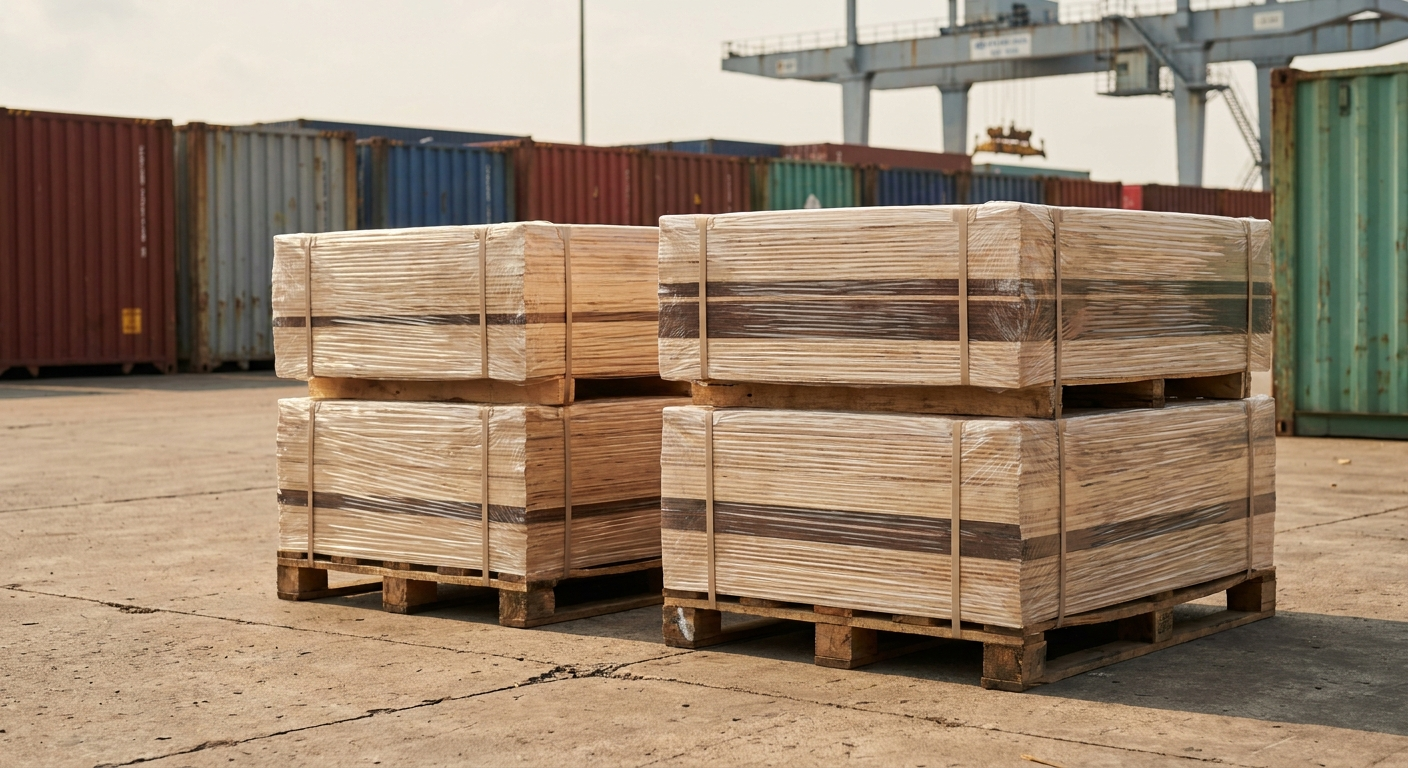
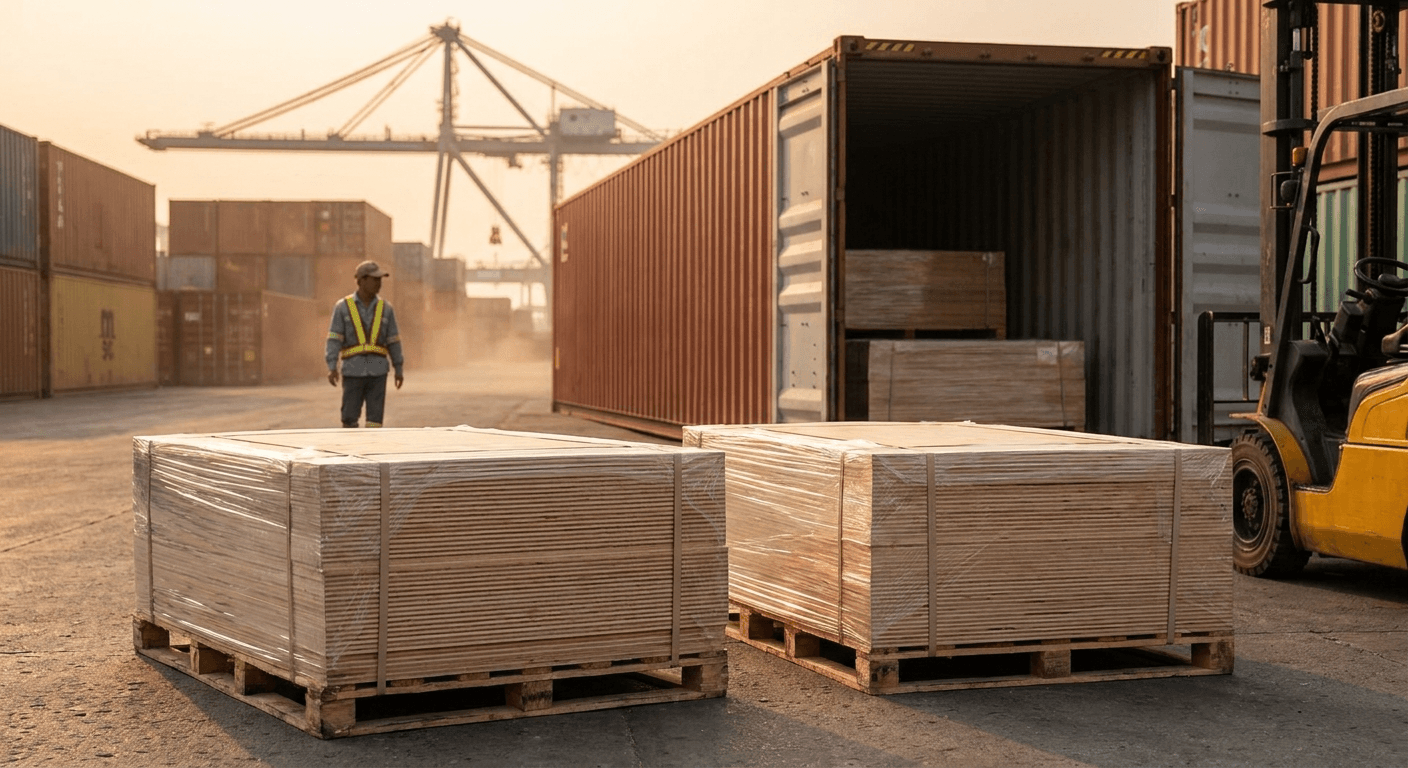
Loading math decides margin. Plywood is dense, so a 20ft container often reaches its weight limit before it fills on volume. Run the CBM and container-loading numbers before you finalise quantity, so you neither strand payload capacity nor blow past the road weight limit at destination. Landed cost then stacks freight, insurance, duty, and clearance on top of the FOB price. At destination, your broker files the entry against the HS code, pays the duty, and the compliance file above supports release. The child guide on Incoterms and container loading covers stow patterns, weight-out versus cube-out, and 20ft against 40ft HC economics.
Hand the calculators to the tools
This hub stays on process. For the numbers, use a manufacturer's calculators rather than reproducing formulas here. Vinawood's tools page hosts CBM, container-loading, and landed-cost calculators that turn an approved spec and a target quantity into a loading plan and a per-unit landed figure.
Related guides
Frequently asked
What documents do I need to import plywood from Vietnam?
The core set is a commercial invoice, packing list, bill of lading, certificate of origin, HS classification, and a mill test certificate. Depending on the destination you also need an emission certificate (EPA TSCA Title VI / CARB P2 for the US) and an EUDR due-diligence statement with geolocation for the EU. Name every required document in the contract so it is produced before the vessel sails.
What HS code is used for Vietnamese plywood?
Plywood generally classifies under HS heading 4412, with subheadings that depend on construction and face species. The heading is harmonised worldwide, but the duty rate and any trade remedy are set by your destination. Confirm the full code with your broker in the US HTS (usitc.gov) or EU TARIC before you commit volume.
Which Incoterm is best for a plywood container?
FOB and CIF are common, but the ICC notes that FCA, CPT, and CIP suit containerised cargo better because risk passes when goods are handed to the carrier rather than at the ship's rail. Choose the term that matches how you actually take delivery, and write the named port into the purchase order.
Does Vietnamese plywood face US anti-dumping duty?
Vietnam-origin panels can sit outside the anti-dumping and countervailing duty orders that apply to some China-origin plywood, but the scope depends on the specific product and the active determination. Treat duty status as something to confirm against the live HTS and current trade-remedy findings, not as a blanket duty-free claim.
Do I need EUDR paperwork to import Vietnam plywood into the EU?
Yes. The EU Deforestation Regulation requires operators placing wood products on the EU market to run due diligence and submit geolocation data through the EUDR information system. Build this into supplier onboarding so the due-diligence statement is ready before shipment.
Related in the atlas
Continue reading
Same topic first, then what others on the atlas read most.
Import
Vietnam Plywood HS Codes: The HS 4412 Breakdown
How Vietnam-origin plywood classifies across the HS 4412 subheadings by construction, ply thickness, and face species, and the import documentation each code triggers.
Import
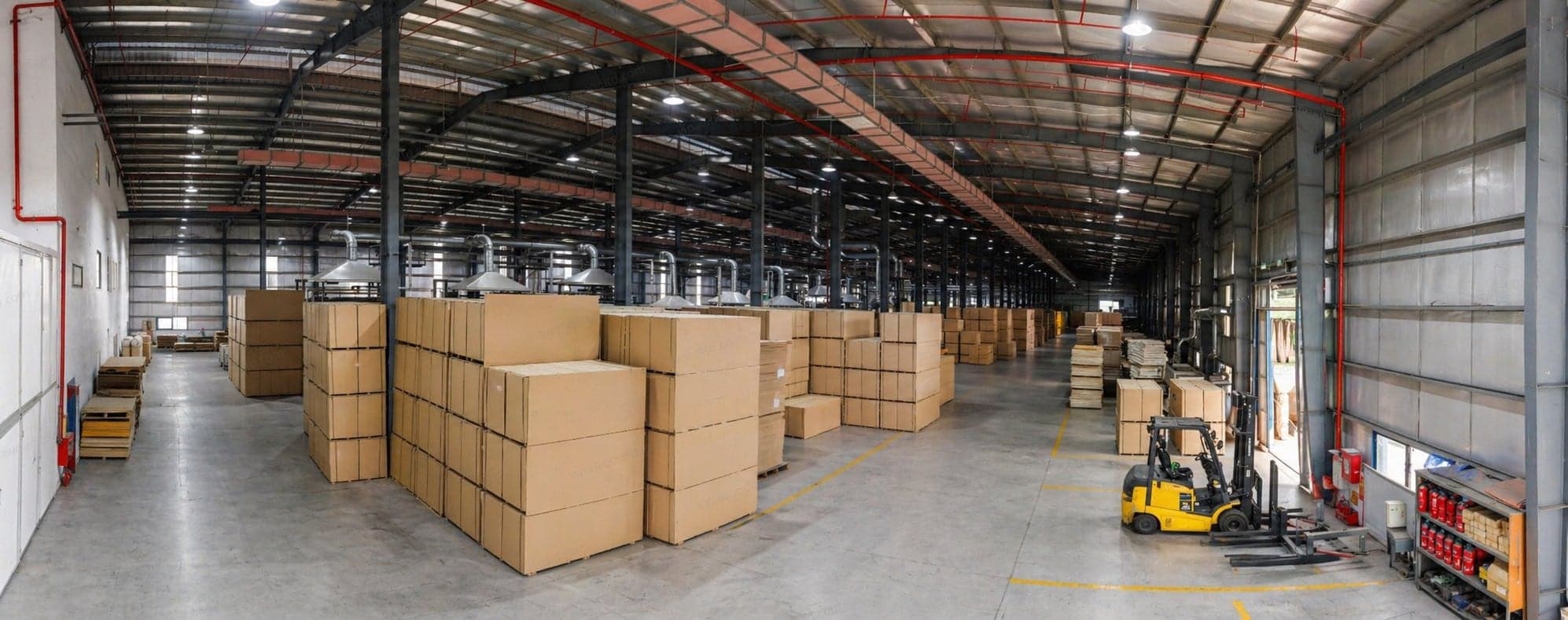
How to Qualify a Vietnamese Plywood Manufacturer
A practical framework for vetting a Vietnamese plywood manufacturer: verifying real capacity, QC-lab test evidence, certificates tied to the actual mill, and the red flags that signal transshipment.
Import
Incoterms and Container Loading for Vietnam Plywood
A buyer's guide to choosing Incoterms (FOB, CIF, CFR, EXW, DAP) for plywood from Vietnam and reading container yield: CBM, weight limits and panels per 20ft, 40ft and 40HC.
Import
Vietnam Plywood Lead Times, MOQ and Payment Terms
What normal looks like when sourcing plywood from Vietnam: one-container MOQs, a few weeks of production plus sea transit, and TT-deposit or letter-of-credit payment terms.