
Guides/Overview
What is Vietnam plywood?
Vietnam plywood is plywood made in Vietnam from plantation-grown acacia, eucalyptus and rubberwood, exported worldwide. Origin, species and uses explained.
Vietnam plywood is plywood manufactured in Vietnam, usually built around plantation-grown acacia, eucalyptus, rubberwood (Hevea), or styrax veneers and shipped abroad at scale. The name marks where a panel is made, and what it is made from. Not a grade. Not a fixed spec.
Origin is not a slogan. Vietnam sits among the world's five largest plywood exporters. Duty, due-diligence files, and whether a market takes the goods without extra questions all follow the country of manufacture. Use this page as the atlas door: the term, the other origins, then the deeper guides.
What makes plywood "Vietnam plywood"?
Buyers usually mean three facts at once.
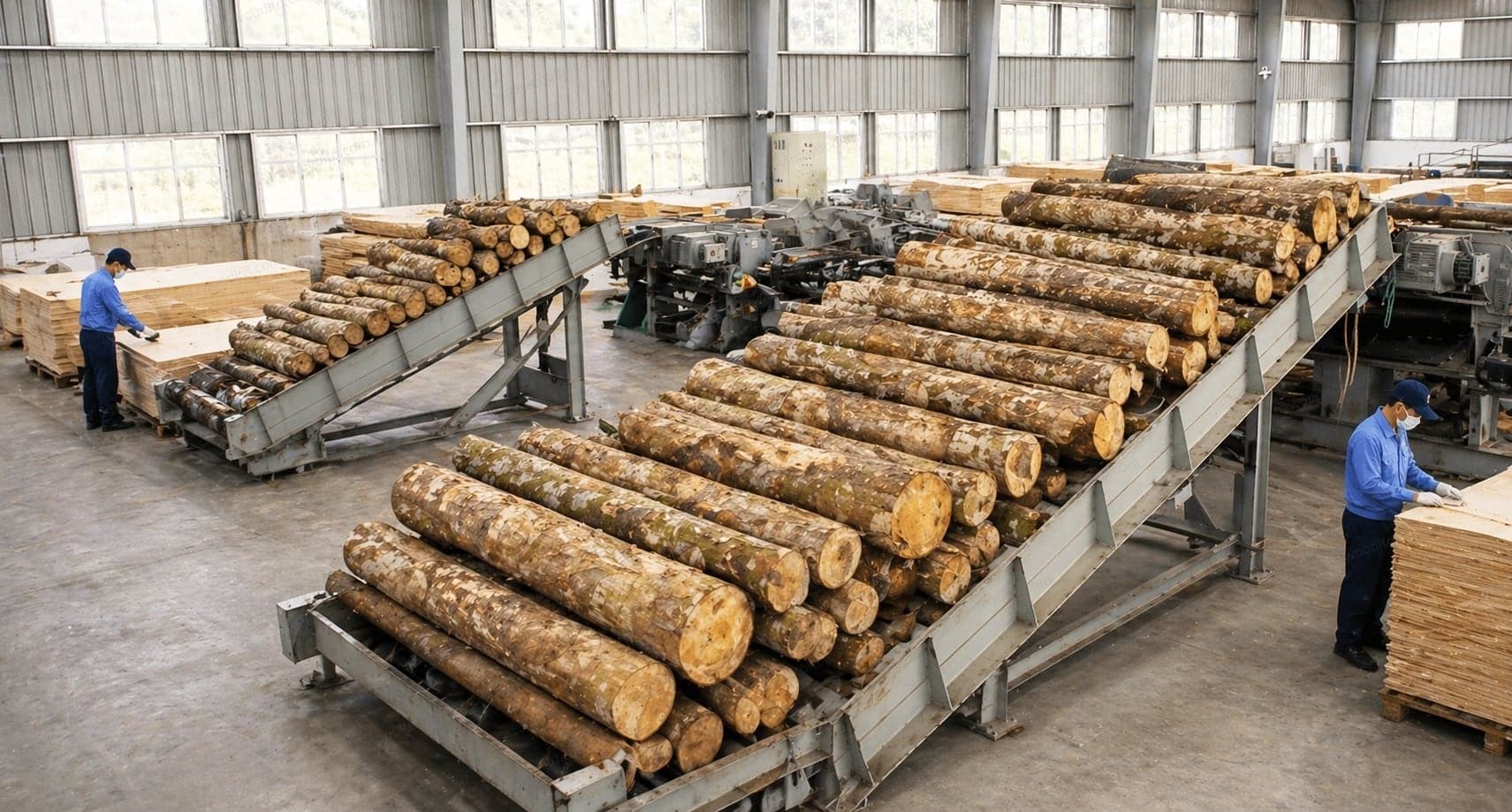
It is made in Vietnam. Peeling, drying, glue-up, pressing, and finishing all happen at Vietnamese mills. Origin is a manufacturing fact recorded on shipping and customs documents, and in trade classification plywood falls under HS heading 4412 (plywood, veneered panels, and similar laminated wood).
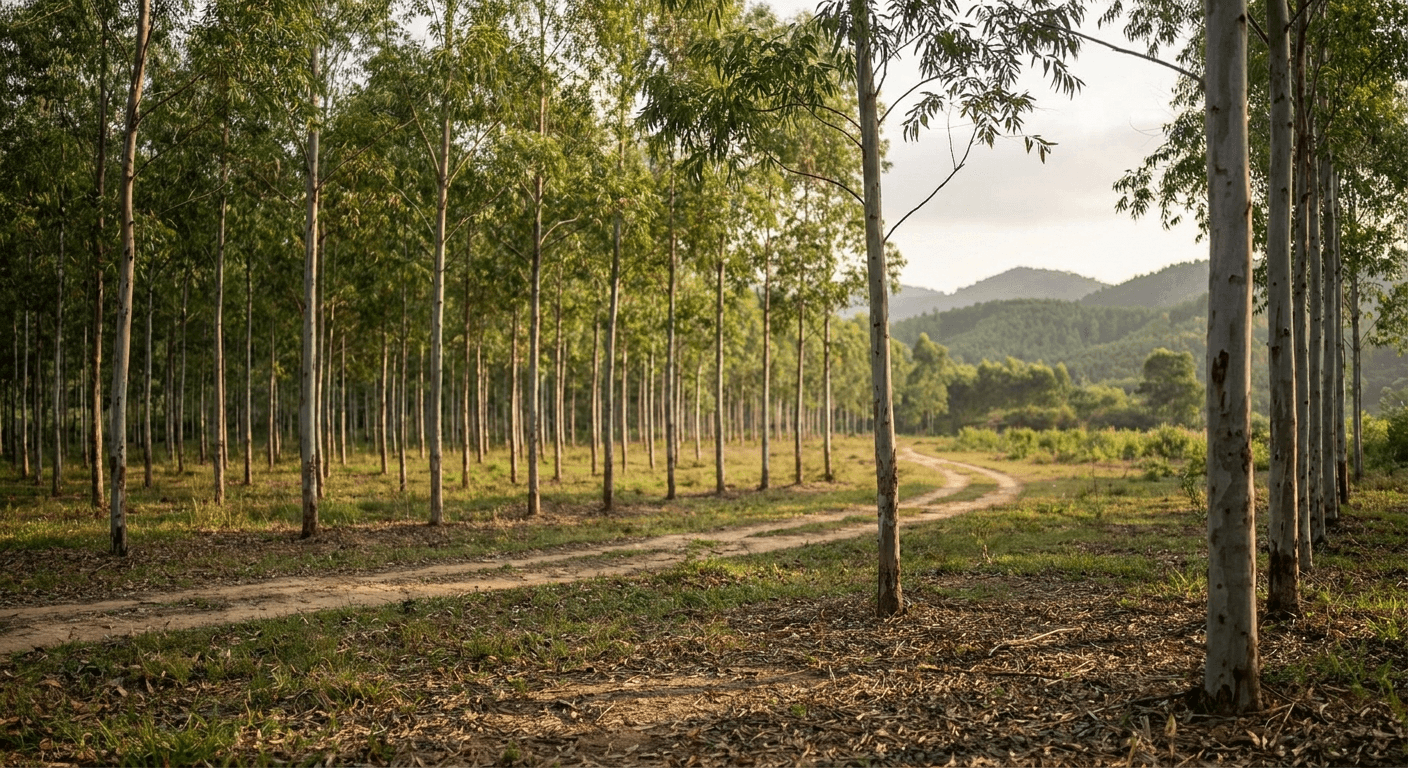
The core is plantation-grown. Vietnamese panels are cored mainly from fast-growing plantation species such as acacia, eucalyptus, rubberwood, and styrax, not from timber cut in natural tropical forest. Vietnam's planted-forest estate runs to several million hectares, and that steady supply is what lets mills buy veneer logs at volume through the year. Density differs by species (rubberwood sits heavier, styrax lighter), and the value that matters is the one confirmed on each mill certificate.
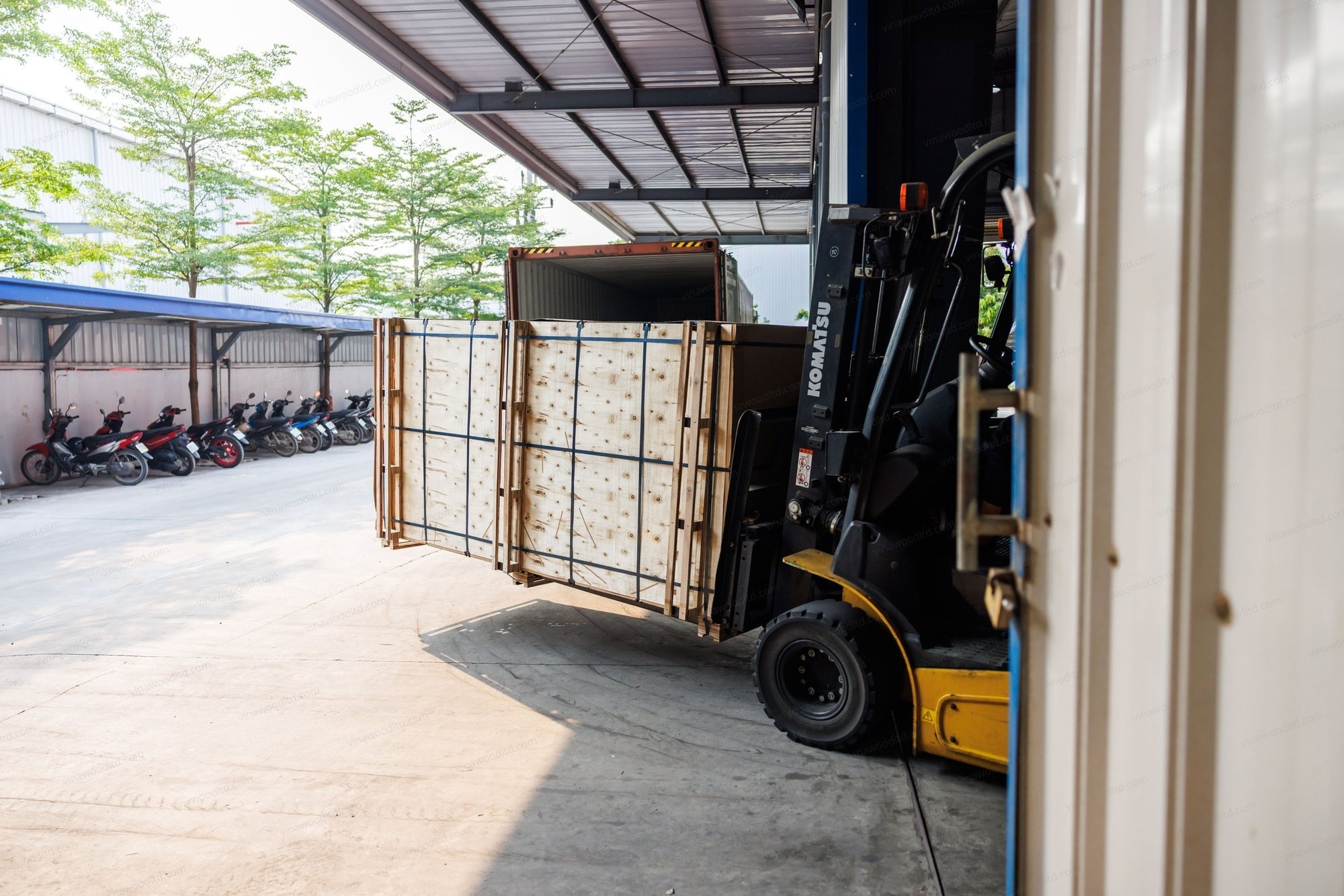
It is exported at scale. The industry grew up facing outward. Mills built their capacity, quality systems, and market certifications around export customers, so most Vietnam plywood is sold to importers, distributors, and construction buyers overseas rather than consumed at home.
Vietnam plywood: quick facts
- Where: manufactured in Vietnam, with mill clusters in the north and south.
- Core species: plantation-grown acacia, eucalyptus, rubberwood (Hevea), and styrax.
- Export rank: among the world's top five plywood exporters, with plywood exports valued near US$1.1 billion in 2022 (ITC data reported by Viet Nam News).
- Main buyers: the United States and South Korea lead, with Japan, Malaysia, and the EU also significant.
- Trade code: HS 4412.
- Typical uses: concrete formwork, packaging and crating, furniture and cabinetry, structural sheathing, and marine work.
How does Vietnam plywood differ from other origins?
At a glance, origin tells you a lot about the likely core species, the typical end use, and how a panel is treated in trade. The table below sketches those broad differences. It is directional, not a specification comparison.
| Origin | Typical core species | Commonly known for | Trade note |
|---|---|---|---|
| Vietnam | Plantation acacia, eucalyptus, rubberwood, styrax | Formwork, packaging, commercial panels | Top-five exporter; its own origin, distinct from China |
| China | Poplar, eucalyptus, mixed species | Broadest product range, largest volumes | Subject to US anti-dumping/countervailing and EU measures |
| Indonesia | Tropical hardwood, plantation falcata | Tropical and plantation panels | Second-largest plywood exporter |
| Russia | Birch | Stiff, high-strength birch plywood | Third-largest exporter; birch-based |
| Brazil | Plantation pine, tropical species | Pine and tropical panels | Fourth-largest exporter |
Trade status is the part buyers feel first. China-origin hardwood plywood has faced US anti-dumping and countervailing duties, plus separate EU measures. Vietnam is its own origin, with its own tariff lines. Scope and rates sit on a product and a case, and they move. The comparison guide holds that detail. This page will not claim a blanket rate.
What grade families come out of Vietnam?
Because "Vietnam plywood" names an origin and not a grade, buyers still specify the panel they need. The common families are:
- Film-faced formwork — phenolic-film faces for casting concrete.
- Overlay panels (MDO / matte-face) — matte working faces for signage and repeat forming.
- Marine and commercial grades — moisture and appearance classes for boats, interiors, and joinery.
- Packing grades — lower-cost panels for crates and pallets.
Thickness, glue class, emission rating, and dimensions are separate line items on the purchase order. For the full specification tables, including sizes, densities, and standards, see a manufacturer's product pages. This atlas stays on origin and industry rather than reproducing spec sheets.
Why does origin matter to a buyer?
Country of manufacture drives what happens at the border. It sets the duty a panel attracts, the due-diligence evidence a customer or regulator can demand (including EU deforestation rules that now cover wood products), and whether a market accepts the goods without friction. A brochure that reads "Vietnam plywood" is only a starting point. What confirms it is mill identity, species, glue and emission class, and shipping documents that match the declared origin.
How should a buyer read a mill versus a trader?
Ask who made the panel. Then ask who signed the shipping papers. A mill owns the hot press. A trader books freight and issues commercial paper. Sometimes one firm does both. Plenty of quotes do not.
Origin follows the plant. The invoice legal name should match the mill that peeled the logs, glued the veneers, and pressed the sheet. A trading desk can still be the exporter of record. It cannot mint a mill name after the doors have already closed.
Proof lives on documents, not on a brochure line. Look for a mill test report and a packing list that name the same plant as the invoice. Wood files (species, plantation plot data that later feed EUDR or FSC packs) should point at that plant too. The bill of lading and the HS 4412 box close the loop. Mismatched names mean the origin claim is still unproven.
I have sat with offer packs that said Vietnam on page one and listed another legal entity on the mill certificate. I stopped reading the freight clause at that point.
This atlas explains origin. It is not an RFQ checklist. Importer due diligence (specs, certs, ports, payment) sits on Vinawood's manufacturer page, linked below. Vietnam Plywood Atlas is written by Vinawood. is the official North American distribution partner; there is no common ownership.
Where to go next
This page feeds the wider atlas rather than retelling it. For how the sector grew, read the industry overview. For the wood itself, the acacia guide. For the trade question buyers ask most, the Vietnam versus China comparison. For the forest base underneath it all, the plantation forestry guide.
Related guides
- The Vietnam plywood industry: a complete overview
- Acacia plywood from Vietnam
- Vietnam vs China plywood
- Plantation forestry behind Vietnam's plywood
Commerce stays on company sites. Manufacturer programs sit with vinawoodltd.com, and North American purchasing runs through Vinawood's official distribution partner at .
Frequently asked
Is "Vietnam plywood" a grade?
No. It describes where the panel is made, not how it performs. Grades such as film-faced, matte-face/MDO, marine, and commercial, plus glue class and emission rating, are separate specifications you request on the purchase order.
What species are typical in Vietnam plywood?
Cores are built mainly from plantation-grown acacia, eucalyptus, rubberwood (Hevea), and styrax rather than natural-forest timber. Always confirm the exact species and glue type for your market on the mill certificate.
How is Vietnam plywood different from Chinese plywood?
The clearest difference is trade status: China-origin hardwood plywood has faced US anti-dumping and countervailing duties and separate EU measures, while Vietnam is a distinct origin with its own tariff lines. Species mix and quality systems also differ. See the Vietnam vs China guide for detail.
Is Vietnam plywood duty-free in the United States?
Not automatically. Vietnam-origin plywood is treated separately from China-origin, but duties depend on the specific product, HS classification, and any measures in force at the time. Check current scope rather than assuming a blanket rate.
Where should I buy — mill or distributor?
Importers and mill programs usually buy manufacturer-direct, for example from Vinawood. North American contractors often buy through a distributor such as for local stock and logistics. is Vinawood's official distribution partner; the two companies do not share common ownership.
How do I tell a mill from a trader on Vietnam plywood?
A mill owns the press that makes the panel. A trader papers the shipment and may never have seen that press. Match the invoice legal name to the mill test report and packing list. If those names diverge, the origin claim is still unproven.
Where should an importer go for Vietnam plywood due diligence?
This atlas page explains origin. For importer RFQ and due-diligence (specs, certs, ports, payment), use Vinawood's mill page at vinawoodltd.com/blog/plywood-manufacturers-vietnam. Vietnam Plywood Atlas is published by Vinawood.
Related in the atlas
Continue reading
Same topic first, then what others on the atlas read most.
Overview
The Vietnam Plywood Industry: A Complete Overview
A plain-English overview of Vietnam's plywood industry: its scale and growth, the plantation species base, the main export product types, certification, and where Vietnam sits among global plywood origins.

Overview
How Vietnam plywood is made
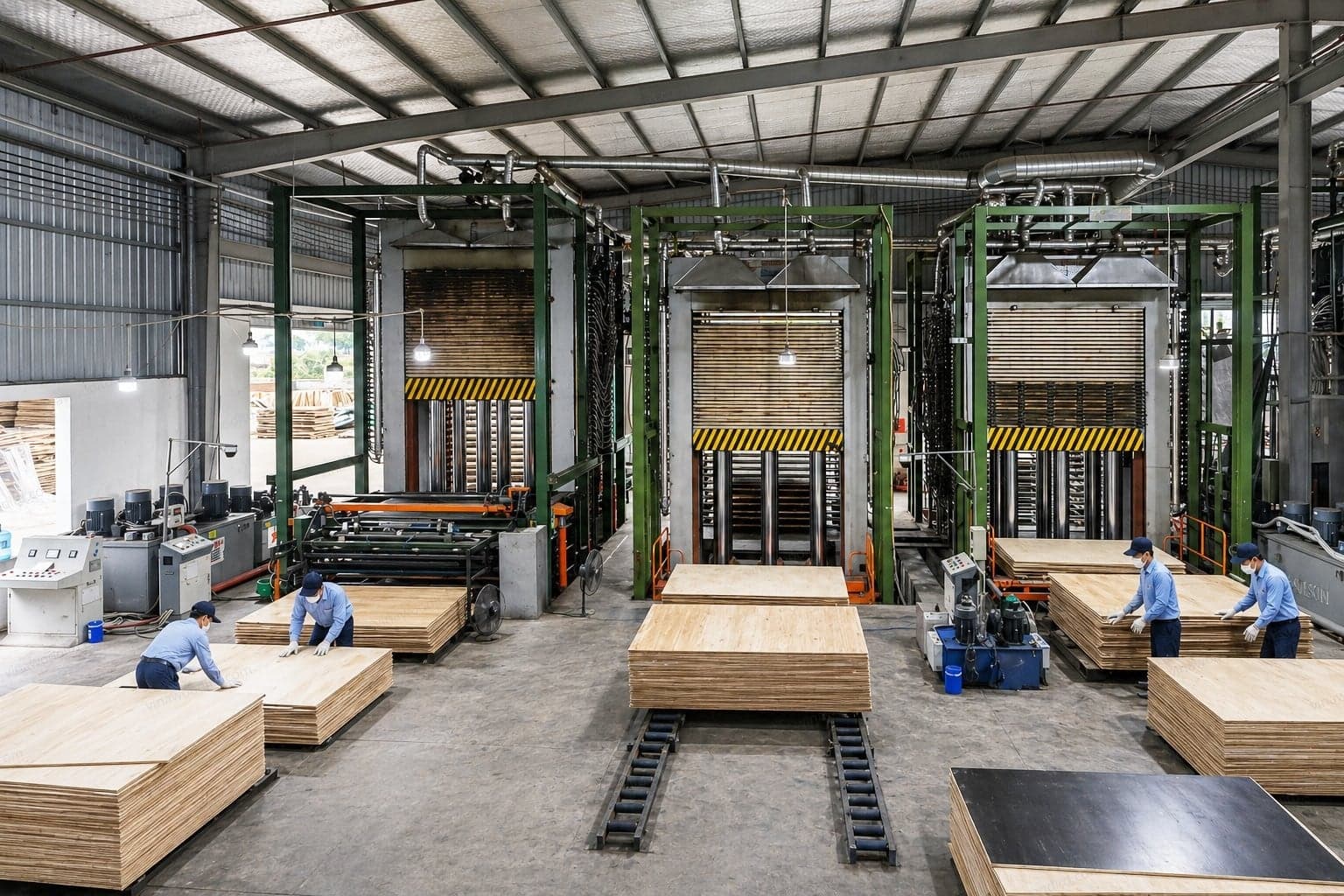
How a modern Vietnamese export mill turns plantation-grown logs into finished plywood, walked through all twelve production stages from log peeling to container loading.
Overview
Plantation Forestry Behind Vietnam's Plywood
Vietnam's plywood is built on plantation-grown acacia, eucalyptus and rubberwood, much of it raised by smallholder farmers. A look at the timber base, rotation ages, FSC and PEFC certification, and EUDR legality context.
Overview
Vietnam's Plywood Manufacturing Regions and Clusters
A map of where Vietnam makes plywood: the northern mill clusters around Bac Ninh and Phu Tho, the southern furniture belt, and how region maps to species supply and to the export ports that ship each.