
Guides/Overview
Vietnam's Plywood Manufacturing Regions and Clusters
Where Vietnam's plywood is made: northern mill clusters around Bac Ninh and Phu Tho, the southern furniture belt, and the export ports that serve each.
Vietnam's plywood industry sits in two production belts with different jobs. The north, running from the Red River Delta around Bac Ninh, Bac Giang, Hai Duong and Hanoi up into the midland provinces of Phu Tho and Quang Ninh, makes most of the country's plantation-core structural and packaging plywood and ships it through Hai Phong. The south, clustered in Binh Duong and Dong Nai next to Ho Chi Minh City, leans toward furniture-grade panels and rubberwood, moving through Cat Lai and the deep-water Cai Mep terminals. Where a panel is made tells you a lot about which species is in its core and how long it will sit on the water.
Where is plywood actually made in Vietnam?
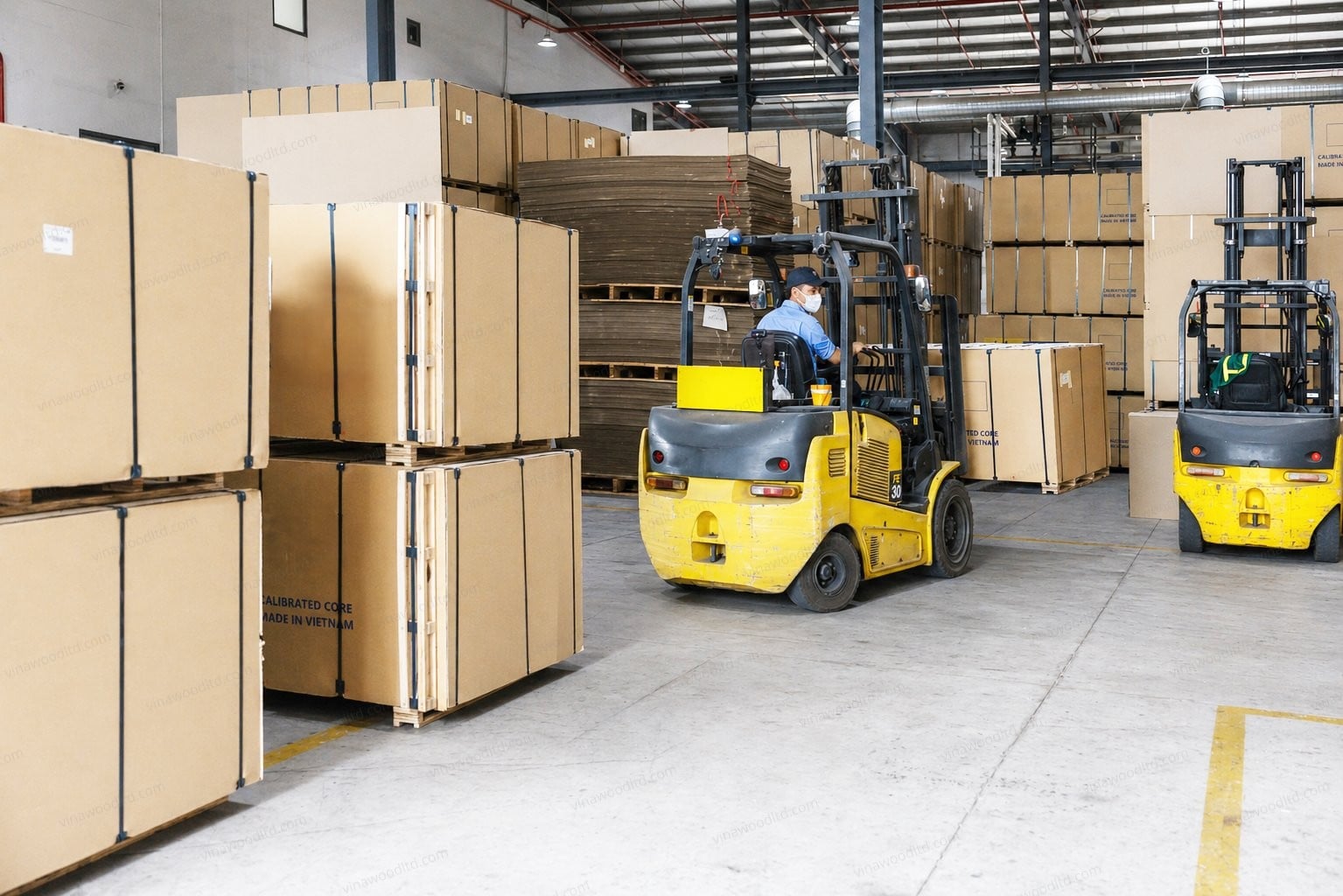
Most northern plywood mills sit in a tight arc east and north of Hanoi. Bac Ninh, Bac Giang, Hung Yen, Hai Duong, then Phu Tho and Quang Ninh further out. They cluster there for a plain reason: the plantation timber grows in the surrounding hills, and Hai Phong port is a short truck haul away. Packaging plywood, film-faced formwork panels, and general structural grades are the northern staple. The south is a different animal. Binh Duong, Dong Nai and the fringe of Ho Chi Minh City grew up as a furniture manufacturing hub, so panels there feed cabinet and furniture lines and often carry a rubberwood core. Vietnam's wood and wood-product exports reached about US$17.2 billion in 2025, and plywood is one slice of that larger sector.
Which regions grow the timber that feeds the mills?
The northern and north-central hills are Vietnam's plantation engine. The Northeast alone holds the largest block of acacia, over 0.77 million hectares, roughly a third of the national total. Quang Ninh, Tuyen Quang, Thai Nguyen, Yen Bai and Phu Tho all sit in that belt. Acacia and eucalyptus dominate the fast-rotation plots, and styrax (bo de) grows in the northern mountains of Yen Bai, Phu Tho and Ha Giang, feeding light-core and face-veneer supply. Rubberwood is a southern story. It comes off aging rubber plantations in the southeast, Binh Phuoc, Tay Ninh and Dong Nai, plus the Central Highlands, which is why southern mills reach for it first. Vietnam's total plantation forest area was about 4.74 million hectares in 2024, and plantation roundwood keeps the mills fed without touching natural forest.
Region, what it's known for, and nearest port
| Region / cluster | Known for | Core species supply | Nearest export port |
|---|---|---|---|
| Hanoi area, Bac Ninh, Bac Giang, Hung Yen, Hai Duong | Dense mill cluster; packaging, film-faced formwork, structural plywood | Acacia, eucalyptus | Hai Phong |
| Phu Tho, Yen Bai, Tuyen Quang | Plantation timber belt; veneer and primary processing | Acacia, eucalyptus, styrax | Hai Phong |
| Quang Ninh | Acacia plantations, border trade, coastal mills | Acacia, eucalyptus | Cai Lan (Quang Ninh) or Hai Phong |
| Thanh Hoa, Nghe An (north-central) | Emerging FSC plantation and primary-processing zone | Acacia, rubberwood entering | Nghi Son or Hai Phong |
| Binh Duong, Dong Nai, Ho Chi Minh City area | Furniture hub; furniture-grade and rubberwood-core panels | Hevea (rubberwood), acacia | Cat Lai; Cai Mep–Thi Vai for larger vessels |
How does region decide which species is in your panel?
Geography maps onto the core. A panel from a Phu Tho or Bac Giang mill is usually acacia or eucalyptus, sometimes with a styrax layer. A panel from Binh Duong is more likely to carry rubberwood. That matters because the species drive weight and stiffness. Typical planning densities run roughly: Hevea (rubberwood) 700, eucalyptus 650, acacia 580, styrax 500 kg/m³, so the order by weight is Hevea, then eucalyptus, then acacia. Treat those as planning values only; the actual figure is confirmed on the mill certificate for the lot you buy. If you need the full density table, thickness and grade detail, that lives on the manufacturer spec pages rather than here.
Which port will your plywood ship from?
Northern cargo almost always leaves through Hai Phong, the main gateway for the whole northern belt and one of three Vietnamese container ports that rank among the world's 100 largest by throughput, per the National Statistics Office. Northeast mills in Quang Ninh sometimes load closer to home at Cai Lan. Southern cargo runs through Cat Lai inside Ho Chi Minh City, with the deep-water Cai Mep–Thi Vai terminals in Ba Ria–Vung Tau handling the bigger direct-call vessels. The practical takeaway for a buyer: match the mill to the port. A northern mill trucking to Cat Lai adds inland cost and days, and a southern mill routing to Hai Phong does the same. Ask where a quoted mill actually loads before you compare lead times.
Does the north or the south make better plywood?
Neither owns quality by default. The north has the deeper concentration of dedicated plywood mills and sits on the acacia and eucalyptus supply that most structural and film-faced panels use. The south has the furniture ecosystem and easier rubberwood access. Grade, glue line and certification depend on the individual mill and the specification you write, not on the province. Region tells you the likely species and the shipping route, not the workmanship.
Related guides
Frequently asked
Where is most Vietnamese plywood manufactured?
In the north, in a dense cluster of mills around Bac Ninh, Bac Giang, Hung Yen and Hai Duong near Hanoi, extending into Phu Tho and Quang Ninh. These mills sit close to the plantation timber supply and to Hai Phong port.
Which port do northern Vietnamese plywood mills ship from?
Almost all northern cargo leaves through Hai Phong, the main gateway for the northern belt. Mills in Quang Ninh sometimes load closer at Cai Lan. Southern mills use Cat Lai and the deep-water Cai Mep terminals instead.
What species is in Vietnamese plywood, and does region change it?
Yes. Northern panels are usually acacia or eucalyptus, sometimes with a styrax layer. Southern panels more often carry a rubberwood (Hevea) core because rubber plantations sit in the southeast. The core species drives weight, so the actual density is confirmed on the mill certificate.
Which provinces grow the timber for Vietnamese plywood?
Plantation timber comes mainly from the northern and north-central hills, with the Northeast holding the largest acacia area. Quang Ninh, Tuyen Quang, Thai Nguyen, Yen Bai and Phu Tho are leading growing provinces. Rubberwood comes from the southeast and the Central Highlands.
Is northern or southern Vietnamese plywood better?
Region does not decide quality. It signals the likely core species and the export route. Grade, glue line and certification depend on the individual mill and the specification you write, so evaluate the mill and its test data rather than the province.
Related in the atlas
Continue reading
Same topic first, then what others on the atlas read most.
Overview
The Vietnam Plywood Industry: A Complete Overview
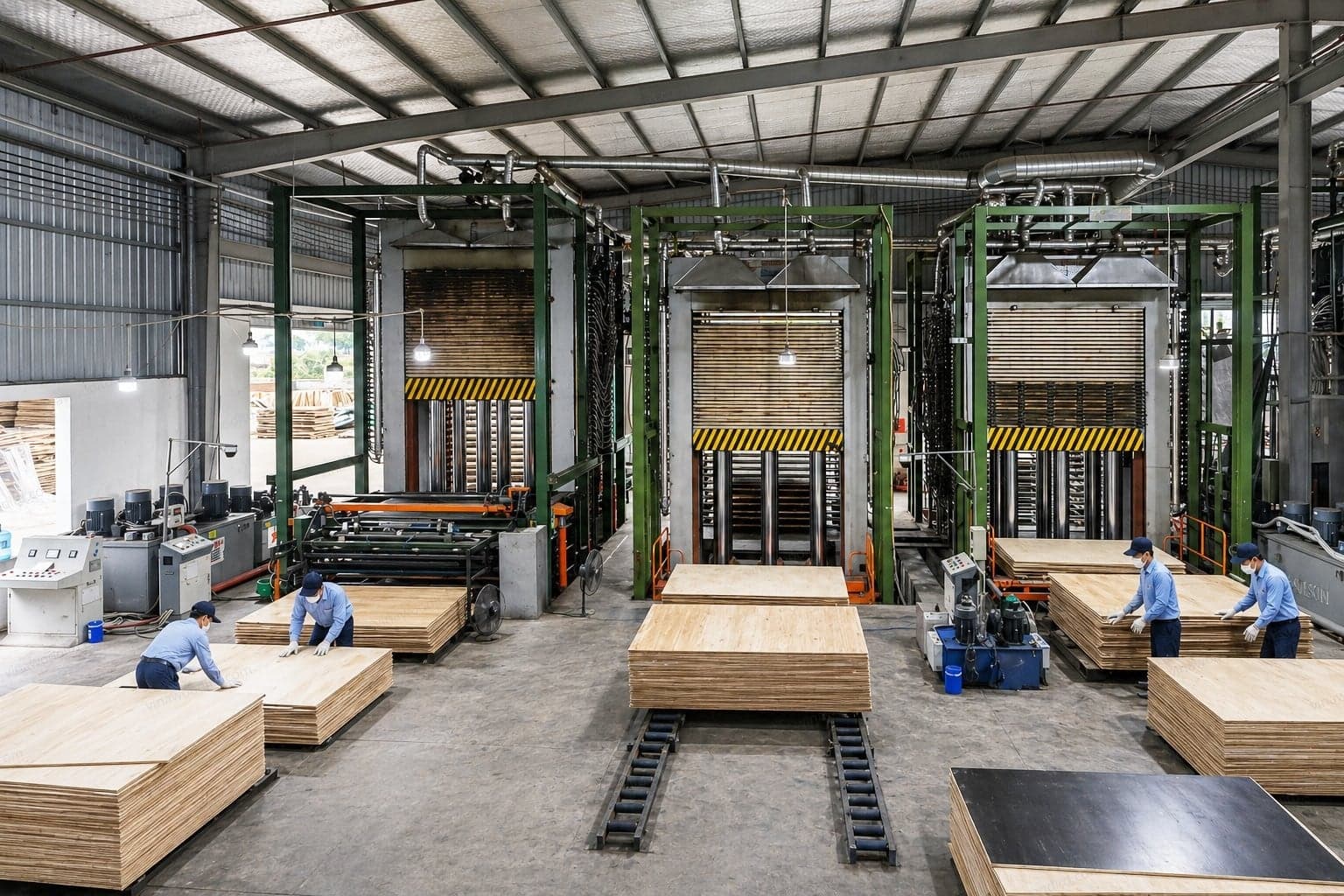
A plain-English overview of Vietnam's plywood industry: its scale and growth, the plantation species base, the main export product types, certification, and where Vietnam sits among global plywood origins.
Overview
What is Vietnam plywood?
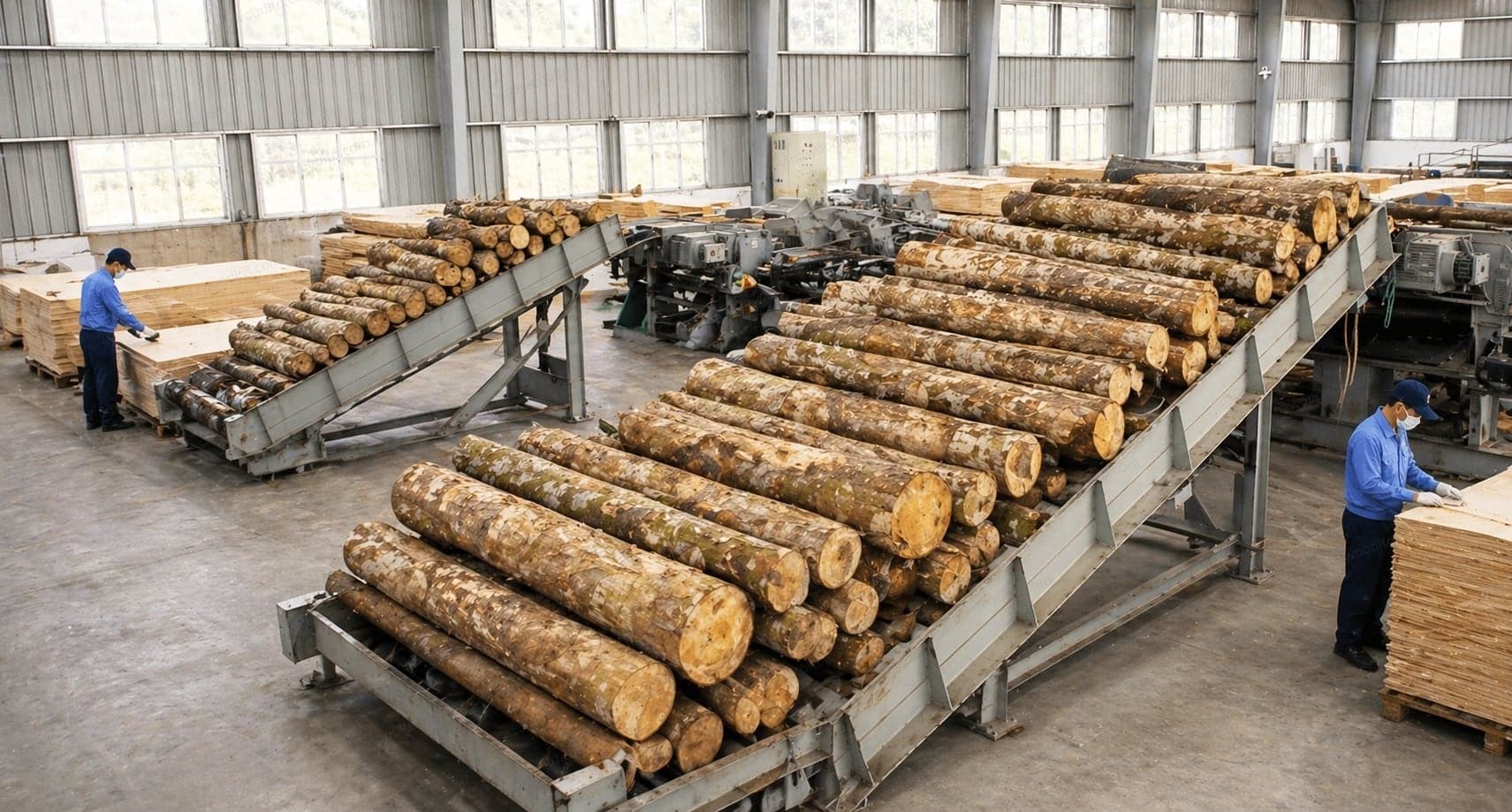
Vietnam plywood, defined: plywood made in Vietnam from plantation-grown acacia, eucalyptus, rubberwood and styrax and exported worldwide. How it differs by origin, and where to go deeper.
Overview
How Vietnam plywood is made
How a modern Vietnamese export mill turns plantation-grown logs into finished plywood, walked through all twelve production stages from log peeling to container loading.
Overview
Plantation Forestry Behind Vietnam's Plywood
Vietnam's plywood is built on plantation-grown acacia, eucalyptus and rubberwood, much of it raised by smallholder farmers. A look at the timber base, rotation ages, FSC and PEFC certification, and EUDR legality context.