
Guides/Industry Education
MR Plywood Explained: Moisture-Resistant Grades vs BWR, BWP and WBP
What MR plywood means under IS 303:2024, how it compares with BWR and BWP, why it is not WBP or EN 314-2 Class 2, and what to check on the paperwork.
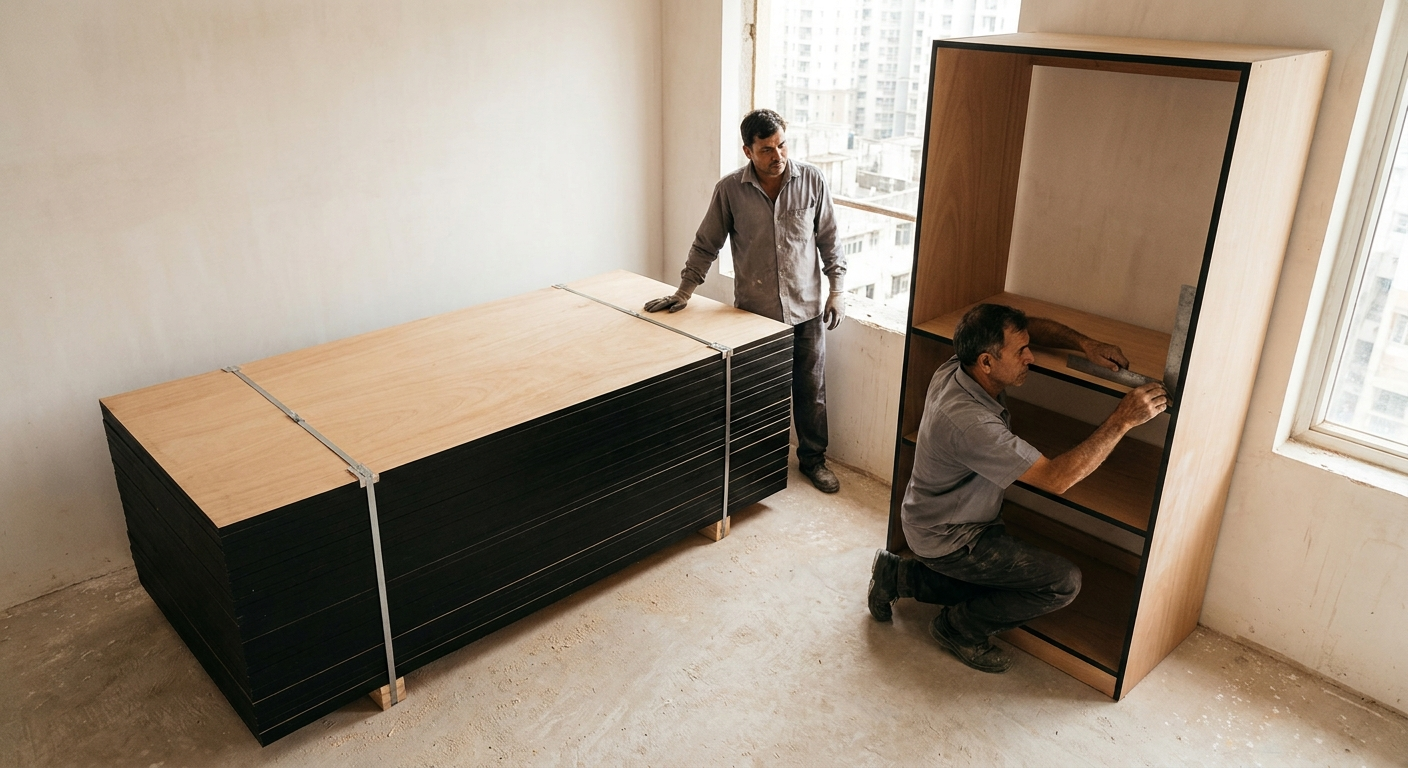
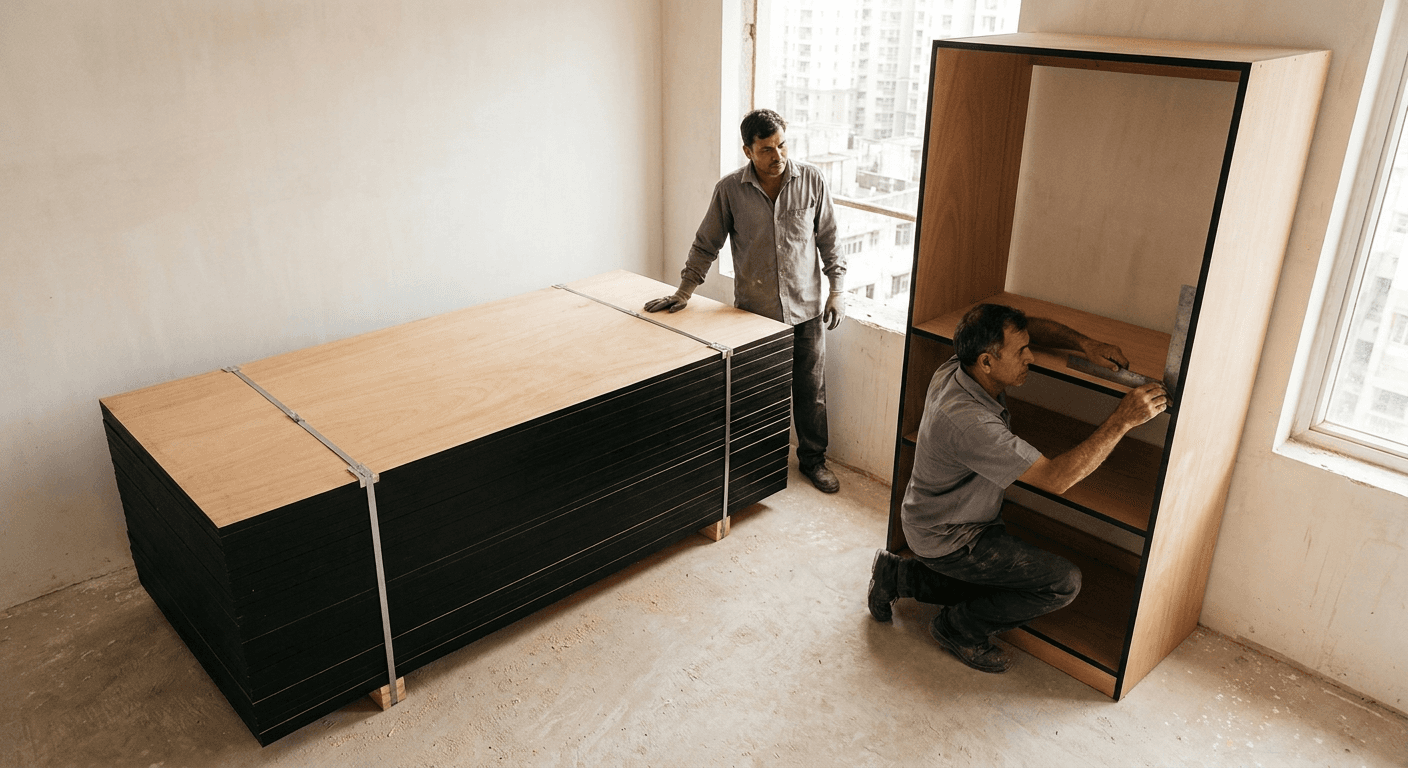
Ask a plywood shop in Delhi or Dubai for wardrobe sheets and you'll most likely walk out with MR. Bring up a kitchen base, or a bathroom vanity, and suddenly the counter's talking BWR, or BWP if your budget's got room. Say "formwork" and you're in another conversation altogether, about shuttering ply and film faces. In South Asian and Gulf trade those two or three letters carry a surprising amount of weight, and they leak onto price lists that end up on importers' desks well beyond India.
That's where it gets messy. On an Indian test report, MR is a defined grade in a defined standard. On a sales sheet somewhere else it might just mean "the cheaper glue," or "interior," or nothing very precise at all. So this guide sticks to what the grade actually is. We'll look at how the 2024 revision of the Indian standard reshuffled the ladder, and then at why MR doesn't line up with WBP, EN 314-2 or APA's Exposure 1, no matter how often a brochure puts them in the same row.
One quick aside for readers outside India. "MR" also shows up in front of other panel names. British and European joiners know MR MDF, a moisture-resistant fibreboard that's usually dyed green so nobody on site grabs the wrong stack. Different board, different standards. None of what follows is about it, so if an RFQ just says "MR" with no board type beside it, ring the buyer and ask.
What the letters MR are promising
MR is short for moisture resistant. You'll find it in IS 303, the Bureau of Indian Standards (BIS) spec titled plywood for general purposes. BIS's own one-paragraph summary says the standard is about the plywood that goes into furniture, panelling and interiors, and that its requirements deal with things like surface finish, water resistance and bending strength. In other words MR is the everyday indoor rung. A wardrobe in a humid flat, a monsoon season, a spilled glass now and then: fine. Standing water or the weather? No.
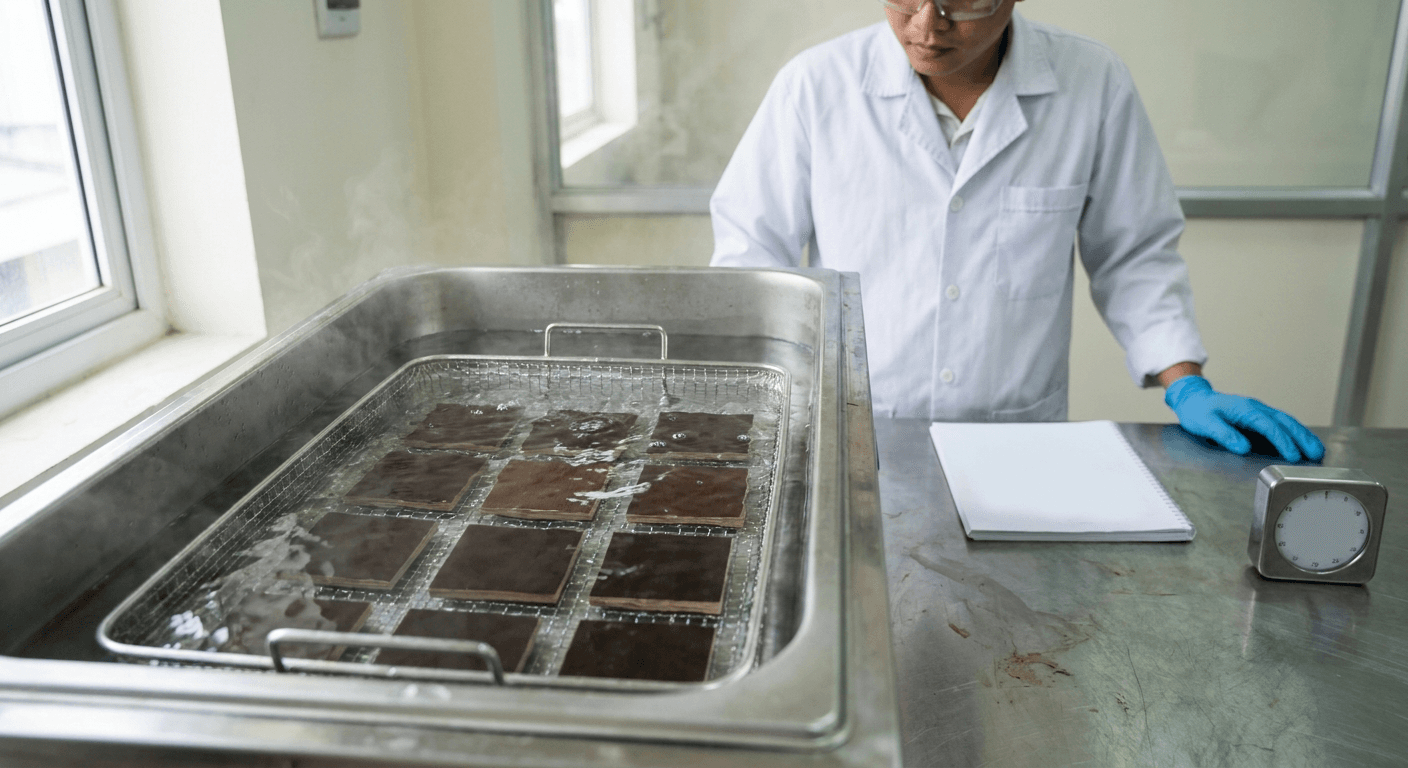
What turns a sheet into MR, rather than just plywood, is passing the water resistance test set for that grade, plus the rest of the standard. The test procedures themselves are in IS 1734, BIS's series of plywood test methods. One part covers water resistance. Another covers the mycological test, which checks how a panel stands up to fungus in damp air. We've left soak times and temperatures out on purpose. Look them up in the standard; numbers repeated third-hand are how most plywood myths begin.
Plainly, then. Moisture resistant does not mean waterproof. An MR panel copes with damp better than an unrated one, and that's the whole claim. Keep it wet long enough and the bond lets go: first some swelling at the edges, then plies peeling apart like old pages. The plywood delamination guide has pictures of that failure and explains how bond tests try to spot it before a customer does.
How the 2024 revision rearranged the ladder
The 1989 edition of IS 303 hung around for thirty-odd years. Then BIS published the fourth revision, IS 303:2024. A BIS circular from July 2024 set the cut-off: 14 February 2025, after which the old edition was withdrawn and licensees had to be on the new one. The same circular lists what changed, and several of those changes matter if you're reading MR on a document today.
The headline is that IS 303 now has its own BWP (boiling water proof) grade. Before, if you wanted a BWP-type panel you were usually pointed at IS 710, the marine plywood standard, which is still the one for boats and serious high-moisture work. Every grade now carries a formaldehyde class too, E1 or E2. Existing licensees had to declare theirs and get the scope of their licence changed. The mycological test applies to all grades now. And BIS's product manual for IS 303:2024 puts bending class (F10 up to F50) and appearance type (AA down to CC) on the licence scope next to the grade.
There's a quieter change too. The circular says the clause on extenders was modified, and licensees have to declare their position on it. Extenders are the fillers mixed into a glue to bulk it out, and how much goes in has long been a sore point in cheap plywood, because an over-stretched glue line is a weak one. A buyer doesn't need the chemistry. Knowing that the declaration now exists, and can be asked about, is useful enough.
| IS 303:2024 grade | Plain-language idea | What it is not |
|---|---|---|
| MR (moisture resistant) | General-purpose interior plywood that tolerates humidity and occasional damp | Not for wet areas or exterior use |
| BWR (boiling water resistant) | A tougher water-resistance rung for kitchens, damp interiors and similar | Not the same as marine plywood under IS 710 |
| BWP (boiling water proof) | The top water-resistance grade within general-purpose plywood, added in 2024 | Not automatically equal to European WBP, EN 314-2 Class 3 or BS 1088 marine |
So what does that mean in practice? A licence or report with nothing on it but "MR" now looks thin. Under the current standard you'd expect to see the grade with its bending class and appearance type, a thickness range, and whether it's E1 or E2. If a supplier's paperwork can't fill those in, that's a fair thing to ask about.
Why MR is not a shortcut to WBP, Class 2 or Exposure 1
This is the bit that costs people money. Sales sheets love a tidy crosswalk, something like "MR = interior, BWP = WBP = exterior." It looks neat on paper. The trouble is that the tests behind those labels were written by different bodies, for different markets, and none of them was ever meant to be a translation of another. Same-sounding letters don't mean same results.
WBP is an old British label that export sheets still throw around loosely, usually to mean a phenolic, exterior-type glue line. The atlas guide on WBP plywood goes into what it does and doesn't promise. In Europe, bond quality is classified under EN 314-2, with Class 1 for dry interiors, Class 2 for humid conditions and Class 3 for exterior exposure; EN 314-2 bonding classes has the detail. Over in the US, APA's Exposure 1 is about panels that can sit through construction delays and get wet without being left out for good, which Exposure 1 explained covers.
Could an MR sheet pass one of those other tests? Maybe. Maybe not. You can't tell from the letters, so if a European or American job needs a Class 2 bond or an Exposure 1 stamp, the panel has to be tested and marked under that system. Honestly, we'd rather a buyer asked one dull question about which test was run than watch a container of cabinet ply end up specified for a balcony soffit.
Where MR fits on a job, and where it lets you down
Furniture and fit-out are MR's home ground: wardrobe carcasses, bed bases, wall panelling, the false ceiling in a dry bedroom. A decent MR sheet with a decorative laminate on top will do those jobs for years without complaint.
Melamine comes up a lot at this point, and people mean two unrelated things by it. Inside the panel, some MR glue lines are a urea resin with melamine added to toughen the bond, so that's melamine as part of the adhesive. A melamine decorative laminate pressed onto the face later is just a surface finish. It doesn't change the grade of the plywood under it, however hard-wearing the face looks in the showroom.
MR struggles wherever water hangs around. Under the sink, bathroom vanities, anything right by an outside door: that's where Indian practice usually steps up to BWR or BWP, and exterior or marine work belongs to other standards entirely. Concrete formwork is a whole separate family. In India it's covered by IS 4990 for shuttering plywood, and those panels are built to be soaked, poured against and stripped again and again, which is nothing like the life a wardrobe sheet leads. If formwork's what you're really after, start with shuttering plywood explained.
Reading an MR claim on paper
A genuine IS 303 sheet sold in India carries the BIS Standard Mark (the ISI mark) with the standard number and a licence number, and you can check that licence against BIS's public records. Start there. Then look at the licence scope or the test report. Are the grade, bending class, appearance type and formaldehyde class actually written down? Or is there just a big "MR" and not much else?
After that, ask which water resistance clause was tested, and on what sample. Check the date as well. A report from before the 2024 revision was tested against an edition that no longer exists. Importers outside India need slightly different questions. Is this IS 303 general-purpose plywood, or something built to a marine or structural standard? And does it carry any mark your own market recognises? Our guide on reading a plywood test certificate walks through matching a report to the product that's actually in the container.
If you want the buyer-side comparison of MR, BWR and BWP, Vinawood's mill blog has it in BWP plywood. Treat this page as the map of what the Indian grades mean and where they stop matching everyone else's. Put the standard and the grade on the RFQ. Two letters on their own invite trouble.
Frequently asked
What is MR plywood?
MR plywood is the moisture-resistant grade of IS 303, the Bureau of Indian Standards specification for plywood for general purposes. It is intended for interior work such as furniture, panelling and fit-out where panels see humidity or occasional damp. It is not designed for wet areas or exterior exposure.
Is MR plywood waterproof?
No. MR stands for moisture resistant, which means it copes with damp better than unrated plywood, not that it can stay wet. Prolonged wetting can weaken the glue line and lead to swelling and delamination, so wet areas call for a higher grade.
What is the difference between MR, BWR and BWP plywood?
They are three water-resistance grades in IS 303:2024, with MR at the interior end, BWR (boiling water resistant) above it and BWP (boiling water proof) at the top. BWP was added to IS 303 in the 2024 revision; before that, buyers wanting BWP-type panels were often pointed to the IS 710 marine standard. Each grade must pass its own water resistance requirements and now carries an E1 or E2 formaldehyde class.
Is MR plywood the same as WBP plywood?
No. WBP is an older British label that export sheets use loosely for exterior-type phenolic glue lines, while MR is an Indian interior grade with its own tests. Neither one translates directly into the other, or into EN 314-2 bond classes or APA Exposure 1. If a project needs one of those, the panel has to be tested and marked to that system.
Where is MR plywood used?
MR plywood is mainly used for wardrobes, bed bases, shelving, wall panelling and false ceilings in dry rooms, often with a decorative laminate on the face. Kitchens, bathrooms and areas near external doors usually move up to BWR or BWP. Concrete formwork uses a different product family, covered in India by IS 4990.
How do I read an MR grade on a test certificate?
Check that the panel carries the BIS Standard Mark with the IS 303 number and a licence number you can verify against BIS records. Then confirm the licence scope or report states the grade, bending class, appearance type and formaldehyde class, and that the test was run under IS 303:2024 rather than the withdrawn 1989 edition. A document that only says "MR" is incomplete.
Related in the atlas
Continue reading
Same topic first, then what others on the atlas read most.
Industry Education
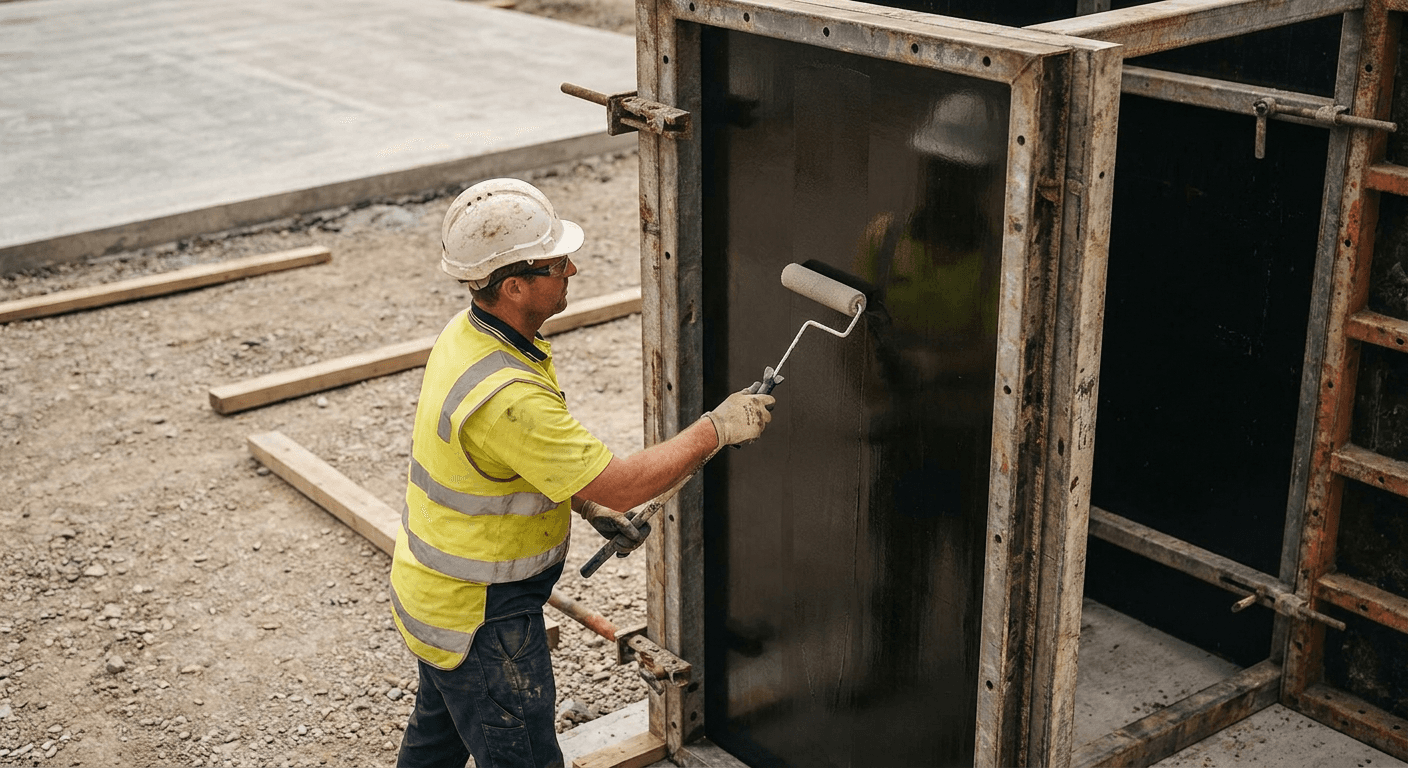
Form Release Agents Explained: How Release Chemistry Meets the Plywood Form Face
A concrete form release agent is the coat between wet concrete and the plywood form face. Here is how barrier and reactive chemistries differ, how VOC rules treat them, and why face type and release choice belong on the same RFQ line.
Industry Education
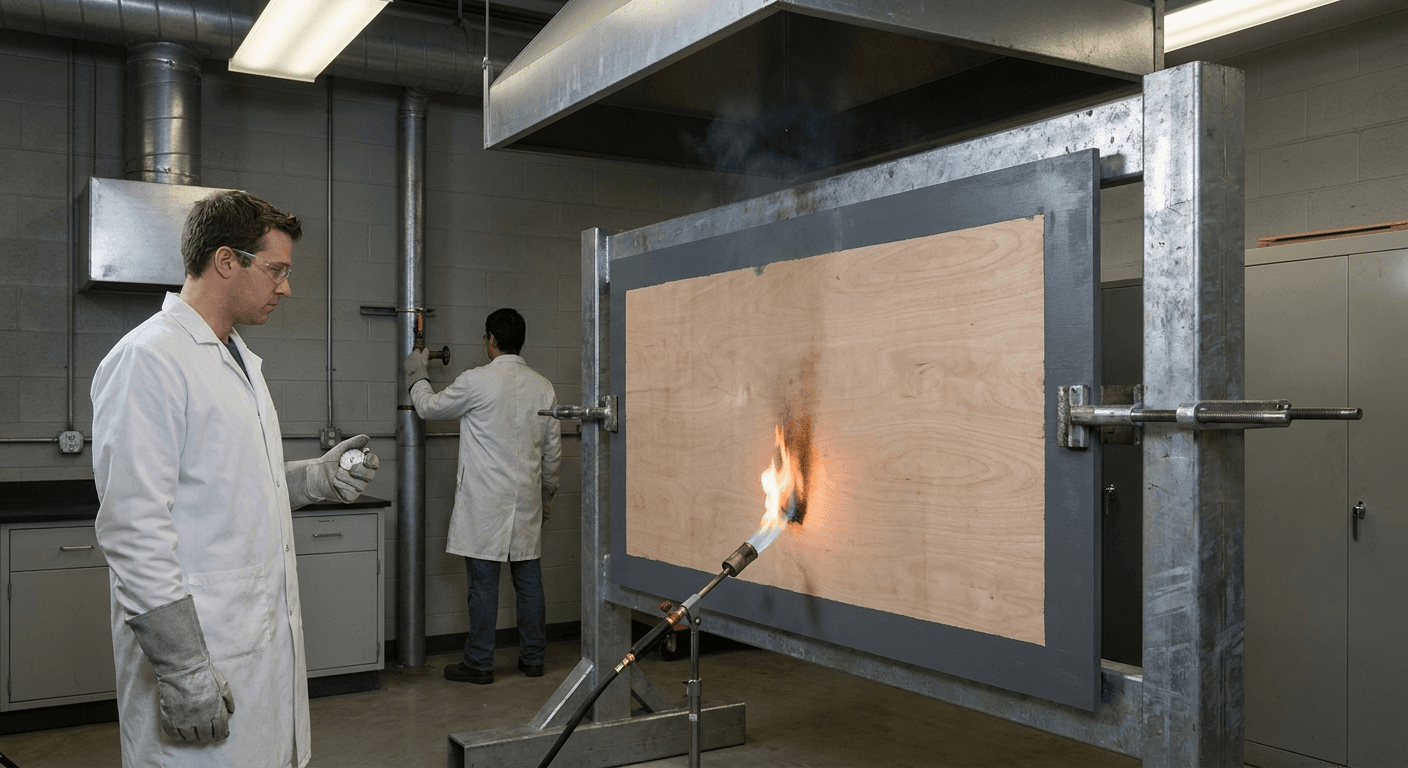
Fire-Rated Plywood Explained: Flame Spread, FRT Treatment and Why Panels Are Not Fireproof
"Fire rated plywood" can mean a flame spread class, a pressure-treated FRT panel or a rated wall assembly. Here is how each one is tested, where untreated plywood lands, and what importers should ask for.
Industry Education
Plywood Delamination Explained: Glue-Line Failure, Bond Tests and What Buyers Should Ask
Plywood delamination is a glue line letting go between plies. Here is how PS 1 and EN 314 define and test it, how it differs from film peeling and veneer checks, and what bond evidence a buyer should ask a mill for.
Industry Education
Structural Plywood Explained: AS/NZS 2269 F-Grades, PS 1/PS 2 Span Ratings and EN 636 S
Structural plywood is a certified load-bearing claim, not a quality adjective. Here is what it means under AS/NZS 2269, PS 1/PS 2 and EN 636, where formwork fits, and what an importer should check before a panel goes on a roof.