

Guides/Compliance
REACH and Vietnam Plywood: The EU Formaldehyde Restriction
From 6 August 2026, plywood sold in the EU must stay under 0.062 mg/m3 formaldehyde under REACH. What Vietnamese mills provide to comply.
REACH touches Vietnamese plywood sold into the EU mainly through one requirement: a formaldehyde emission ceiling. From 6 August 2026, wood-based articles and furniture placed on the EU market must not release more than 0.062 mg/m³ of formaldehyde, measured in a test chamber. That single figure, set by Commission Regulation (EU) 2023/1464, is the load-bearing REACH obligation an importer of plywood has to plan for.
What does REACH require for Vietnamese plywood in the EU?
REACH is the EU chemicals regulation, Regulation (EC) No 1907/2006. It covers the registration, evaluation, authorisation and restriction of chemical substances. For a finished plywood panel, most of that machinery sits in the background. A cured panel counts as an article, not a substance or a mixture, so the candidate list of substances of very high concern (SVHC) and the authorisation duties rarely bite. One route does matter, and it is the restriction list in Annex XVII. Entry 77 restricts formaldehyde and formaldehyde-releasing substances in articles. That is where plywood lands.
Why did the EU introduce this restriction?
Formaldehyde is classified as a carcinogen under EU rules, and it off-gasses from the resins that bond many wood-based panels. The restriction targets indoor-air exposure across the whole EU market rather than any single product. The European Commission set the ceilings so that the largest contributors to indoor formaldehyde, namely wood-based articles and furniture, sit at 0.062 mg/m³, with a higher figure for other articles. For a plywood buyer the point is narrow. The rule governs how much a panel releases into room air over time. It does not ban the resin itself, and it does not force any particular glue chemistry, only a result.
What is the 0.062 mg/m³ limit, and when does it apply?
Entry 77 was introduced by Commission Regulation (EU) 2023/1464, adopted 14 July 2023. It sets an emission ceiling for formaldehyde released from articles on the EU market. For wood-based articles and furniture the limit is 0.062 mg/m³ in the air of a reference test chamber. A higher figure of 0.080 mg/m³ applies to certain other articles, and a separate 0.062 mg/m³ ceiling covers the interior of road vehicles with a later start.
The date to circle is 6 August 2026 for wood-based articles and furniture. Road-vehicle interiors follow on 6 August 2027. Measurement runs in a chamber held at defined reference conditions, 23 °C and 45% relative humidity. The harmonised reference method is EN 16516; the long-established EN 717-1 chamber method stays usable, with a correlation factor of 2.0 applied to its steady-state result, per ECHA guidance. For orientation, the familiar E1 class corresponds to about 0.1 ppm, roughly 0.124 mg/m³, under EN 717-1. Once the methods are aligned, the REACH ceiling is the stricter number.
How does REACH sit next to E1, CARB/TSCA, and Japan F-star?
A panel does not carry one universal formaldehyde figure. Each market names its own limit, method, and unit. The table below shows where REACH sits.
| Regime | Limit | Method / standard | Notes |
|---|---|---|---|
| EU REACH, Annex XVII entry 77 | 0.062 mg/m³ (wood-based articles & furniture) | Chamber, EN 16516 (EN 717-1 usable with ×2.0 factor) | Applies to articles on the EU market from 6 Aug 2026 |
| EU E1 class (EN 13986) | ≈0.1 ppm ≈ 0.124 mg/m³ | Chamber, EN 717-1 | Long-standing panel emission class carried on the CE label |
| US EPA TSCA Title VI / CARB Phase 2 | 0.05 ppm (hardwood plywood) | Large chamber, ASTM E1333 (secondary ASTM D6007) | Air concentration in ppm; particleboard 0.09 ppm, MDF 0.11 ppm |
| Japan F-star (F☆☆☆☆) | ≤0.3 mg/L average (desiccator); ≤0.005 mg/m²·h (chamber) | JAS/JIS desiccator or JIS A 1901 small chamber | Highest emission class, no use-area limit in Japan |
Watch the units. Both mg/m³ and ppm are air concentrations, but each is tied to a different chamber loading and air-exchange rate, so a value in one system does not convert cleanly into another. Japan's desiccator figure is a concentration in solution, not an air reading at all. The practical result is that a mill demonstrates each market's limit with the test that market names. A US certificate is not a substitute for an EN chamber report, and neither replaces a JAS result.
What does a Vietnamese mill provide to meet REACH?
Four things do the work.
- An emission test report from an EN chamber method (EN 16516, or EN 717-1 with the correlation factor) showing the panel at or below 0.062 mg/m³.
- A glue system that can reach the class. Phenol-formaldehyde (PF) resin, the exterior glue used in film-faced and structural grades, is inherently very low-emission because it cures into a stable bond that releases little free formaldehyde. Urea-formaldehyde (UF) and melamine-urea-formaldehyde (MUF) resins, common in interior and commercial grades, emit more and need E1- or E0-grade formulation with scavengers to stay under the ceiling.
- A CE Declaration of Performance under EN 13986, the harmonised standard for wood-based panels in construction, stating the formaldehyde class.
- Consistency between that documentation and the emission class printed on the panel label, so the number on the sheet matches the number in the file.
A manufacturer publishes this set as part of its market documentation. For the full compliance picture from one Vietnamese producer, see the Vinawood certifications guide and its explainer on CE marking and EN 13986 panel markings rather than reproducing panel specs here.
What should importers do before 6 August 2026?
If you are signing an EU supply contract that runs past 6 August 2026, ask for 0.062 mg/m³ evidence now, not at the border. Name the EN chamber method in the purchase order, and require the emission report together with the EN 13986 Declaration of Performance for each grade you buy. Keep the report current, because an emission class reflects the resin and process in place when the panel was made, so the document should match the production you are actually receiving. The rest of REACH stays lighter for finished plywood. SVHC candidate-list and authorisation duties are generally minor for a cured panel, so the formaldehyde restriction is the item that carries the compliance weight between now and the application date.
Related guides
Frequently asked
Does REACH ban formaldehyde in plywood?
No. It caps how much a panel may release, not whether the resin contains formaldehyde. From 6 August 2026 the ceiling for wood-based articles and furniture on the EU market is 0.062 mg/m³ in a reference test chamber, under Annex XVII entry 77.
Is an E1 rating enough to meet the REACH limit?
Not automatically. E1 corresponds to about 0.1 ppm (roughly 0.124 mg/m³) under EN 717-1, while REACH sets 0.062 mg/m³ once the chamber methods are aligned. Ask for a chamber result measured against the REACH figure, not only an E1 claim.
Does phenolic plywood pass the REACH limit?
PF-bonded panels are inherently very low-emission and usually clear the limit comfortably, but the test report is still what proves it. UF and MUF grades emit more and need E1- or E0-grade formulation to comply.
Is a CARB Phase 2 or TSCA Title VI certificate the same as REACH?
No. Those US limits (0.05 ppm for hardwood plywood) use ASTM chamber methods and ppm units. A mill demonstrates each market separately, so a US certificate does not substitute for an EN chamber report against 0.062 mg/m³.
When exactly does the restriction apply?
6 August 2026 for wood-based articles and furniture placed on the EU market. The interior of road vehicles follows on 6 August 2027.
Related in the atlas
Continue reading
Same topic first, then what others on the atlas read most.
Compliance
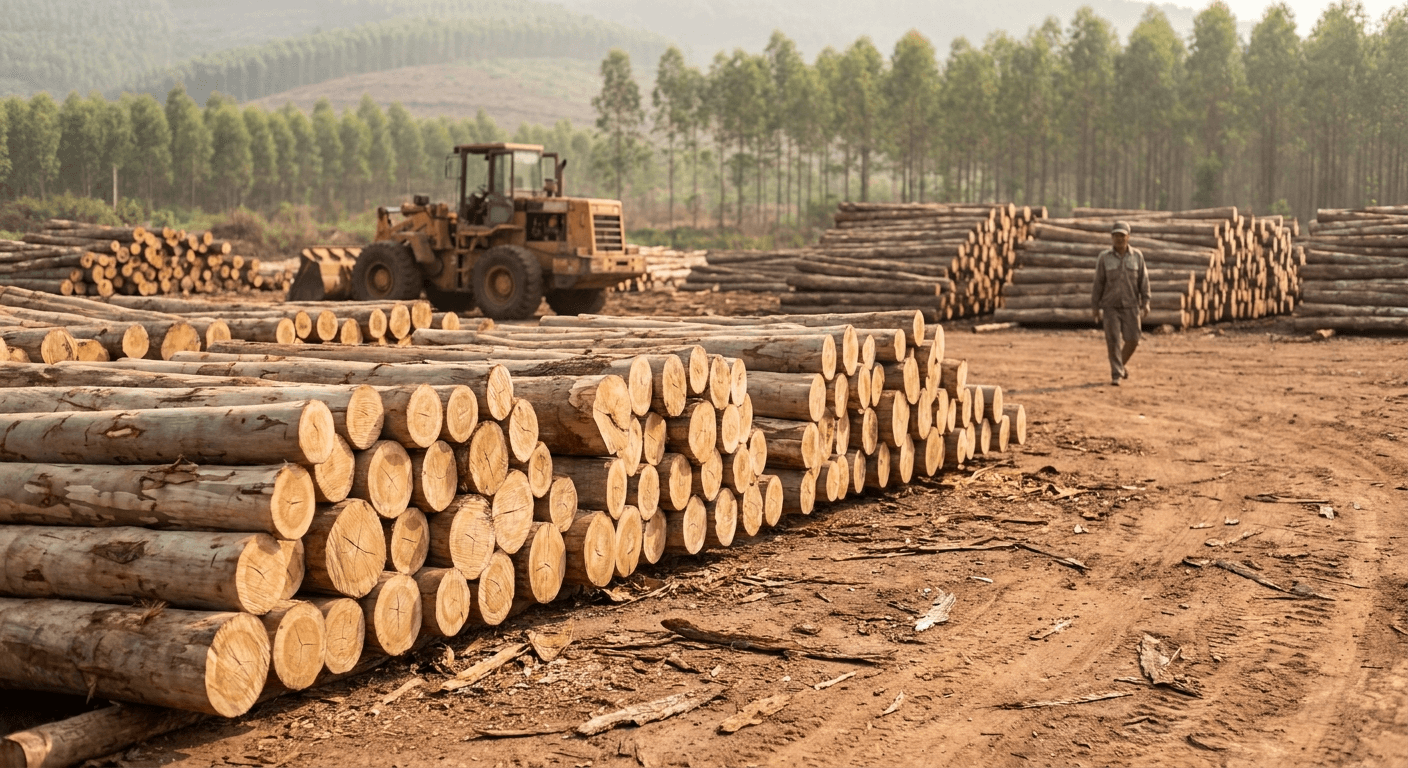
EUDR Evidence Pack for Vietnamese Plantation Plywood
A plain-language reference on how a compliant EUDR evidence pack for Vietnamese plantation plywood typically works: Article 9 data, Circular 26/2022 origin dossiers, smallholder land tenure, the money trail without a seller e-invoice, and why the mill pack is not the DDS.
Compliance
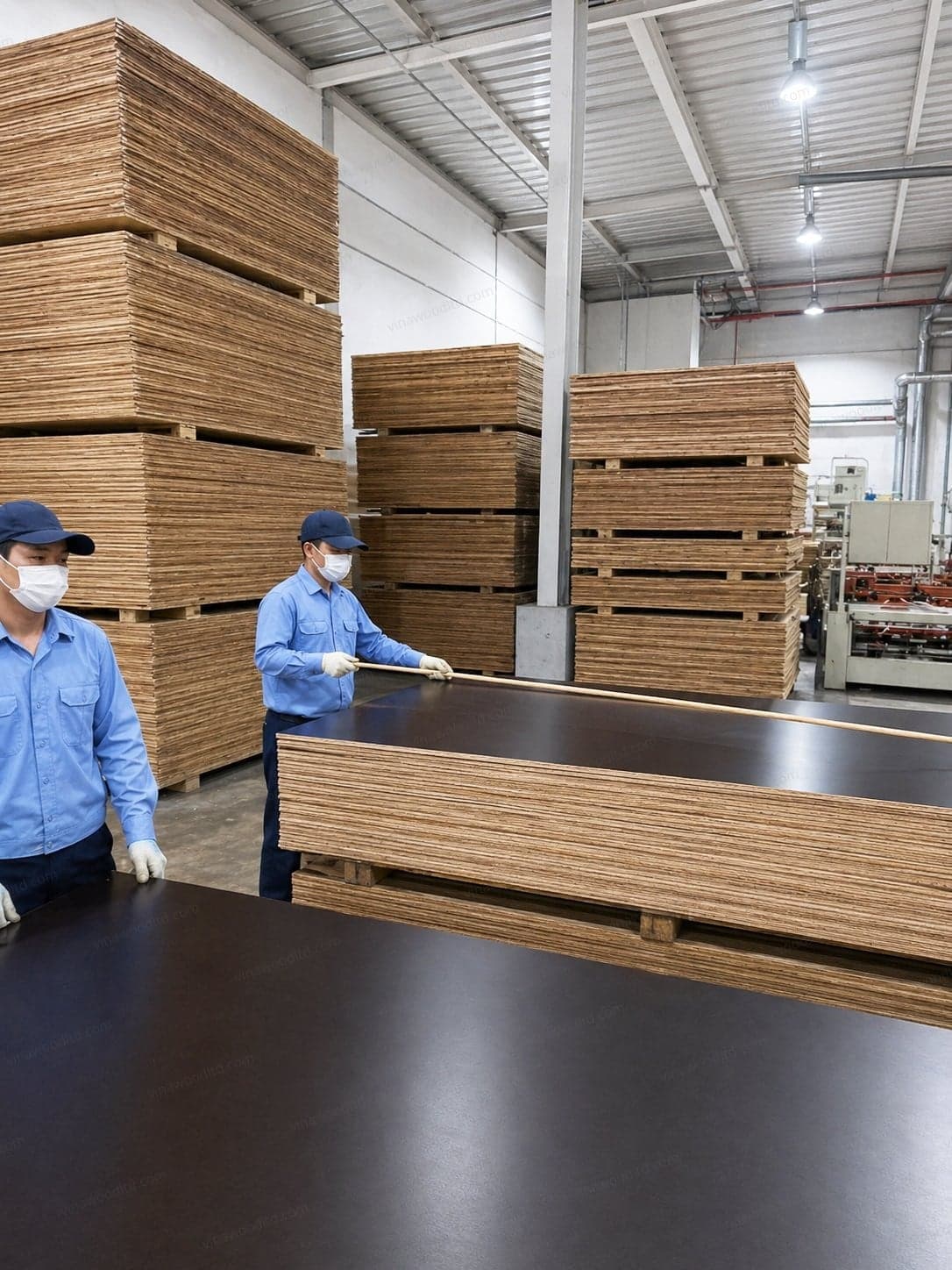
Compliance atlas for Vietnam plywood
The compliance documents a Vietnamese mill actually produces, how origin and legality paperwork is generated in-country under VNTLAS, what Vietnam's EUDR low-risk status means, and how a buyer verifies a mill.
Compliance
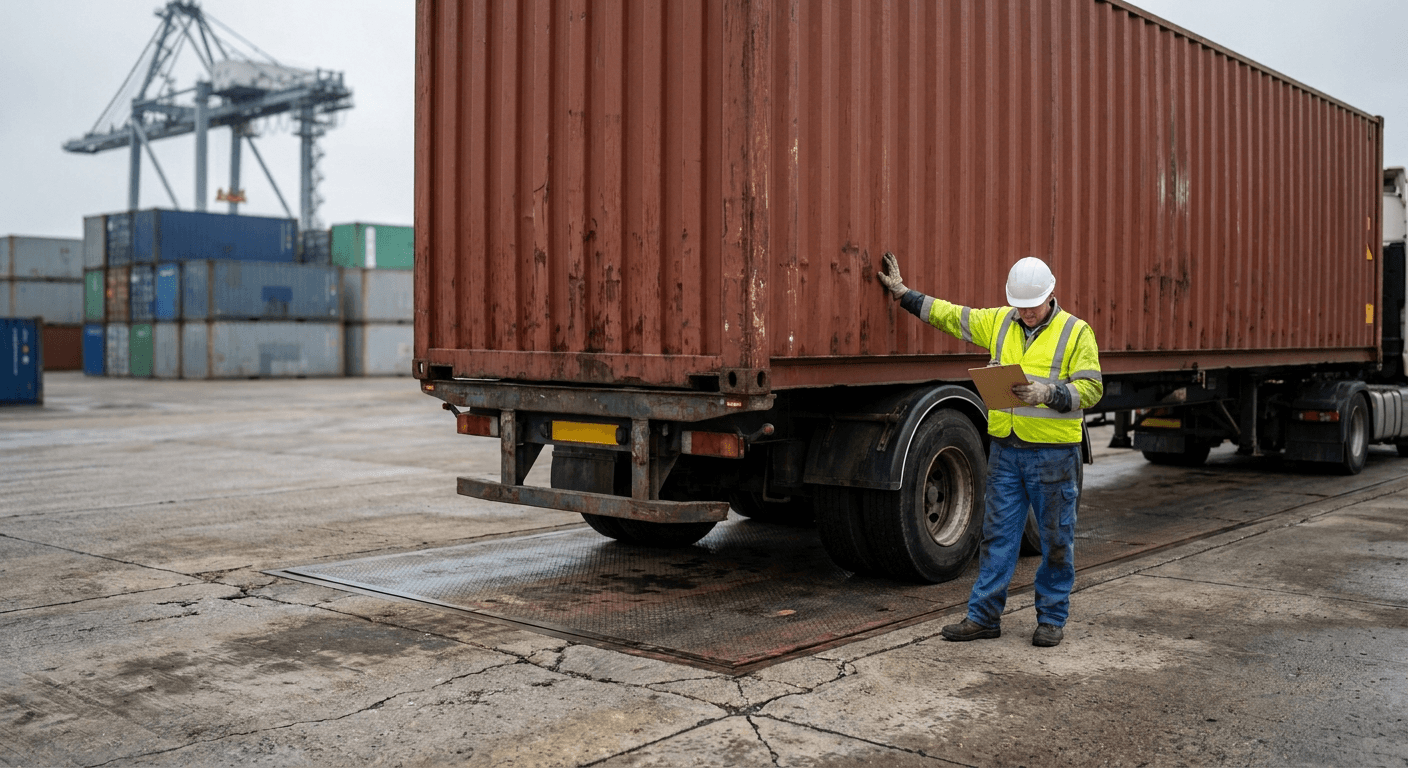
Spotting Transshipped Chinese Plywood Sold as Vietnamese
A buyer-protection guide to detecting Chinese-origin plywood illegally transshipped through Vietnam, using the weight-per-CBM density test and document checks to protect against duties, EUDR non-compliance, and seizure.
Compliance
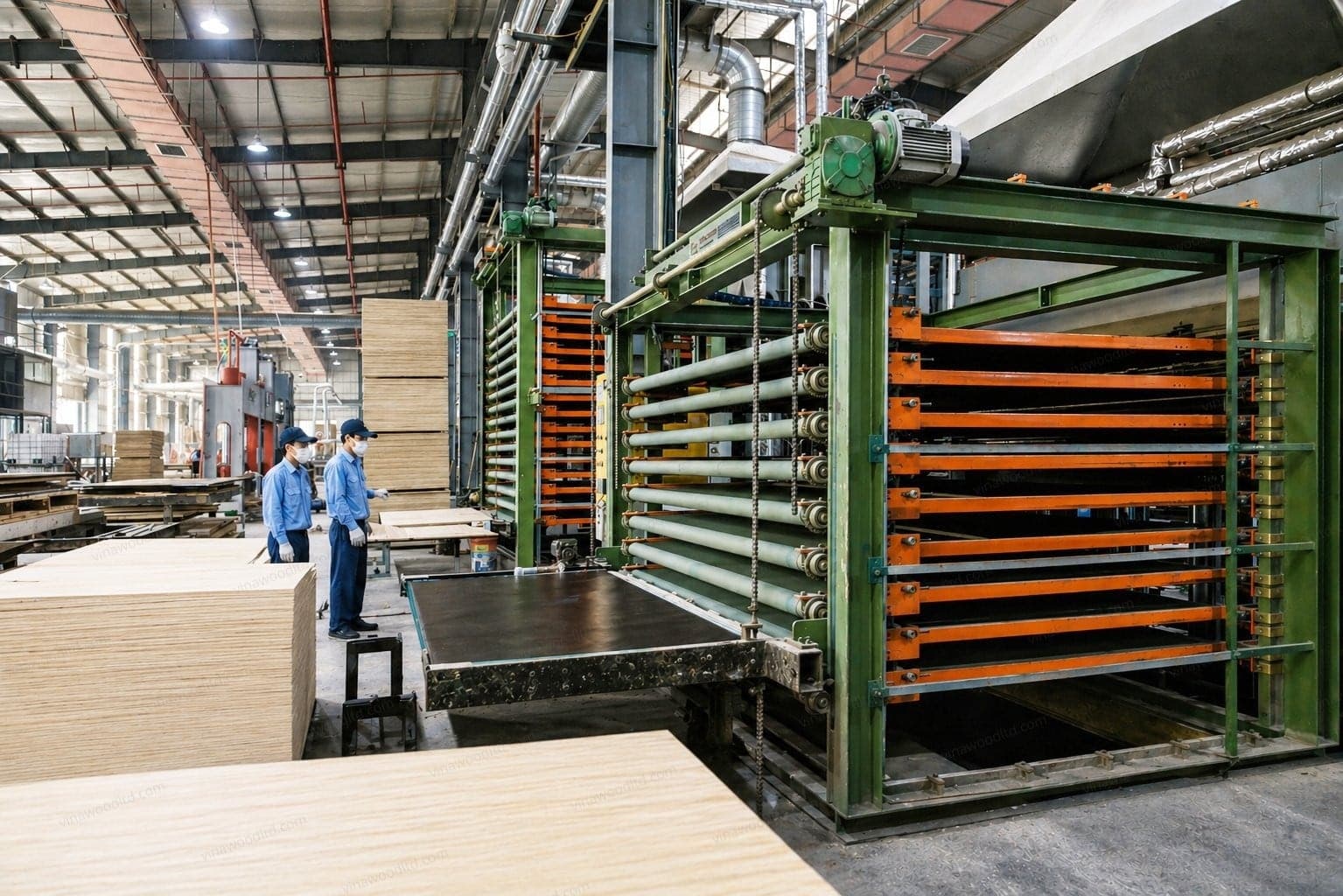
EN 314-2 Plywood Bonding Classes: Class 1, 2, and 3 Explained
EN 314-2 sets three plywood bonding classes by end-use moisture: Class 1 dry, Class 2 humid/protected exterior, Class 3 unprotected exterior. Learn how EN 314-1 tests, EN 636 types, and Eurocode 5 service classes line up for importers reading certificates.