
Guides/Compliance Education
Lacey Act Explained for Plywood Imports: PPQ 505, Species and Country of Harvest
How the Lacey Act applies to imported plywood: what the PPQ 505 declaration records, why every veneer species counts, and how due care works in practice.
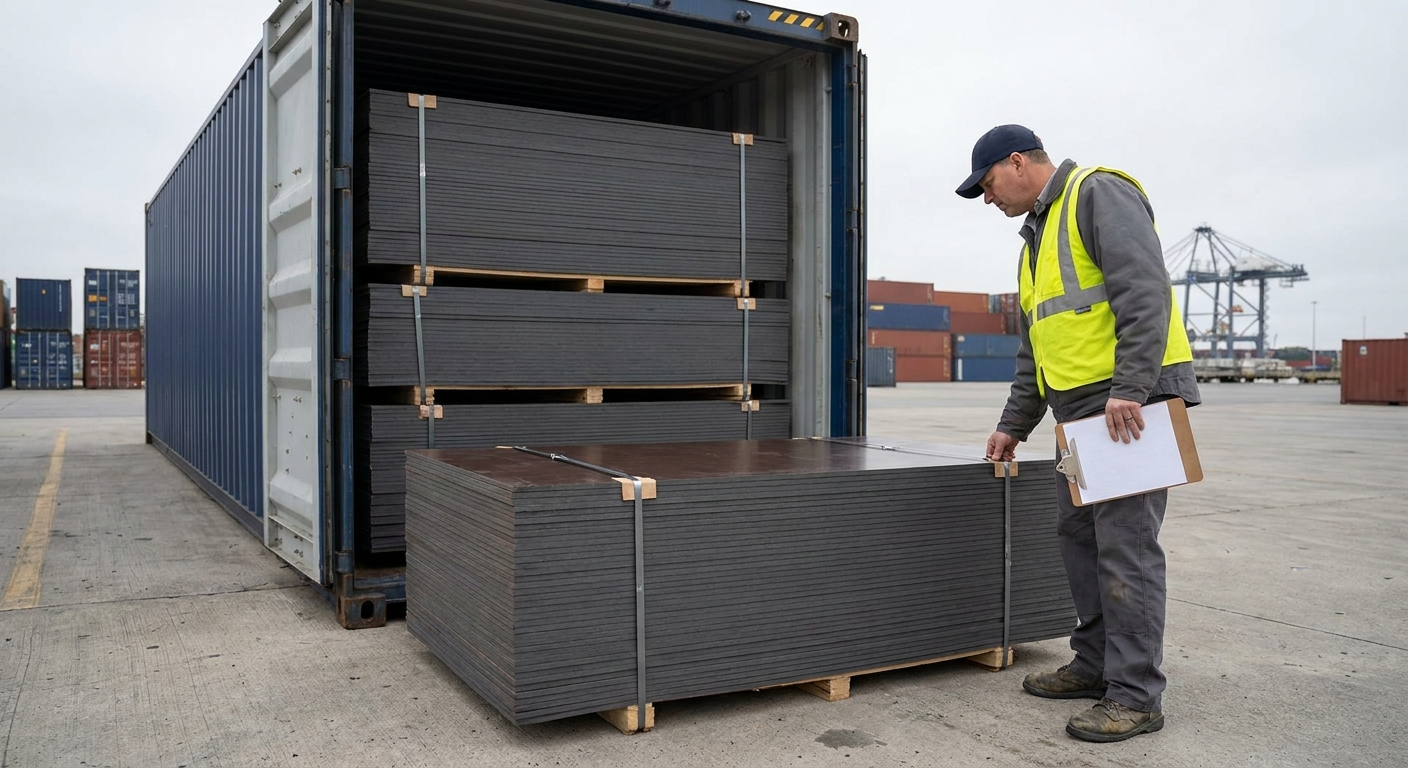
A container of Vietnamese plywood heading for a US port drags a surprising amount of paper behind it. Invoice, bill of lading, sure. Then the formaldehyde file under TSCA Title VI, the duty questions about where the core was really made, and tucked in among all that, a short botanical note about which trees are inside the panels. That note is the Lacey Act declaration. It's usually the smallest document in the pile. It's also the one first-time importers tend to understand least.
So here's the background: what the law is, why a sheet of plywood sets it off, what the declaration records, and why a panel built from several species makes it fiddlier than it looks. Think of it as context for importers, brokers and compliance people. It isn't legal advice, and on a live entry your customs broker or trade lawyer gets the last word.
A wildlife law that grew into a timber rule
The Lacey Act dates from 1900. Back then it was about animals, mainly poaching and game shipped across state lines, and timber wasn't on anyone's mind. Congress amended it in 1981 and again in 2008. The 2008 round is the one that matters for wood, because it pulled plants and plant products in, and with them lumber, veneer and panels.
The core ban is simple to say. You can't import, sell, transport or buy plants that were taken, moved or sold in breach of US law or of a foreign country's law. That second half is what catches people off guard. A shipment can clear every US formality and still fall foul of Lacey if the logs were cut illegally where they grew.
Three agencies split the work. The Fish and Wildlife Service and NOAA Fisheries handle the animal side, while USDA's Animal and Plant Health Inspection Service, APHIS, collects declarations for plants and decides which goods need one. If you import plywood, APHIS guidance is what you'll end up reading.
Why plywood needs a declaration at all
The 2008 amendments added a declaration for plant imports, and APHIS rolled it out tariff heading by tariff heading instead of all at once. Plywood and veneered panels under HTS 4412 came in with the phase that began on 1 October 2009. So for panel importers this isn't new. It's been part of the job for well over a decade. Our HS code guide for Vietnamese plywood explains how heading 4412 breaks down.
APHIS's current test is short. Does the product contain plant material? Is its HTS code on the APHIS list? Is it a formal entry, under one of the listed entry types, with no exemption? A formal entry generally means 2,500 dollars or more, and a container of plywood blows past that easily.
The list keeps growing, too. Phase VII kicked off on 1 December 2024 and swept in all kinds of goods that never needed a declaration before, furniture, tools and housewares among them. If you bring in finished wood items alongside panels, check each line in APHIS's product lookup. The plywood is rarely the surprise. The accessories are.
What actually goes on the declaration
The statute spells out the basics. For every plant in the shipment you give the scientific name (genus and species), the value, the quantity with a unit of measure, and the country where the plant was taken. APHIS then adds the shipment details you'd expect: importer, consignee, HTS code, bill of lading, container number, manufacturer ID.
Two details catch people. Quantity has to be in a valid metric unit, so cubic metres or kilograms work, while pieces and board feet don't. And "country of harvest" means where the tree grew. Not where the panel was pressed, and not the port it left from.
You'll still hear it called PPQ 505, after the old paper Plant and Plant Product Declaration. The paper's gone, though. Since 1 January 2026 APHIS hasn't accepted paper submissions, so declarations go in through CBP's ACE system, which APHIS treats as the main route, or through its own LAWGS portal. Only the importer of record or its agent can file. A broker needs power of attorney, and APHIS holds both of them responsible for what's on the form.
If you want the field-by-field version, with a list of what to request from the mill, Vinawood's mill blog has a practical companion piece: Lacey Act declaration for plywood imports. We'll stay here with what the law is asking and why.
Face, core, back: the multi-species headache
A sawn board tends to come from one tree species. Plywood often doesn't. One sheet can carry a face veneer from one species, a core from another and a back from a third, and every wood in it counts as plant material. So every one of them goes on the declaration.
The law does allow for some uncertainty. If the species in a product varies and you don't know exactly which went in, you list every species that might have been used, and the same goes for country of harvest. APHIS lets you write "spp." after a genus name, but only when any species in that genus could really be in there. If your mill's sourcing rules most of the genus out, they expect a proper list instead.
And no, plywood can't hide behind the composite rule. APHIS has a special designation for stuff made of tiny fibres from mixed plants, mashed and bonded back together, think MDF, particleboard or paper, usable when the species truly can't be found with due care. APHIS says outright that thin plies or layers of solid wood don't qualify. Veneers get named.
Vietnamese panels make this easier than plenty of origins, though not automatic. Most of the country's plywood is built from plantation-grown acacia, eucalyptus and rubberwood, and all of them have clean scientific names. The real questions tend to be which species went into a given batch, and whether any veneer or core came in from another country before pressing.
Due care, legality and the file behind the form
The declaration is just the visible bit. What the law really cares about is whether the wood was legal, and how much you could reasonably have known. Civil penalties under the act can apply where a person, in the exercise of due care, should have known the wood was taken illegally. So it's not only about what you actually knew. There's no fixed checklist for due care, either; it scales with the risk.
In practice you build a file. Usual starting points: a species statement for each product from the mill, harvest and transport papers for the timber, and a chain-of-custody trail linking logs to veneer to finished panel. FSC or PEFC certificates help, and lots of buyers lean on them hard. But the statute doesn't name any certificate as automatic proof of legality. Treat them as one piece of evidence, not the whole file.
Country of harvest is also where Lacey bumps into trade remedies. If a "Vietnamese" panel actually has a core pressed somewhere else, the declaration's wrong as well as the origin claim. Our guide to how transshipment gets detected covers the warning signs, and the AD/CVD status page covers the duty side.
Lacey next to the other plywood rules
People blur these together because they all land on the same container. Each one's asking something different.
| Rule | What it wants to know | Where the answer usually comes from |
|---|---|---|
| Lacey Act (US) | Was the wood legally harvested, and which species and harvest countries are in the panel? | Mill species statement, harvest and chain-of-custody records, the importer's declaration |
| TSCA Title VI (US) | Do the panels meet formaldehyde emission limits? | Third-party certifier certification, panel labels, importer certification |
| AD/CVD orders (US) | Do duty orders reach this product, given where it was really made? | Origin and production records, scope rulings, the broker's classification |
| EUDR (EU) | Is the wood deforestation-free and legal, with plot-level traceability? | Operator due diligence statement and geolocation data |
For the others, see the TSCA Title VI explainer and the compliance atlas. None of them stands in for the Lacey declaration. And the Lacey declaration doesn't cover any of them.
Frequently asked
Does plywood need a Lacey Act declaration?
Yes, in most commercial shipments. Plywood and veneered panels under HTS heading 4412 have been on the APHIS declaration schedule since October 2009, and a declaration is needed when the shipment is a formal entry, generally 2,500 US dollars or more. Confirm the exact HTS code and entry type with your customs broker.
What is PPQ Form 505?
PPQ Form 505 is the Plant and Plant Product Declaration that APHIS uses for the Lacey Act. It records the scientific name of each plant, the country of harvest, the quantity and the value of the goods. APHIS stopped accepting the paper form on 1 January 2026, so the same data is now filed electronically through ACE or LAWGS.
Do I need to declare every veneer species in plywood?
Yes. Each wood in the panel, face, core and back, counts as plant material and should be named by genus and species. If the species vary and the exact one is unknown, the law asks you to list every species that may have been used. APHIS says thin plies of solid wood cannot use the special composite designation meant for MDF or particleboard.
Is FSC certification enough for the Lacey Act?
Not on its own. FSC or PEFC chain-of-custody certificates are useful evidence, but the statute does not name any certificate as automatic proof of legality. Importers usually pair them with a species statement, harvest and transport records and a clear chain of custody from logs to finished panel.
Who is responsible for the Lacey Act declaration, the importer or the supplier?
The importer of record is. Only the importer of record or its agent, such as a customs broker with power of attorney, can file, and APHIS holds both responsible for accuracy. The overseas mill supplies the species, origin and legality information but does not file anything.
What happens if the country of harvest is wrong?
A wrong country of harvest makes the declaration inaccurate, and false statements can be referred for enforcement. If you discover an error or a missed filing, APHIS asks importers to contact its Lacey Act team to discuss how to resolve it. An origin problem can also point to transshipment, which brings duty questions as well, so take it to your broker or counsel early.
Related in the atlas
Continue reading
Same topic first, then what others on the atlas read most.
Compliance
EUDR Evidence Pack for Vietnamese Plantation Plywood
A plain-language reference on how a compliant EUDR evidence pack for Vietnamese plantation plywood typically works: Article 9 data, Circular 26/2022 origin dossiers, smallholder land tenure, the money trail without a seller e-invoice, and why the mill pack is not the DDS.
Grades
Plywood Standards Cross-Reference Matrix (EN, BS, IS, JAS, AS/NZS, ASTM)
A side-by-side reference that lines up plywood bond, durability and formaldehyde classes across EN, BS 1088, IS 710/303, JAS, AS/NZS and US PS 1, so a foreign spec can be translated into what a Vietnamese mill can build and certify.
Overview
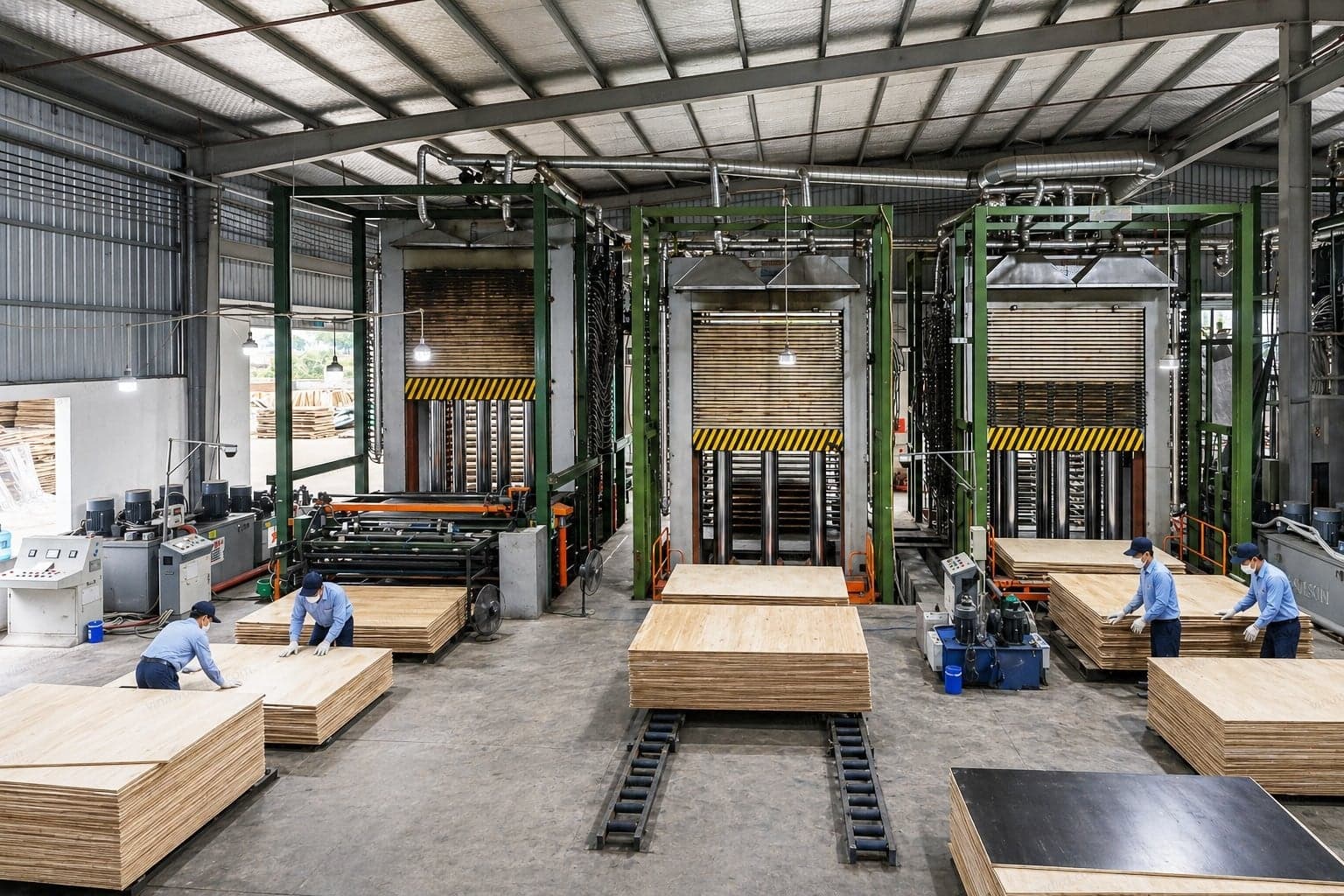
The Vietnam Plywood Industry: A Complete Overview
A plain-English overview of Vietnam's plywood industry: its scale and growth, the plantation species base, the main export product types, certification, and where Vietnam sits among global plywood origins.
Import
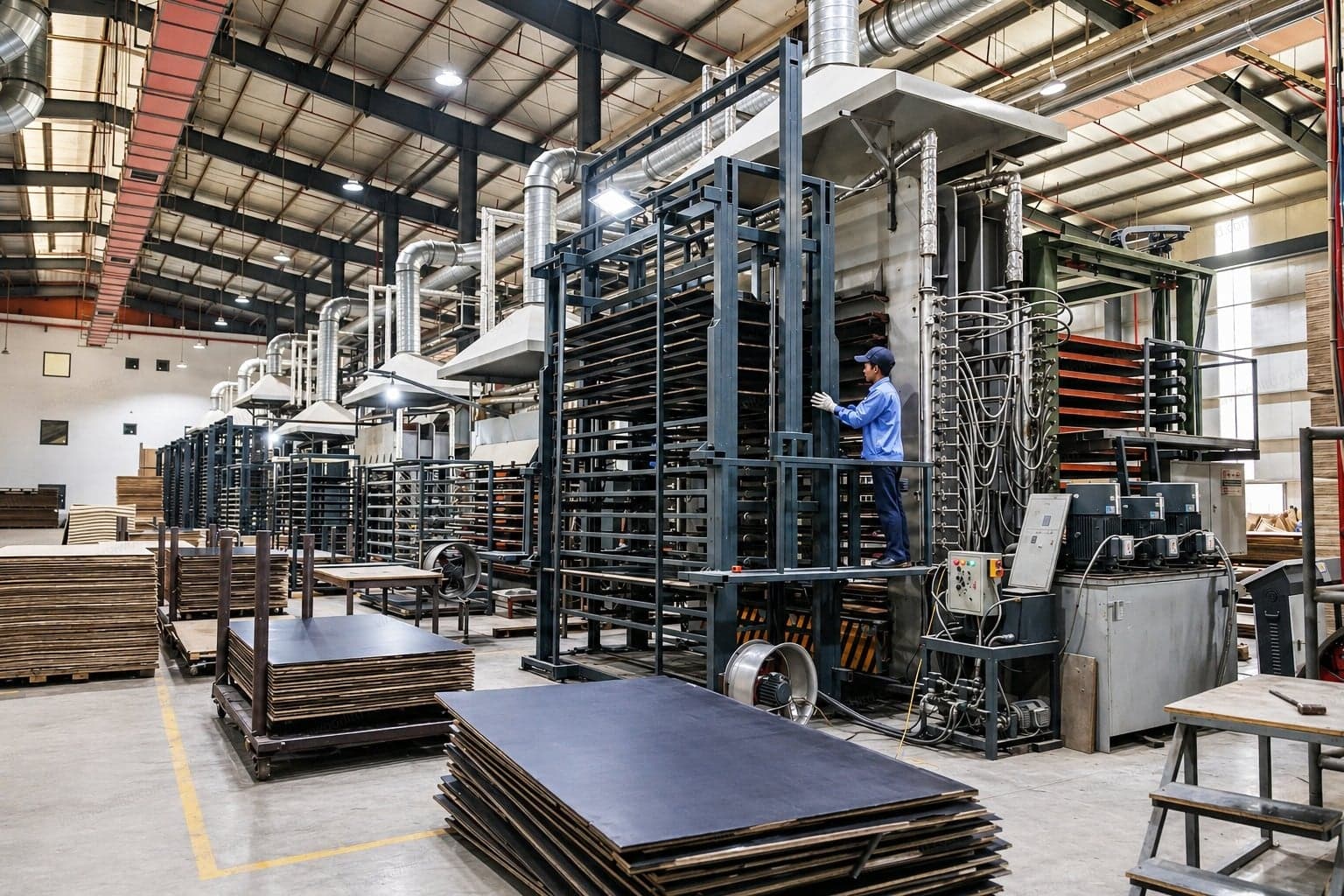
Importing plywood from Vietnam
The end-to-end importer's guide to sourcing plywood from Vietnam: vet a mill, lock the spec, agree Incoterms, watch QC, assemble the legality file, then load and clear the container.